What Type Of Filter Removes Arsenic From Water: 2026 Guide
Reverse osmosis, iron media, activated alumina, and anion exchange filters remove arsenic best.
If you want clear advice on what type of filter removes arsenic from water, you’re in the right place. I specialize in home water treatment and have helped many families fix arsenic issues in wells and city water. In this guide, I break down how arsenic behaves, which filters work, which do not, and how to choose the right setup with confidence.
 drinking water: what you need to know”
style=”max-width: 100%; height: auto; border: 2px solid black; border-radius: 10px; display: block; margin: 0 auto;”
loading=”lazy”
/>
Arsenic in drinking water: what you need to know
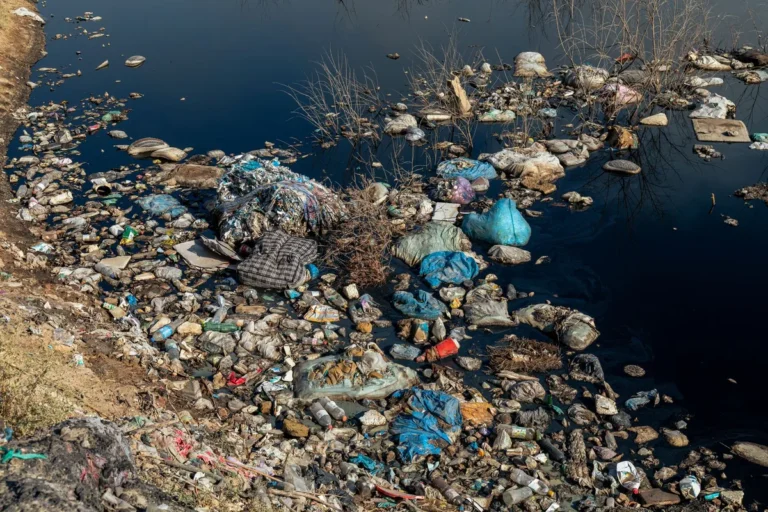
Arsenic is a natural element found in rocks and soil. It can dissolve into groundwater and move into private wells. Some old pesticides and industry sites also add risk.
There are two main forms in water. Arsenic V (arsenate) carries a charge and is easier to remove. Arsenic III (arsenite) is neutral at normal pH and is harder to catch. Many filters need arsenic III changed to arsenic V first. This step is called oxidation.
Public health limits set a very low bar. The US limit is 10 parts per billion. Many experts aim even lower for home water. That is why the right filter choice matters.
A simple screen or carbon block does not pull arsenic out. To decide what type of filter removes arsenic from water, you must match the filter to the arsenic form and your water chemistry.
What type of filter removes arsenic from water: options compared
Below are proven options that remove arsenic well. I list how they work, what they do best, and key limits. This helps you choose what type of filter removes arsenic from water in your home.
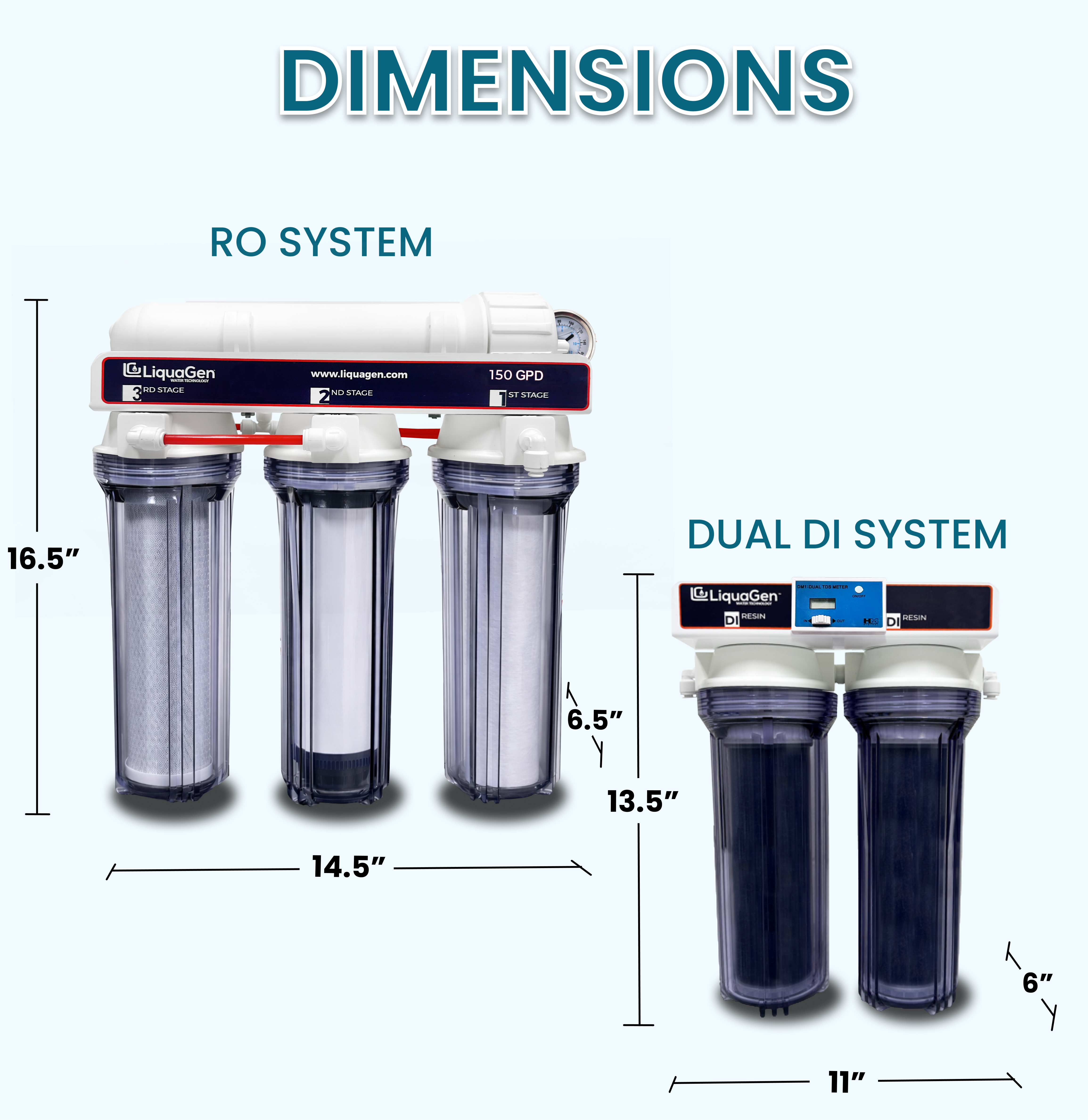
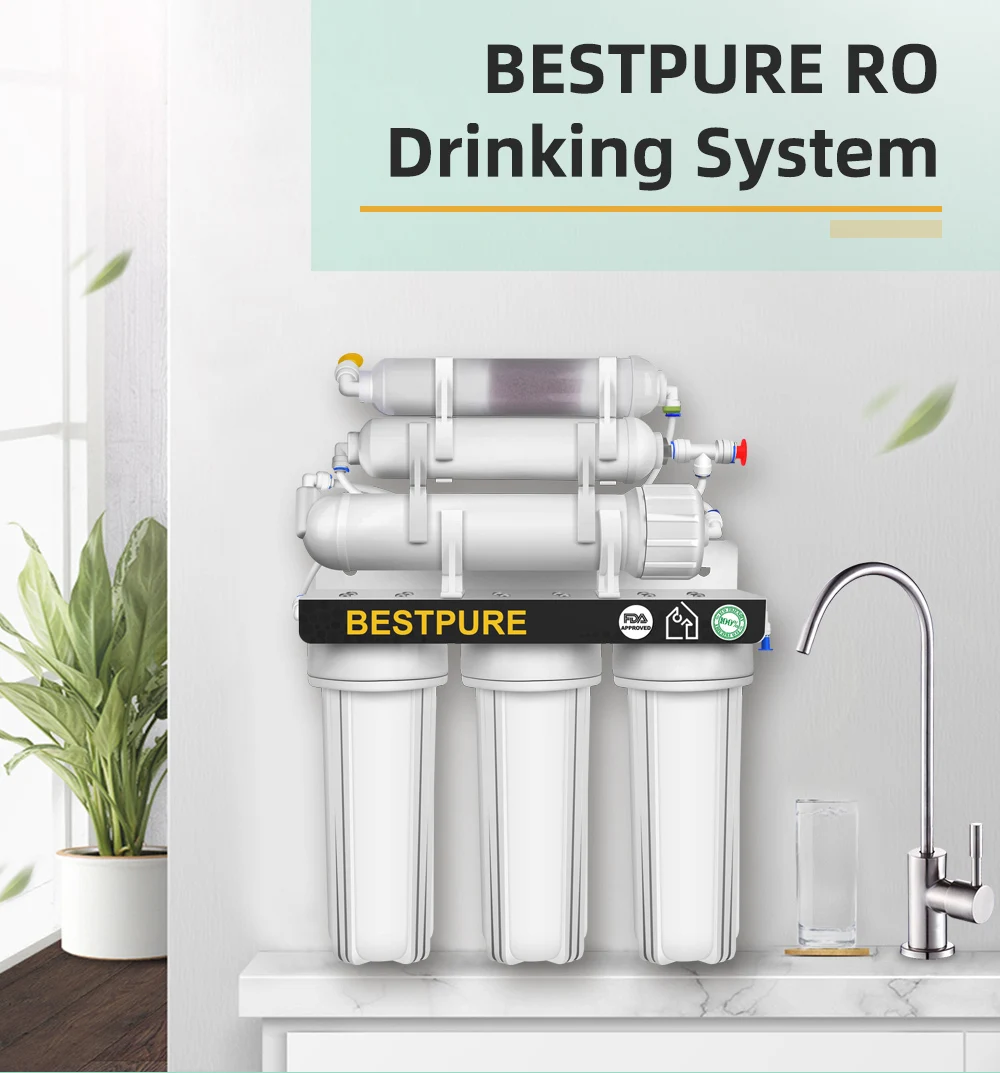
Reverse osmosis (RO)
- What it is: A membrane that rejects dissolved ions and tiny molecules.
- Performance: Often 90 to 99 percent for arsenic V. Less for arsenic III unless pre-oxidized.
- Best use: Under-sink drinking water. Great final barrier. Look for units tested to NSF/ANSI 58.
- Notes: Needs a prefilter and a carbon stage. Makes some waste water. Add a small tank for flow.
Adsorptive media: activated alumina (AA)
- What it is: Porous aluminum oxide granules that bind arsenic.
- Performance: Very good for arsenic V. Can remove arsenic III after oxidation. Best at lower pH.
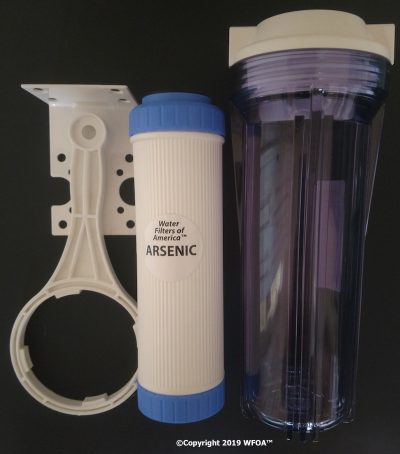
- Best use: Cartridges or small tanks at point of use or entry. Look for NSF/ANSI 53 claims.
- Notes: Media has a set life. High silica or phosphate cuts capacity.
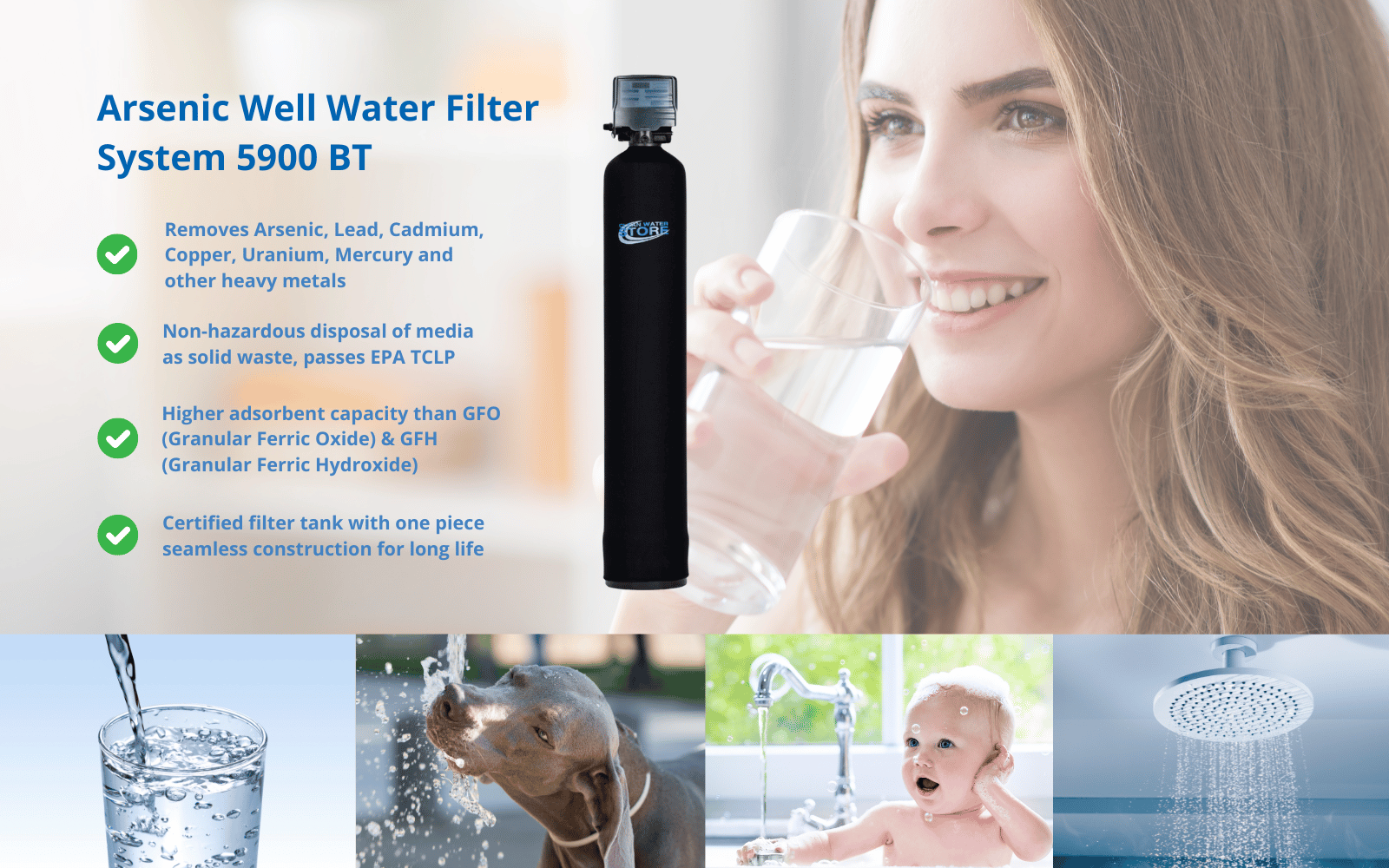
Adsorptive media: iron-based media (granular ferric oxide/hydroxide)
- What it is: Iron oxides that grab arsenic strongly.
- Performance: High removal for arsenic V. Works with arsenic III if you oxidize first.
- Best use: Whole-house tanks or under-sink cartridges with certified claims.
- Notes: Needs backwash in tank systems. Competing ions can reduce run length.
Anion exchange
- What it is: A resin that swaps chloride for arsenic anions.
- Performance: Strong for arsenic V. Poor for arsenic III unless oxidized.
- Best use: Whole-house systems when you want low upkeep and high flow.
- Notes: Uses salt for regen. Competes with nitrate and sulfate.
Distillation
- What it is: Boil and condense water to leave metals behind.
- Performance: Good removal of arsenic. Slow and uses energy.
- Best use: Countertop batch drinking water. Good for off-grid.
- Notes: Not a filter, but a valid option. Needs cleaning and care.
Oxidation plus filtration
- What it is: Convert arsenic III to arsenic V, then filter through iron media or RO.
- Oxidants: Chlorine, ozone, or permanganate. Some manganese dioxide media can help.
- Use case: Wells with much arsenic III. This is key when you ask what type of filter removes arsenic from water in tough cases.
What does not remove arsenic well
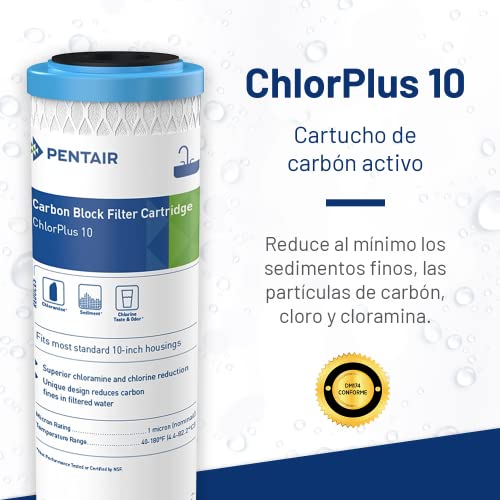
- Standard carbon pitchers without special media.
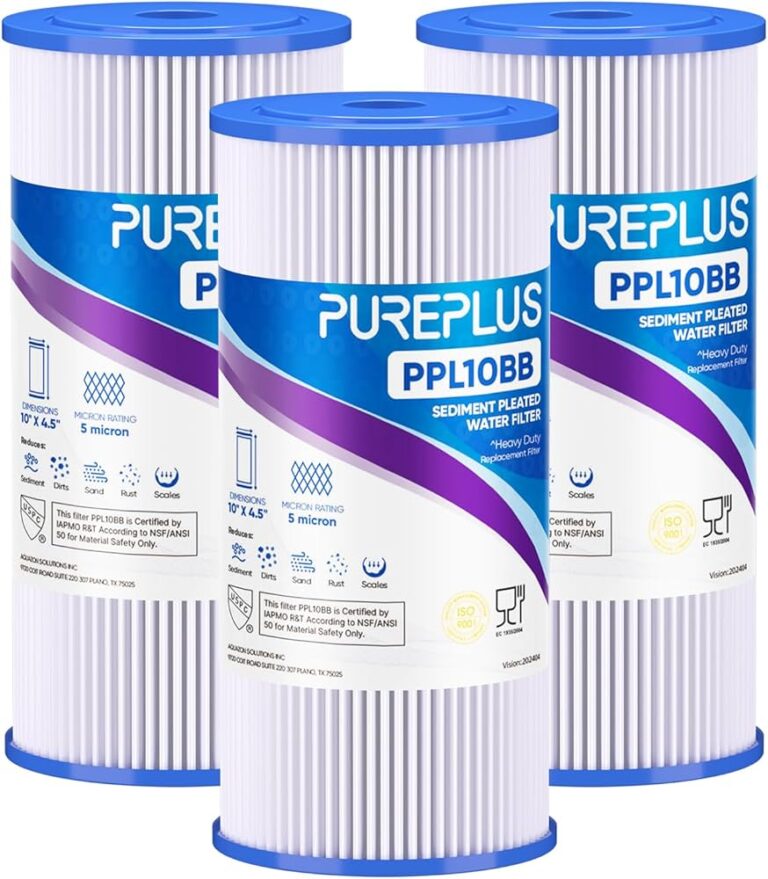
- Simple sediment filters.
- UV light alone.
- Ultrafiltration or microfiltration membranes.
When people ask what type of filter removes arsenic from water, the short list is RO, activated alumina, iron-based media, and anion exchange. Each can hit very low levels when applied right.
Testing first: the step most people skip
To pick what type of filter removes arsenic from water for your home, start with a lab test. A cheap strip is not enough. Order a certified lab test for arsenic.
- Ask for total arsenic and, if possible, speciation into arsenic III and V.
- Check pH, iron, manganese, silica, phosphate, sulfate, and TDS.
- Test raw water before treatment, then test treated water after install.
Why it matters: Oxidation is often needed. Competing ions change media life. The test guides the system choice and saves you money.
Light rule of thumb I use:
- If arsenic III is high, add oxidation before RO or media.
- If TDS is high, RO shines at point of use.
- If you want whole-house, prefer iron media tanks or anion exchange with the right pre-treatment.

How to choose the right setup for your home
Here is a simple way to decide what type of filter removes arsenic from water for you.
-
Goal and scope
- Drinking and cooking only: Under-sink RO with a post-carbon polish.
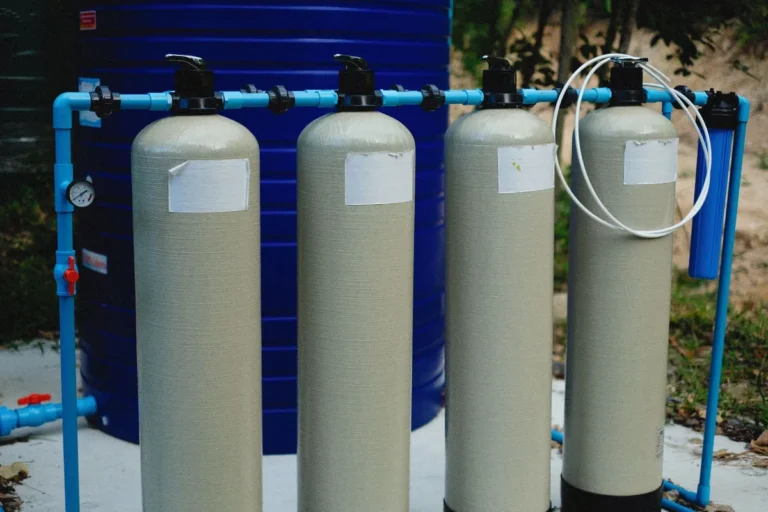
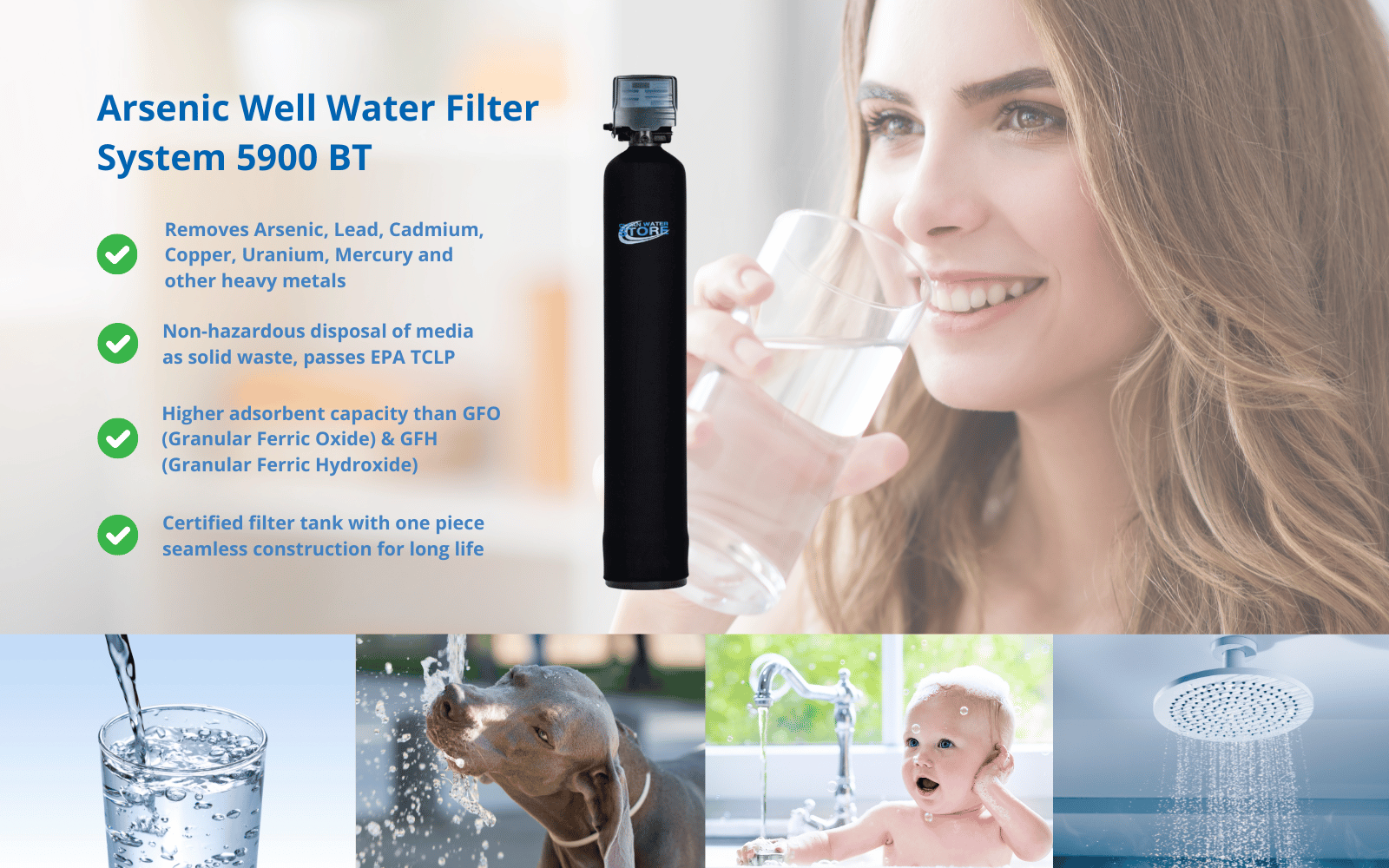
- Whole-house: Iron-based media tank or anion exchange with pre-oxidation as needed.
-
Arsenic form
- Mostly arsenic V: Any of the four core methods will work.
- Mix with much arsenic III: Add oxidation or use a media that includes manganese dioxide.
-
Water chemistry
- High silica or phosphate: Iron media or RO often perform better than alumina.
- High hardness: Add softening before RO to protect the membrane.
- Chlorine in city water: Catalytic carbon can manage taste after oxidation.
-
Certification
- Look for NSF/ANSI 53 for adsorptive cartridges and tanks that claim arsenic reduction.
- Look for NSF/ANSI 58 for RO units.
- Confirm pressure ratings and materials safety per NSF/ANSI 61.
-
Space, waste, and upkeep
- RO has a small tank and a drain line. Filters change yearly.
- Media tanks need backwash or change-out every 1 to 3 years.
- Anion exchange needs salt. Plan space for brine.
Real-world picks I have used:
- Private well, 35 ppb arsenic with 70 percent as arsenic III: Small chlorine feed, contact tank, iron media tank, carbon polish. Post results under 2 ppb.
- Suburban home, 12 ppb arsenic V, pH 7.3: Under-sink RO, two-stage prefilter, and remineralize cartridge. Post results 1 to 3 ppb.

Install and maintenance tips from the field
A good plan beats a big budget. Simple steps prevent most issues.
-
Size for flow
- Match media bed size to gallons per minute. Do not overshoot flow.
- For RO, check daily production. Pick a system that meets peak use.
-
Pre-oxidation done right
- Dose chlorine with a small metering pump. Aim for a short contact time.
- Or use manganese dioxide media that can oxidize on contact.
-
Protect the gear
- Add a 5 micron sediment prefilter.
- If iron or manganese is high, treat those first to prevent fouling.
-
Service on time
- Change RO prefilters every 6 to 12 months.
- Replace RO membranes every 2 to 5 years based on rejection.
- Test effluent arsenic every 6 to 12 months. Adjust media change-out by results.
Common mistakes to avoid:
- Skipping speciation, then the system misses arsenic III.
- Relying on a basic carbon pitcher. It will not solve arsenic.
- Ignoring NSF marks and third-party tests.
- Letting pH drift high on alumina media, which hurts capacity.
These steps matter no matter what type of filter removes arsenic from water in your setup.
Proof it works: standards, testing, and data
Trust but verify. Here is how I confirm results.
- Use products with clear arsenic reduction claims tested to NSF/ANSI 53 or 58.
- Keep install records and service logs. Note filter dates and lot codes.
- Test treated water for arsenic after install, after 2 weeks, then on a set schedule.
- Track RO membrane rejection by a handheld TDS meter. Sharp drops signal a problem.
- For media tanks, sample mid-cycle. If levels climb, plan a change-out.
Many public health groups advise under 10 ppb. Some aim for 5 ppb or less. Set your goal, then use lab data to prove it. This is the best way to answer what type of filter removes arsenic from water for your family’s needs.
Budget, lifespan, and total cost of ownership
Buying the right gear once is cheaper than buying twice. Here are fair ranges from installs I have managed.
-
Under-sink RO
- System: 200 to 600 dollars. Filters: 50 to 150 dollars per year.
- Pros: Strong arsenic cut. Great taste. Small footprint.
- Cons: Some waste water. Slow without a tank.
-
Iron media tank or activated alumina tank
- System: 900 to 2,000 dollars. Media: 200 to 400 dollars per 1 to 3 years.
- Pros: Whole-house flow. Simple care.
- Cons: Capacity varies with water chemistry.
-
Anion exchange whole-house
- System: 1,200 to 2,500 dollars. Salt and service add small ongoing cost.
- Pros: High flow. Stable effluent.
- Cons: Needs brine handling. May compete with other anions.
-
Distiller
- System: 200 to 500 dollars. Power use varies.
- Pros: Strong metal removal. Simple concept.
- Cons: Slow. Not a true filter.
Add lab tests to your budget. Plan 30 to 150 dollars per test. Good data is vital when you decide what type of filter removes arsenic from water for the long term.
Quick checklist before you buy
Use this checklist as you narrow picks on what type of filter removes arsenic from water.
- Confirm lab test and speciation.
- Decide point of use or whole-house.
- Select RO, iron media, alumina, or anion exchange based on form and pH.
- Add oxidation if arsenic III is present.
- Verify NSF/ANSI certification for arsenic reduction.
- Check install space, drain access, and power if needed.
- Plan service, parts, and testing schedule.
Frequently Asked Questions of what type of filter removes arsenic from water
Does reverse osmosis remove arsenic from well water?
Yes, RO removes arsenic V very well and arsenic III after oxidation. It is a top choice for drinking water at the sink.
Can a pitcher filter remove arsenic?
Most pitchers do not remove arsenic. A few use special media and must show certified arsenic reduction to be trusted.
Is whole-house arsenic removal worth it?
Yes if showers, laundry, and all taps need low arsenic. Many people choose point-of-use RO for cost and keep whole-house later.
How do I know if I have arsenic III or V?
Ask the lab for speciation. If not available, plan for oxidation to be safe.
Do I need to soften water before RO?
If hardness is high, softening helps protect the RO membrane. It also keeps flow strong and extends life.
Will boiling water remove arsenic?
No. Boiling concentrates arsenic as water evaporates. Use a proper filter or a distiller.
How often should I test after installing a system?
Test after install, then at 6 to 12 month intervals. Increase frequency if results drift or usage is high.
Conclusion
You now know what type of filter removes arsenic from water and how to match it to your home. Reverse osmosis, iron-based media, activated alumina, and anion exchange all work when applied with sound testing and, if needed, oxidation. The right choice depends on arsenic form, pH, and how you plan to use the water.
Take action today. Order a lab test, pick a certified system, and set a simple service plan. If you found this useful, share it, subscribe for more home water tips, or leave a question and I will help you choose with confidence.