What Size Micron Filter For Well Water: 2026 Sizing Guide
Most homes need a 5 micron prefilter and a 1 micron final filter for wells.
Finding the right size micron filter for well water can feel tricky, but it does not have to be. In this guide, I break down what size micron filter for well water works in real homes, why it matters, and how to dial it in without wasting money or killing your water pressure. You will get clear steps, real examples, and pro tips based on years of installing and troubleshooting well systems.

Micron ratings made simple
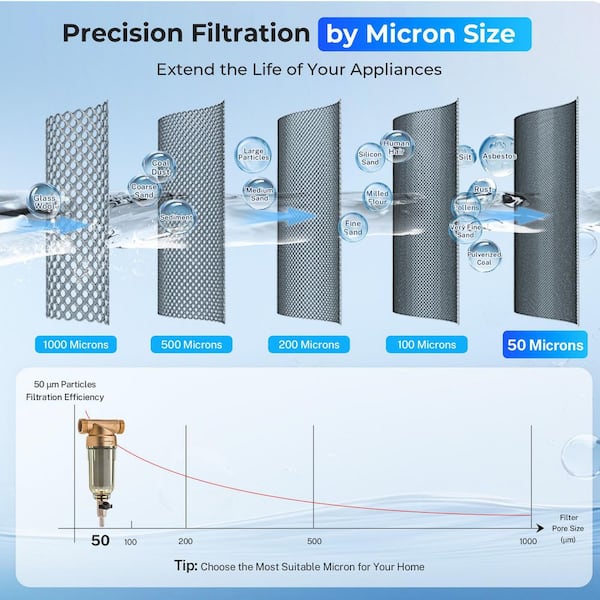
A micron is one millionth of a meter. It measures the size of particles a filter can capture. A 5 micron filter traps fine silt that you can barely see. A 50 micron filter traps coarse sand you can see.
Two key terms matter:
- Nominal rating means the filter removes most particles at that size, not all. It is common in sediment cartridges.
- Absolute rating means the filter removes 99 percent or more of particles at that size. It is used for cyst-rated filters and some membrane stages.
Think about trade-offs. Smaller micron filters catch more dirt but clog faster and drop more pressure. Larger micron filters flow better but let more fine silt pass. If you ask what size micron filter for well water should you pick, start with 5 micron for the whole house and fine-tune from there based on pressure and clarity.
How to choose what size micron filter for well water
Use a simple, step-by-step plan:
- Test and observe. Look for sand, red staining, slime, or cloudy water after a rain.
- Match the problem to a micron size. Sand needs larger micron. Silt needs smaller.
- Protect flow. Size the housing and cartridge to your gallons per minute needs.
- Stage filters. Go coarse to fine so you do not clog the smallest filter.
Quick selector you can trust:
- Visible sand or grit: 50 to 100 micron first, then 20 micron.
- General well sediment: 20 to 5 micron.
- Fine silt or cloudiness: 5 to 1 micron.
- Cyst protection at the tap: 1 to 0.5 micron absolute.
In my installs, what size micron filter for well water came down to pressure plus clarity. If a 5 micron choked showers, I stepped back to 10 micron pleated, then added a 1 micron at the kitchen. That kept the home happy and drinking water pristine.
Common well issues and the right micron sizes
Every well is different, but patterns repeat. Here is how I match filters:
-
Sand and grit
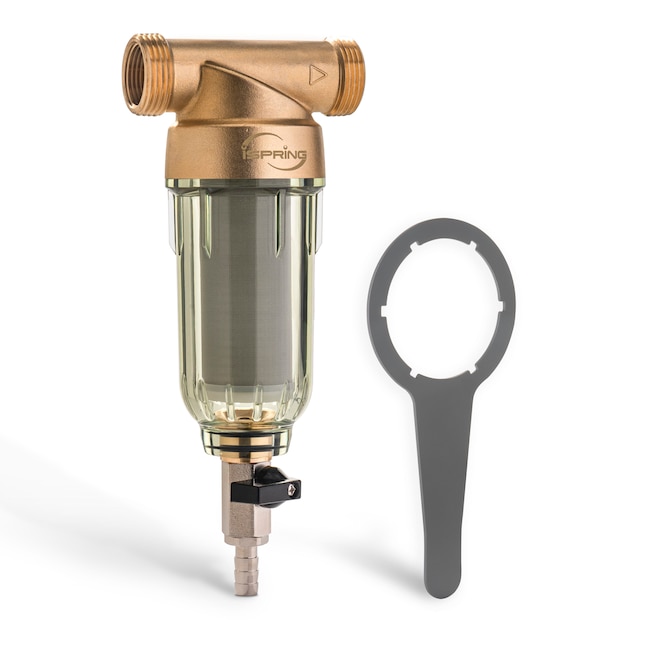
- Use a spin-down or screen at 100 to 200 micron as a first line.
- Follow with 50 or 20 micron pleated to polish flow.
-
Rust and iron flakes
- Start at 20 or 10 micron.
- If staining persists, add 5 micron and consider iron treatment for dissolved iron.
-
Fine silt and turbidity
- Go 5 micron melt-blown.
- If cloudiness remains, add 1 micron after carbon.
-
Slime or biofilm
- Filters alone will not disinfect. Use shock chlorination, a continuous chlorinator, or UV.
- Pre-UV, keep sediment under 5 micron for best UV performance.
-
Tannins or taste and odor
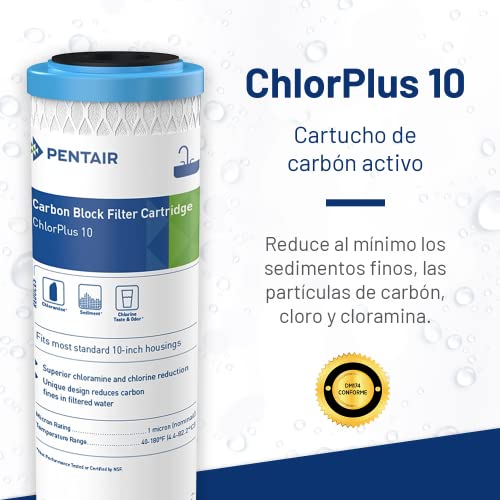
- Use sediment stages first. Then a carbon block at 5 to 1 micron.
- If tannins persist, consider anion exchange made for tannins.
If you wonder what size micron filter for well water handles both sand and silt, stage it: 100 micron spin-down, 20 micron pleated, 5 micron depth. Add 1 micron at the kitchen if needed.

Smart staging for whole-house and drinking water
A single small cartridge is rarely enough for a busy home. I design simple stacks that flow well and last.
Whole-house basics:
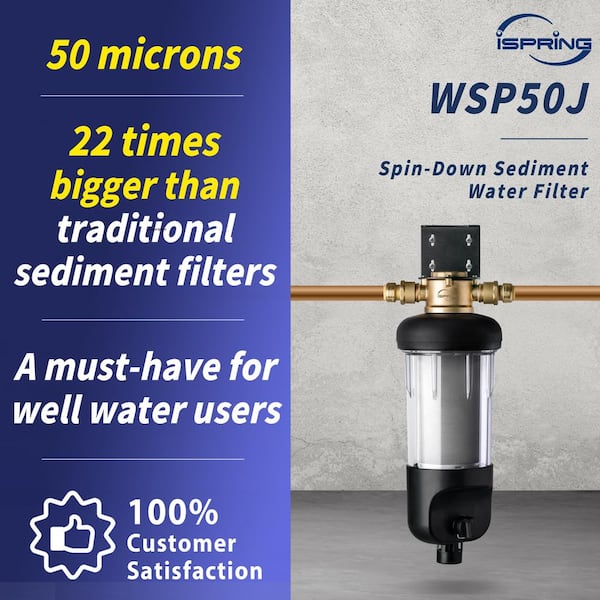
- Spin-down 100 to 200 micron for sand, cleanable.
- Big Blue 20 inch housing with 20 micron pleated.
- Big Blue 20 inch with 5 micron depth for polishing.
- Optional carbon block at 5 micron for taste and odor.
Drinking water polish:
- Under-sink carbon block at 1 or 0.5 micron absolute.
- For reverse osmosis, use 5 micron sediment then carbon prefilter, then the RO membrane.
This approach answers what size micron filter for well water works in practice while keeping pressure strong. Larger housings and pleated cartridges give more surface area, which means fewer clogs and happier showers.
Simple tests to estimate particle size and choose your micron
You do not need a lab to make a good call. Try these:
- Jar test. Fill a clear jar, let it sit. Sand drops in minutes. Silt stays cloudy for hours. More silt means smaller micron.
- Coffee filter test. Pour a cup through a paper filter. If the filter turns tan fast, you likely need 5 micron or finer.
- Turbidity check. A handheld meter shows NTU. Over 5 NTU often benefits from 5 micron. Under 1 NTU can use 10 micron.
- Pressure gauges. Install before and after the filter. A rise of 8 to 10 psi means it is time to change or step coarser.
When clients ask what size micron filter for well water they need after storms, I suggest keeping a spare 5 micron depth cartridge. Swap it in when the jar test looks cloudy, then switch back if pressure drops.

Maintenance, lifespan, and flow
Filters do not last forever. Plan ahead:
- Replacement timing. Many whole-house cartridges last 2 to 6 months. High sediment can shorten that to weeks. Use pressure drop to guide changes.
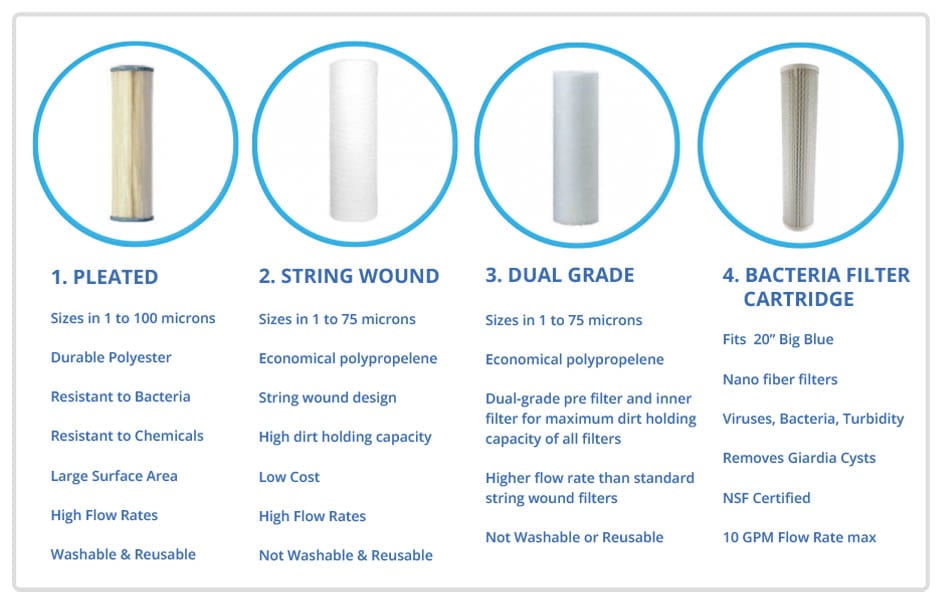
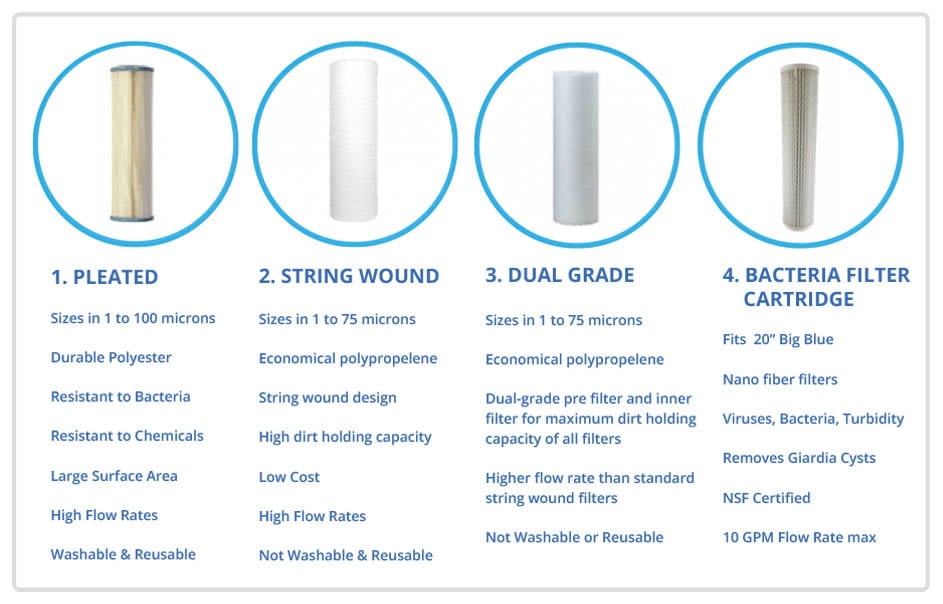
- Cartridge types. Pleated filters are washable once or twice and flow well at 20 to 50 micron. Melt-blown depth filters hold more fine dirt at 5 to 1 micron.
- Flow sizing. Use 20 inch Big Blue housings where you can. They flow better and last longer than 10 inch.
- Keep spares. Stock two sets. Swap fast and avoid downtime.
If cost worries you, ask what size micron filter for well water can lower spend. Often a coarse pleated prefilter saves the fine 5 or 1 micron cartridge from clogging, cutting your yearly cost in half.
Mistakes to avoid and pro tips
I have seen these errors again and again. Skip them and save headaches:
- Going too fine first. A lone 1 micron whole-house filter will clog fast and crush pressure.
- Skipping prefiltration with iron or sand. Always stage coarse to fine.
- Ignoring absolute vs nominal. For cyst reduction at a tap, you need a 1 micron absolute, not nominal.
- Undersizing housings. Small 10 inch filters on a big home will not keep up.
- Forgetting disinfection. Filters do not kill bacteria. Use UV or chlorination when needed.
Pro tips that work:
- Add a 0 to 100 psi gauge before and after your filter train.
- After a major rain, rinse your spin-down and check your prefilter early.
- If you have variable sediment, mount a 3-valve bypass. It saves the day during heavy silt events.
- When asking what size micron filter for well water, think seasonally. Many wells get finer silt in spring. Plan for a temporary 1 micron stage.

Source: amazon.com
Safety, standards, and when to escalate
Clean water is more than clear water:
- Cyst reduction. Look for NSF/ANSI certifications on point-of-use filters. A 0.5 to 1 micron absolute carbon block can be cyst-rated.
- UV systems. Most UV makers want turbidity under 1 NTU and sediment under 5 micron for best performance.
- Chemical concerns. Sediment filters do not remove dissolved metals or nitrates. Use specific media or RO for that.
- Testing. Do a certified lab test yearly for coliform bacteria and nitrates. After floods, test again before use.
If you keep asking what size micron filter for well water and still see stains or pressure drops, the answer may be treatment beyond micron size. Iron, manganese, and hardness often need dedicated systems to protect fixtures and appliances.

Frequently Asked Questions of what size micron filter for well water
What size micron filter for well water is best for general use?
Most homes do well with a 5 micron whole-house sediment filter. It balances clarity and flow while catching fine silt.
Do I need a 1 micron filter on the whole house?
Not usually. A 1 micron filter is great at a drinking tap, but it can clog fast if used whole-house without coarse stages.
What size micron filter for well water should I use before UV?
Use 5 micron or finer ahead of UV. This helps UV light reach microbes and improves kill rates.
Is absolute or nominal better for wells?
Use nominal for whole-house sediment stages to maintain flow. Use absolute 1 to 0.5 micron at the tap if you want cyst reduction.
How do I know if I should switch to a different micron size?
Watch pressure and clarity. If pressure drops fast, go coarser or add a prefilter; if water stays cloudy, step finer.
What size micron filter for well water if I see sand in my sink?
Start with a 100 to 200 micron spin-down, then add 50 or 20 micron. This setup catches sand without choking flow.
Will a 5 micron filter remove iron?
It can catch rust particles, not dissolved iron. For dissolved iron, use oxidation and media like catalytic carbon or greensand.
What size micron filter for well water works with reverse osmosis?
Use a 5 micron sediment prefilter, then carbon, then the RO membrane. At the faucet, many systems polish with 0.5 to 1 micron.
How often should I replace a 5 micron filter?
Change it when you see an 8 to 10 psi pressure drop or at 2 to 6 months, whichever comes first.
Can I wash and reuse sediment filters?
Pleated cartridges can be rinsed a few times. Melt-blown depth filters are not washable and should be replaced.
Conclusion
Picking the right micron size is about balance. Start coarse to protect flow, finish fine where you drink, and test as you go. For most homes, a staged train with 20 micron, then 5 micron whole-house, plus 1 micron at the kitchen, gives clean, clear water without pressure pain.
Take the next step today. Check your current filter, add pressure gauges, and decide what size micron filter for well water fits your home right now. If you found this helpful, subscribe for more well water tips or drop a comment with your setup and results.