What Is Tds Water Filter 2026
When you’re looking at water filters, you’ll often see terms like "TDS reduction" or "TDS removal" tossed around. But what does that really mean for the water you drink? TDS, or Total Dissolved Solids, refers to all the inorganic and organic substances that have dissolved into your water. Think minerals, salts, and even trace amounts of metals.
The level of these dissolved solids can significantly impact your water’s taste, its tendency to leave scale on your appliances, and, in some cases, its safety. Understanding what TDS is and how different filters handle it can help you make a much more informed choice about your household water. As of 2026, standards for what's considered acceptable TDS levels in drinking water continue to be scrutinized by bodies like the Environmental Protection Agency (EPA).
Understanding Total Dissolved Solids (TDS) in Your Water
Total Dissolved Solids (TDS) is a measure of the combined total of all organic and inorganic substances currently dissolved in water. These aren't things you can usually see; they're broken down to such a fine particulate level that they’re essentially part of the water itself.
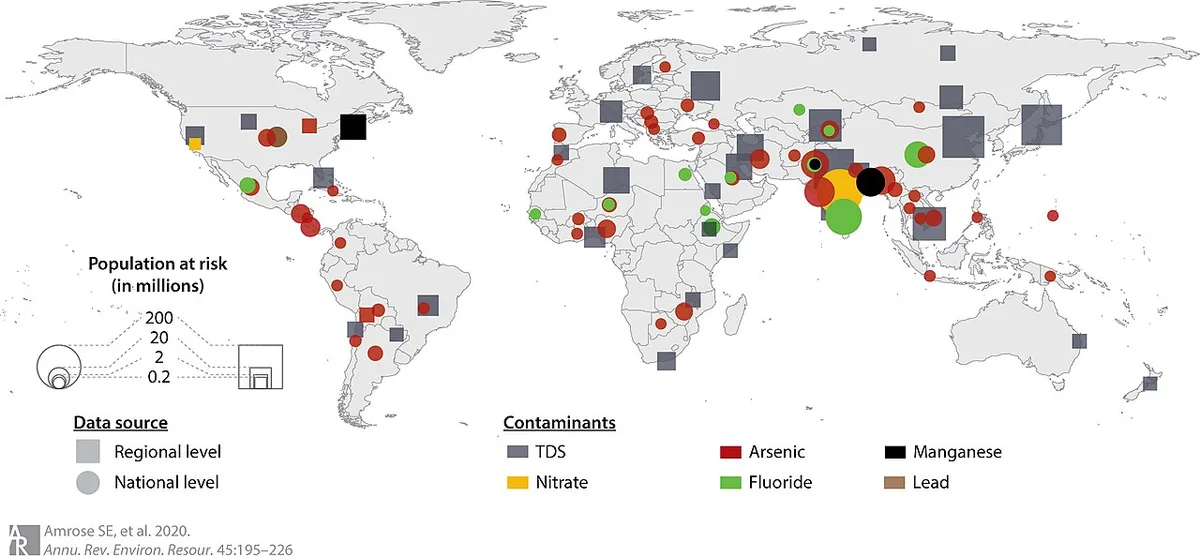
The composition of TDS varies widely depending on the water source. Common components include:
- Minerals: Such as calcium, magnesium, potassium, and sodium. These are often beneficial in moderation.
- Salts: Like sodium chloride.
- Metals: Including trace amounts of iron, copper, or even lead if plumbing issues are present.
- Other compounds: This can range from dissolved pesticides and herbicides if they've entered the water supply to natural organic matter.
The concentration of TDS is typically measured in parts per million (ppm) or milligrams per liter (mg/L). For instance, the EPA suggests a Secondary Maximum Contaminant Level (SMCL) for TDS of 500 ppm for aesthetic reasons like taste and foaming in beverages, it's not about health risk at that level but more about palatability.
What TDS Actually Means: Beyond the Jargon
When you see "TDS," it's just a shorthand for the collective measurable content of everything else that isn't pure H2O. It’s the total concentration of dissolved substances. For many people, the primary concern is how TDS affects the flavor of their drinking water. For example, water with very high TDS might taste salty or metallic, while water with exceptionally low TDS can sometimes taste flat or bland.
Beyond taste, dissolved solids play a role in the formation of mineral scale. This can coat the insides of your coffee maker, kettle, and even your plumbing, reducing efficiency and potentially leading to costly repairs over time. While many dissolved solids are harmless, or even necessary nutrients, some can be hazardous contaminants, such as heavy metals like lead or naturally occurring arsenic.
What's Lurking in Your Water: The Breakdown of TDS
Let’s break down the primary constituents that make up Total Dissolved Solids:
- Minerals: These are perhaps the most common TDS components. Essential minerals like calcium and magnesium contribute to "hard water" and can affect soap lathering and create scale. Potassium and sodium are also frequently found.
- Salts and Inorganic Compounds: Simple salts like sodium chloride (table salt) are a significant contributor. Other inorganic compounds can also be present.
- Metals: These can include both naturally occurring metals in the groundwater and those that leach from plumbing materials (like copper or lead).
- Organic Matter: Tiny amounts of decomposed plant and animal material, as well as dissolved agricultural chemicals like pesticides and herbicides, can also add to the TDS count.
The key takeaway is that TDS is a broad measurement. It doesn't tell you what is dissolved, only that something is dissolved. This is why simply knowing your TDS level isn't enough; sometimes, understanding the quality of the TDS (i.e., what specific contaminants are present) is more critical than the total number itself.
Why TDS Levels Matter for Taste, Health, and Appliances
The concentration of Total Dissolved Solids in your water directly influences several aspects of its quality and usability. For many, the immediate impact is on taste. Water with a TDS level below 50 ppm is generally considered to have a flat or neutral taste. As the TDS climbs, flavors can become more pronounced, ranging from slightly mineral-like to unpleasant saltiness or metallic notes.
Health considerations are also paramount. While many dissolved solids are benign or even beneficial minerals, high concentrations of certain substances can pose risks. For instance, elevated levels of lead can cause serious developmental issues, while high levels of nitrates (which can be a form of TDS) can be dangerous, particularly for infants.
Finally, appliances are noticeably affected by TDS. Hard water, characterized by high levels of calcium and magnesium (a form of TDS), leads to the formation of limescale. This mineral buildup can clog plumbing, reduce the efficiency of water heaters, and shorten the lifespan of appliances like dishwashers and washing machines.
How Water Filters Tackle Total Dissolved Solids
Not all water filters are created equal when it comes to managing TDS. Many common filters are designed to improve taste and odor by removing chlorine or sediment, but they won't significantly reduce the dissolved solids. To tackle TDS effectively, you typically need more advanced filtration technologies.
Activated Carbon Filters: Good for Taste, Not So Much for TDS
Activated carbon filters are incredibly popular, often found in pitcher filters, faucet attachments, and refrigerator water dispensers. Their primary function is to improve the aesthetic qualities of water by adsorbing (trapping on their surface) contaminants like chlorine, which causes off-tastes and odors. They can also remove some volatile organic compounds (VOCs) and sediment.
However, our research indicates that activated carbon filters do very little to reduce the actual Total Dissolved Solids. Because TDS includes minerals, salts, and dissolved metals, these are too small or of the wrong chemical nature to be effectively caught by the adsorption process of activated carbon. So, while they'll make your water smell and taste better by removing chlorine, they won't significantly lower your TDS reading.
Ion Exchange Filters: Trading One Thing for Another
Ion exchange filters are commonly used for water softening. They work by using resin beads that have a negative charge. These beads attract positively charged ions in the water, such as calcium and magnesium (the culprits behind water hardness and a major component of TDS). As the water passes through, the resin releases less problematic ions, typically sodium, in exchange for the calcium and magnesium.
This process does reduce specific types of TDS, primarily the minerals that cause hardness. However, it doesn't remove all dissolved solids. For example, it won't significantly impact dissolved salts or heavy metals that aren't positively charged or are at too high a concentration to be effectively swapped. Manufacturers often specify that their ion exchange filters will reduce TDS, but it’s important to understand they are selective in what they remove.
Reverse Osmosis (RO) Systems: The TDS Reduction Powerhouses
When it comes to significantly lowering Total Dissolved Solids, Reverse Osmosis (RO) systems are the gold standard. These multi-stage systems use a semi-permeable membrane that acts as a very fine sieve. Water is forced under pressure through this membrane, which effectively blocks about 90-99% of dissolved contaminants, including salts, heavy metals, bacteria, viruses, and indeed, most TDS.
An RO system typically includes pre-filters to remove sediment and chlorine, the RO membrane itself, and a post-filter to polish the water. While highly effective, a notable drawback is that RO also removes beneficial minerals like calcium and magnesium, which some people prefer to keep in their drinking water for taste and health. Additionally, RO systems often produce a certain amount of wastewater during the filtration process, as some water is used to flush the membrane.
Ultrafiltration (UF) Systems: A Middle Ground
Ultrafiltration (UF) offers a filtration level between microfiltration and reverse osmosis. UF systems use a membrane with pores typically ranging from 0.01 to 0.1 microns. This is fine enough to block bacteria, viruses, and larger suspended solids, and it can also remove a moderate amount of dissolved solids.
While UF is excellent at removing many contaminants that affect water quality, manufacturer specifications indicate it generally doesn't remove as high a percentage of dissolved salts and minerals as RO. The upside is that UF systems often retain more of the beneficial minerals found in tap water, meaning the water typically tastes better and isn't stripped of its natural composition. They also usually don't produce wastewater, making them more efficient in terms of water usage.
Choosing the Right Filter for Your TDS Goals
When you’re trying to decide on a water filter, especially if your main concern is TDS, it’s crucial to know what each type of system actually does. Simply looking for a filter that "reduces TDS" can be a bit vague, as the degree of reduction varies wildly. The best choice hinges on your specific needs and what you want your water to be like.
Comparing Filter Technologies: TDS Reduction at a Glance
To help you visualize the difference, here’s a quick comparison of how common filter types handle Total Dissolved Solids based on their typical performance:
| Filter Type | Primary Function | Typical TDS Reduction | Notes |
|---|---|---|---|
| Activated Carbon | Taste/Odor, Chlorine | Minimal to None | Excellent for removing chlorine and improving palatability, but won't unclog your TDS meter. |
| Ion Exchange | Water Softening | Moderate (Specific Ions) | Good for removing hardness minerals (calcium, magnesium), but can add sodium. |
| Ultrafiltration (UF) | Bacteria, Viruses | Moderate | Removes microorganisms and larger particles, keeping some beneficial minerals. |
| Reverse Osmosis (RO) | Broad Contaminant Removal | Very High (90%+) | Highly effective against most TDS, including salts and heavy metals; removes minerals. |
If your primary goal is to significantly lower TDS and remove a wide spectrum of dissolved contaminants, Reverse Osmosis is generally the most effective solution. If you're more concerned about taste, odor, and general water clarity, activated carbon or UF might suffice and offer a simpler, less intrusive approach.
Who Needs High TDS Reduction? Identifying Your Use Case
Your need for high TDS reduction largely depends on your local water quality and personal preferences. If your tap water has a consistently high TDS reading, often above 500 ppm, you might notice an impact on taste, and appliances could be more prone to scaling. In such cases, an RO system would be a good candidate.
Consider high TDS reduction if:
- Your local water report shows high mineral or salt content. You can usually find this on your municipality's water quality report.
- You experience rapid scale buildup in kettles, coffee makers, or bathroom fixtures.
- You find your tap water has an unpleasant salty, metallic, or medicinal taste.
For reference, the World Health Organization notes that TDS levels above 600 ppm are generally considered unpalatable, and levels above 1000 ppm may be objectionable to most people.
When Lower TDS Isn't Always Better: The Mineral Question
Here’s a point our research often highlights: while high TDS can be problematic, filtering out all TDS isn't necessarily ideal for everyone. Many of the dissolved solids that contribute to TDS, particularly minerals like calcium and magnesium, are essential for health and contribute positively to water's flavor.
RO systems, while fantastic at reducing TDS by 90% or more, can strip these beneficial minerals. For some, this results in water that tastes too flat, and it means they miss out on a dietary source of these essential nutrients. Some advanced RO systems incorporate a remineralization stage to add beneficial minerals back into the water, offering the best of both worlds. However, if your main goal is simply to remove harmful contaminants without altering the mineral content, other filtration methods might be more appropriate.
What Filter is Best for My Specific TDS Level?
Deciding which filter technology fits your needs really comes down to your starting TDS reading and what you hope to achieve. If your water has a TDS of, say, 50 ppm and tastes fine, you might only need an activated carbon filter for chlorine. But if your TDS is pushing 700 ppm and tastes noticeably salty, you'll likely need something more robust like a Reverse Osmosis system. Many systems will operate within a specific TDS range for peak efficiency, so checking your water quality first is key.
Should I Aim for a Specific TDS Reading?
This is where personal preference really shines. There’s no single "perfect" TDS number that applies to everyone. The EPA's non-enforceable guideline of 500 ppm is a good starting point for taste, but many people prefer water between 50-150 ppm, which offers a clean taste without being completely devoid of minerals. Filtering water to less than 10 ppm, which RO systems can achieve, is often more about removing specific contaminants than about taste alone.
What About Getting My Water Tested?
Before you invest in any filtration system, understanding your baseline is crucial. Getting your water tested is the most accurate way to know your specific TDS level and what dissolved solids are present. You can often get a free or low-cost water quality report from your municipal water supplier. They usually break down common contaminants and their levels.
If you want a more detailed analysis or a reading specific to points in your home, you can purchase a handheld TDS meter. These are relatively inexpensive devices that measure the total dissolved solids in a water sample almost instantly. This data will guide you toward the most effective and cost-efficient filtration solution, preventing you from over-filtering or choosing a system that won't address your primary concerns.
Is It Ever Bad to Have Too Little TDS?
While we often talk about the problems of high TDS, filtering out too much can also present challenges. When a water filter, especially a Reverse Osmosis system, removes nearly all dissolved solids, it can strip out beneficial minerals along with the undesirable ones. This can lead to water that tastes flat and lacks the subtle mineral notes that many people enjoy.
Furthermore, some argue that these essential minerals contribute to our daily intake. For example, calcium and magnesium are important electrolytes. If you're already getting plenty of these from your diet, it may not be a significant concern. However, if your diet is lacking in these minerals, drinking water that has had them removed means missing out on a potential dietary source.
What Happens to Beneficial Minerals?
Think of minerals like calcium, magnesium, and potassium as the subtle flavor enhancers in your water. They are dissolved solids that contribute to a well-rounded taste. When a filter, particularly a RO membrane, forces water through its tiny pores, it leaves behind virtually everything that isn't pure H2O. This includes those beneficial minerals.
Manufacturers of RO systems recognize this and often offer models with a remineralization stage. This stage typically involves passing the highly purified water through a cartridge containing minerals like calcium and magnesium, which are then added back into the water. This process helps to improve taste and restore some of the beneficial mineral content.
Common Mistakes When Filtering for TDS
When consumers look into TDS reduction, they sometimes fall into a few common traps that can lead to dissatisfaction or ineffective filtration. Understanding these pitfalls can save you time, money, and ensure you get the water quality you're looking for.
Mistake 1: Relying on the Wrong Filter Type for High TDS
Perhaps the most frequent error is using a filter not designed to handle significant TDS. For example, expecting an activated carbon pitcher to drastically lower your water's TDS reading (if it's high) is simply not realistic. Activated carbon excels at improving taste and odor by removing chlorine and some organic compounds, but it's not built to catch dissolved salts or minerals.
If your TDS is above, say, 300 ppm and you're concerned about it, you'll likely need more than just a standard carbon filter. Technologies like Reverse Osmosis are specifically engineered to remove a vast majority of dissolved solids. Choosing the wrong technology means the filter will either be ineffective for your needs or a waste of money.
Mistake 2: Ignoring Water Testing Before Buying
Jumping straight to buying a filter without knowing your starting TDS level is like trying to fix a car without knowing what’s wrong. Your local water quality report or a simple TDS meter reading can provide crucial data. Is your TDS 100 ppm or 1000 ppm? Does it contain mostly harmless minerals or potentially harmful heavy metals?
Without this information, you might end up buying an expensive RO system when a simpler, less costly filter would have sufficed, or worse, buying a filter that simply won't address the real issue with your water. Knowing your baseline TDS helps you target the right filtration technology and avoid overspending on unnecessary features.
Mistake 3: Over-Filtering and Losing Beneficial Minerals
As mentioned earlier, aiming for the absolute lowest possible TDS without considering the implications can strip your water of beneficial minerals. While heavy metals are a definite concern, minerals like calcium and magnesium are not. If your primary goal is simply to improve taste, achieving ultra-pure water might remove the very components that make water palatable and healthy.
It's a balance. If your water has high levels of harmful dissolved solids, then removing them is paramount, even if it means some beneficial ones go too, especially if you compensate through diet. But if your "high TDS" is mostly from healthy minerals, you might want to explore filters like UF or RO systems with remineralization features, or even consider if filtering out those minerals is truly necessary for your situation.