How Does A Berkey Water Filter Work: The 2026 Guide
A Berkey water filter purifies water by using gravity to pull it through stacked micro-purification ceramic and carbon elements that trap bacteria, viruses, chemicals, and heavy metals. Sounds simple, right? But there is a lot going on inside that stainless steel chamber that most people never see. I have spent years testing and using Berkey systems in my own home and in off-grid setups, and I can tell you the engineering behind them is fascinating. In this guide, I will walk you through every step of how a Berkey water filter works, break down the science behind those mysterious black filters, share what I have learned from real-world use, and help you understand whether this system deserves a spot on your countertop.
What Is a Berkey Water Filter System
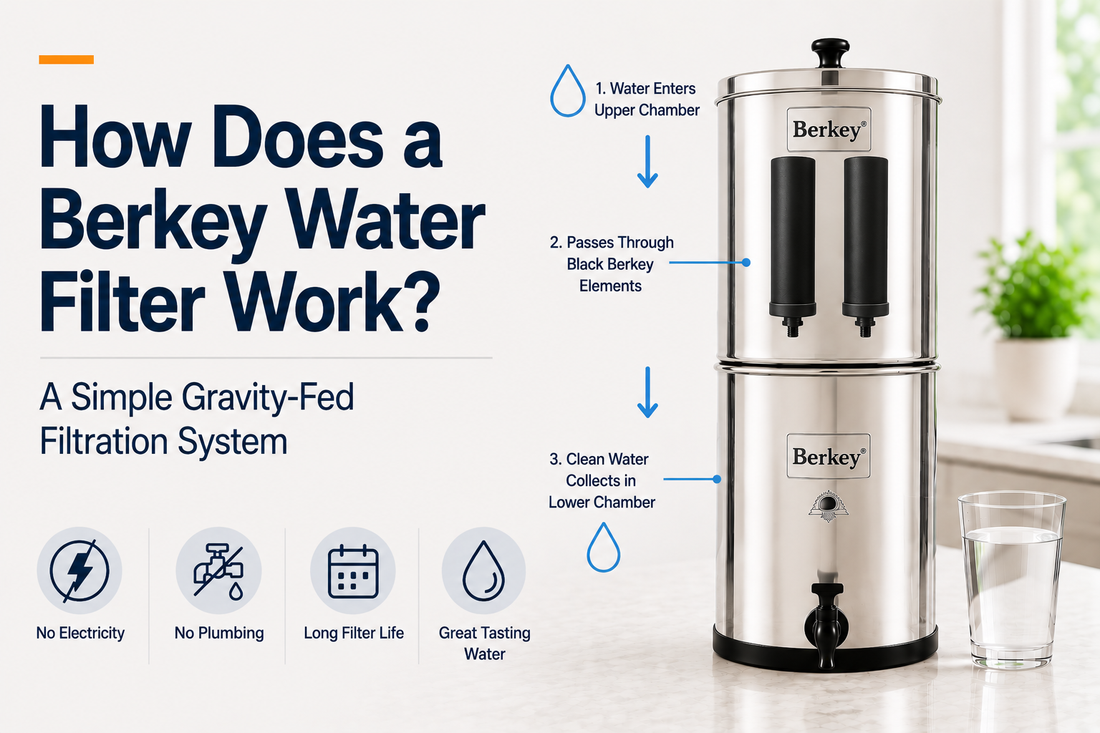
A Berkey water filter is a gravity-fed purification system made up of two stacked chambers: an upper chamber that holds untreated water and a lower chamber that collects clean, filtered water. Between them sit the heart of the system: the purification elements.
The most popular Berkey models, like the Big Berkey and Royal Berkey, use stainless steel housing that looks more like a piece of modern kitchen art than a piece of survival gear. Inside, you will find between two and four filter elements depending on the model. These elements are what do the actual work of cleaning your water.
I remember the first time I set up my Berkey. I was skeptical. How could two little black cartridges clean water that looked like weak tea from a backcountry stream? After watching it work for the first time, I understood why so many preppers, homesteaders, and even off-grid families swear by it.
The Core Components of a Berkey Filter
To really understand how does a Berkey water filter work, you have to know the parts involved.
The Upper and Lower Chambers
The upper chamber holds the water you want to filter. The lower chamber collects the purified water that is ready to drink. Water flows downward from the top chamber to the bottom, driven entirely by gravity. No electricity, no pumps, no moving parts.
The Black Berkey Purification Elements
These are the replaceable filter cartridges. Each one is made up of several layers, including a ceramic outer shell, carbon media, and specialized filtering compounds. The standard Black Berkey elements are rated to filter several thousand gallons before needing replacement, depending on the quality of the source water.
The Spigot
Most Berkey systems come with a spigot on the lower chamber so you can easily dispense clean water into a glass, a pot, or a bottle without lifting the heavy upper chamber.
The Lid and Blocking Plug
The lid keeps debris and contaminants out of the upper chamber, while the blocking plugs (small rubber or plastic plugs) let you control which elements water flows through.

How Does a Berkey Water Filter Work Step by Step
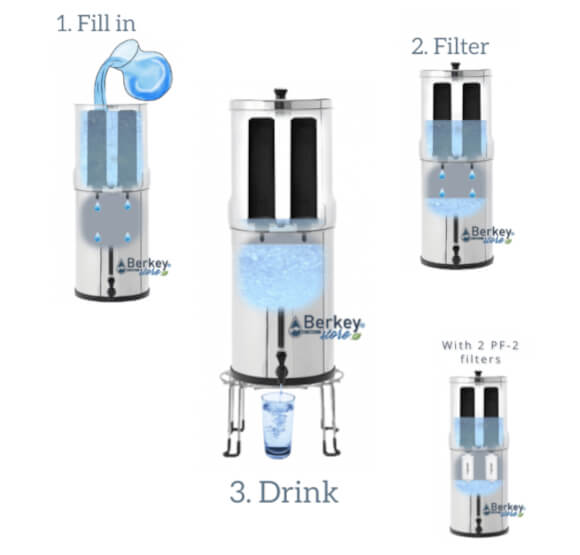
Let me break down the actual filtration process. Think of it as a six-stage journey your water takes from "maybe questionable" to "ready to drink."
Step 1: Water Is Poured Into the Upper Chamber
You start by filling the upper chamber with water from your tap, a rainwater barrel, a stream, or any other source. The system is designed to handle water that most people would never dream of drinking raw.
Step 2: Gravity Begins Pulling Water Down
There is no power involved. Gravity simply pulls the water through small holes in the upper chamber base and into the hollow center of each purification element. This is one of the reasons Berkey is so popular for emergencies and off-grid living. It works when the grid is down.
Step 3: Water Enters the Ceramic Shell
The outer wall of each Berkey element is made of a proprietary ceramic material with incredibly tiny pores. These pores are small enough to physically block bacteria, parasites, cysts, and sediment. Pathogens simply cannot fit through.
Step 4: Water Passes Through the Carbon Core
Inside the ceramic shell is a bed of activated carbon and other adsorbent media. This is where the chemical filtration happens. The carbon grabs onto chlorine, pesticides, herbicides, volatile organic compounds, and many other contaminants. The carbon essentially acts like a magnet for chemicals you do not want in your body.
Step 5: Specialty Media Target Heavy Metals and Other Contaminants
Inside each element, there are additional proprietary media designed to reduce heavy metals like lead and mercury, as well as fluoride and other difficult-to-remove substances. This is what makes Berkey stand out from many other filters on the market.
Step 6: Clean Water Exits Into the Lower Chamber
After making its way through the elements, the purified water drips into the lower chamber where it sits, ready to drink. The flow rate is slow, usually around one gallon per hour per pair of elements, but that slow speed is part of why the filtration is so thorough.
The Science Behind the Black Berkey Purification Elements
The Black Berkey elements are not your average carbon filter. There is real engineering packed into each one.
Ceramic Filtration Technology
Ceramic filters have been used for water purification for centuries. Berkey's version uses an ultra-fine ceramic shell with a pore size so small that even microscopic pathogens are physically blocked. This mechanical filtration step alone takes care of a huge percentage of contaminants in most water sources.
Activated Carbon Adsorption
Activated carbon works through adsorption, which is different from absorption. Adsorption means contaminants stick to the surface of the carbon particles. The more surface area, the more contaminants can be captured. Berkey's carbon is specially formulated to maximize this effect.
Ion Exchange and Specialty Media
Some contaminants cannot be removed by mechanical filtration or carbon alone. That is where ion exchange resins and other specialty media come in. These media are designed to attract and trap specific contaminants like heavy metals and fluoride.
Self-Sterilizing Properties
One thing I really appreciate about Berkey elements is that they are designed to be self-sterilizing. Bacteria and other pathogens that get trapped in the ceramic shell die off rather than multiplying. This is a huge plus if you are filtering water from questionable sources and do not have the luxury of frequent replacements.
What Does a Berkey Filter Remove
Understanding how does a Berkey water filter work also means understanding what it actually removes from your water.
Pathogens
Berkey elements are independently tested to remove or reduce a long list of pathogens, including E. coli, salmonella, cholera, typhoid, and many more. This makes them a serious tool for anyone dealing with compromised water supplies.
Heavy Metals
Lead, mercury, aluminum, and other heavy metals are pulled out by the specialty media inside the elements. If you live in an older home with lead plumbing, this alone can be a reason to consider a Berkey.
Chemicals and Pesticides
Chlorine, herbicides, pesticides, and many volatile organic compounds are reduced through the carbon adsorption process.
Fluoride
This is one of the more debated topics. Berkey elements are designed to reduce fluoride, though independent testing results vary. If fluoride removal is your main concern, you may want to add the optional PF-2 fluoride filters.
Sediment and Turbidity
That murky water from a rain barrel? Berkey handles it well, though very muddy water can clog the elements faster and shorten their lifespan.
How to Set Up and Prime a Berkey System
The first time you set up a Berkey, you have to prime the elements. This is something many new owners do not realize.
Filling the Elements With Water
Each element has a tiny hole on the top. You fill that hole with water from a faucet or syringe, then press the threaded cap back on. This wets the ceramic shell and allows water to flow through.
Attaching the Elements to the Upper Chamber
You simply screw the primed elements into the holes in the base of the upper chamber and tighten them by hand. A small rubber washer helps create a tight seal.
Running the First Batch of Water Through
The first batch you run through a new system may look cloudy. This is normal. Manufacturers recommend running the first batch to waste and rinsing the lower chamber before drinking.
How to Maintain a Berkey Water Filter
I have found that regular maintenance is the key to getting the most out of a Berkey system.
Cleaning the Elements
Every few months, or when you notice a slowdown in flow rate, you can clean the ceramic elements with a Scotch-Brite pad or similar abrasive sponge. I usually clean mine under running water, scrubbing gently to remove the outer layer of ceramic and expose fresh pores.
Replacing the Elements
Under normal use, Black Berkey elements can last for several thousand gallons. If you are filtering heavily contaminated water, they will wear out faster. Keep an eye on flow rate as a sign that replacement is approaching.
Cleaning the Chambers
The stainless steel chambers are easy to clean. A mild soap and warm water is usually all you need. Avoid harsh chemicals that could leave residue in the system.
Common Mistakes People Make With Berkey Filters
I have seen people make the same handful of mistakes over and over. Here is what to avoid.
Skipping the Priming Step
If you do not prime the elements properly, water will not flow through them correctly. Always fill each element before use.
Expecting Instant Filtration
Berkey filters work slowly. Trying to rush the process by overfilling the upper chamber will not speed things up. It just means the elements cannot keep up.
Filtering Hot Water
Hot water can damage the carbon and ceramic materials inside the elements. Always let water cool to room temperature before filtering.
Not Cleaning the Elements Regularly
Letting sediment build up on the ceramic shell will reduce flow rate and eventually ruin the elements. A quick cleaning every few months keeps everything running smoothly.

Real-World Experience With Berkey Filters
In my own home, I have used a Big Berkey for daily drinking water for several years. I have tested it on tap water, well water, rainwater, and even pond water when experimenting with off-grid setups.
Filtering Well Water
Well water in my area tends to be high in iron and slightly acidic. The Berkey handles both well. The water tastes noticeably cleaner, and I have peace of mind knowing heavy metals and pathogens are being addressed.
Filtering Rainwater
I have collected rainwater in barrels and run it through my Berkey before drinking. The system handles the slightly earthy taste and minor sediment without issue. Just make sure your collection surface is clean.
Filtering While Traveling
One of the things I love about Berkey is how portable the system is. I have taken my travel Berkey on camping trips and used it in remote cabins. As long as I had a water source and gravity, I had clean drinking water.
Berkey vs Other Water Filtration Methods
People often ask how Berkey compares to other filtration systems. Let me give you my honest take.
Reverse Osmosis
Reverse osmosis systems do an excellent job but waste a lot of water and usually require electricity or water pressure. Berkey uses no power and wastes very little water.
Pitcher Filters
Pitcher filters like Brita are convenient but use small carbon filters that do not remove nearly as many contaminants. They are also slow and need frequent replacement.
UV Sterilizers
UV sterilizers kill bacteria and viruses but do not remove chemicals, heavy metals, or sediment. They are a great complement to a Berkey but not a replacement.

Frequently Asked Questions About How Does a Berkey Water Filter Work
How long does it take a Berkey to filter water?
Most Berkey systems filter about one gallon per hour per pair of elements. A Royal Berkey with four elements can produce around three to four gallons per hour under ideal conditions.
Can a Berkey filter seawater?
No. Berkey elements are not designed to remove salt from seawater. They are meant for freshwater sources, including tap, well, lake, river, and rainwater.
How long do Berkey filters last?
With proper care and regular cleaning, Black Berkey elements can filter several thousand gallons of water before needing replacement. Heavy sediment or poor water quality can shorten their lifespan.
Do Berkey filters remove fluoride?
The standard Black Berkey elements reduce fluoride to some degree, but if you want the highest level of fluoride removal, adding the PF-2 attachment filters is recommended.
Is Berkey water safe for pets and plants?
Absolutely. Many pet owners use Berkey water for their dogs and cats, and gardeners often use it for sensitive plants that do not tolerate chlorine and other chemicals well.
Conclusion
A Berkey water filter works by using the simple power of gravity to push water through a series of densely packed purification elements that physically block pathogens, adsorb chemicals, and trap heavy metals. Each step in the process is designed to handle a specific type of contaminant, which is why the system is so effective across such a wide range of water sources. From my years of using and testing these systems, I can honestly say they offer a level of reliability and independence that few other filtration methods can match. Whether you are preparing for emergencies, living off-grid, or simply want cleaner water at home, understanding how does a Berkey water filter work gives you the confidence to make the most of this impressive piece of engineering. If you are curious, start small with a Travel Berkey, run a few batches of your tap water through it, and taste the difference for yourself. Once you experience that first glass of truly clean water, you will understand why so many people never go back to their old filter.