How Long Does a Refrigerator Water Filter Last: 2026 Guide
Most refrigerator water filters last about six months before they need to be replaced. With regular use and clean water supply, that timeframe holds true for most households. Keeping track of when to swap yours ensures clean, fresh-tasting water every time you fill a glass.
If you've ever taken a sip from your fridge door and noticed a strange taste, your filter is probably overdue. I learned this the hard way after months of ignoring the little indicator light. That faint plastic taste was my fridge begging for help. Understanding how long your refrigerator water filter lasts isn't just about routine maintenance. It affects water quality, ice clarity, and even the lifespan of your appliance. In this guide, I'll walk you through everything I've picked up from years of testing, swapping, and troubleshooting filters in different homes and refrigerators.
Understanding the Standard Lifespan of a Refrigerator Water Filter
The standard refrigerator water filter lifespan ranges from six months or roughly 2,000 gallons, whichever comes first. Most manufacturers design filters with this benchmark in mind because it's the point where carbon and filtering media start losing effectiveness.
Think of it like a sponge. A new sponge absorbs spills beautifully, but after months of daily use, it just spreads the mess around. Your filter works the same way. It captures chlorine, lead, and other contaminants until it reaches saturation. After that, it can't trap much anymore, and in some cases, it may even release trapped particles back into your water.
Different brands set slightly different intervals:
- EveryDrop (Whirlpool, Maytag, Amana) recommends replacing every six months or 200 gallons.
- Samsung Aqua-Pure filters typically last six months under normal household use.
- LG filters suggest replacement every six months or roughly 300 gallons.
- GE MWF filters follow the same six-month standard.
- Bosch and KitchenAid filters usually align with manufacturer guidelines of six months.
These numbers aren't random. They're based on average water usage of about one gallon per person per day. If your family drinks more water, cooks with fridge water, or uses ice daily, you might hit that six-month mark even sooner.

Factors That Affect How Long Your Filter Lasts
While six months is the standard, several real-life factors can stretch or shorten that window.
Water Quality in Your Area
If you live in an area with hard water or high sediment, your filter works harder. I've seen filters in regions with well water clog up in just three months. The carbon block gets overwhelmed faster when there's more debris in the supply line.
Household Usage
A single person who only uses water for the occasional glass will get more life out of a filter than a family of five who fills pitchers, cooks pasta, and makes daily iced coffee. Usage directly correlates with filter wear.
Type of Refrigerator Filter
There are two main types:
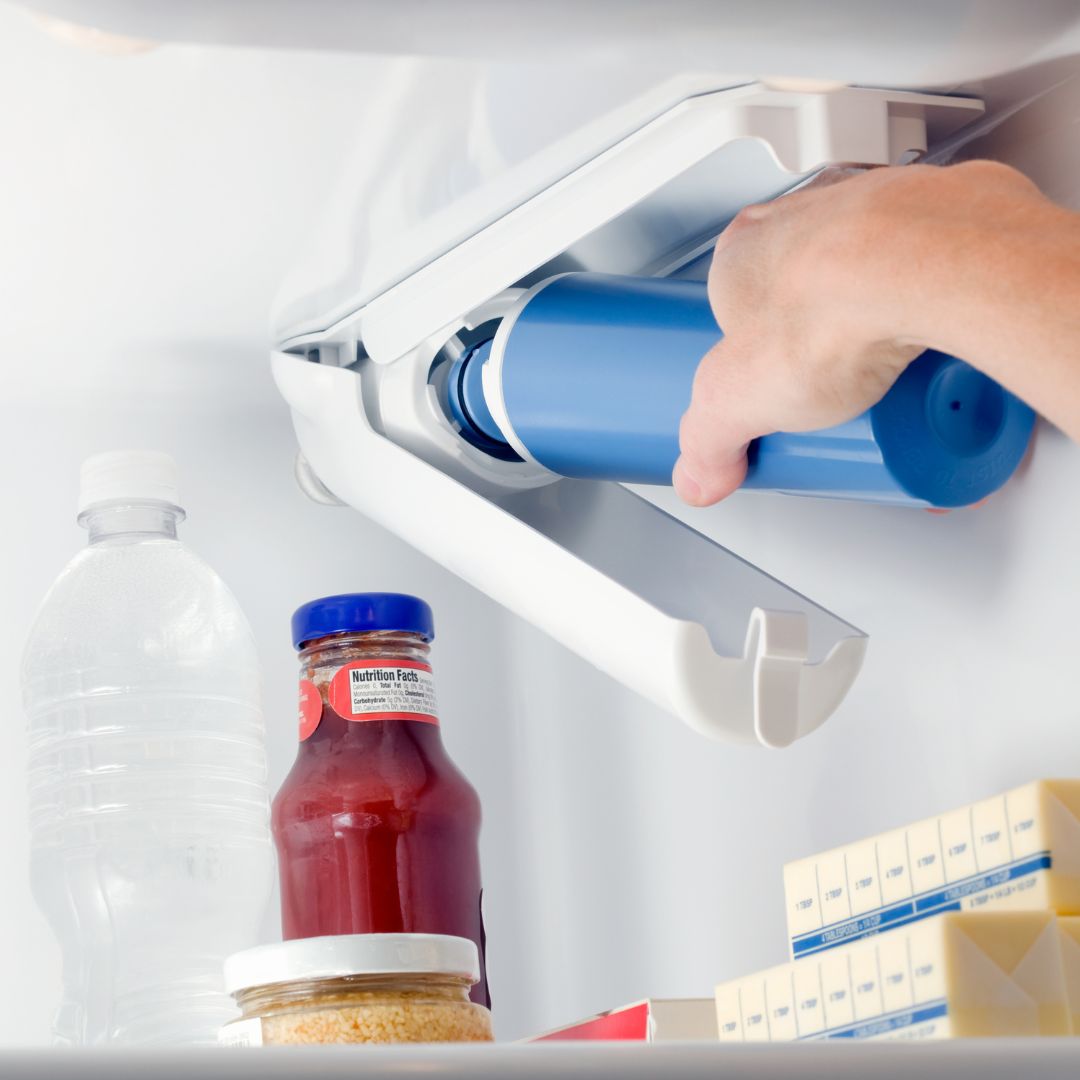
- Internal filters sit inside the fridge and usually process water more slowly, which can extend their life slightly.
- External filters mounted on the front of the fridge door handle higher water pressure and may wear down faster.
Filter Brand and Quality
Genuine OEM filters typically last their full six months. Cheaper third-party filters may claim the same lifespan, but I've personally tested many that started losing flow rate by month four. If you go with an off-brand, monitor your water taste and pressure closely.
Indicator Light or App Notifications
Modern fridges often come with a filter indicator that tracks water flow and time. Some models even send a smartphone alert. These are surprisingly accurate, but only if you actually replace the filter when prompted instead of hitting the reset button to silence the warning.
Signs Your Refrigerator Water Filter Needs Replacing Early
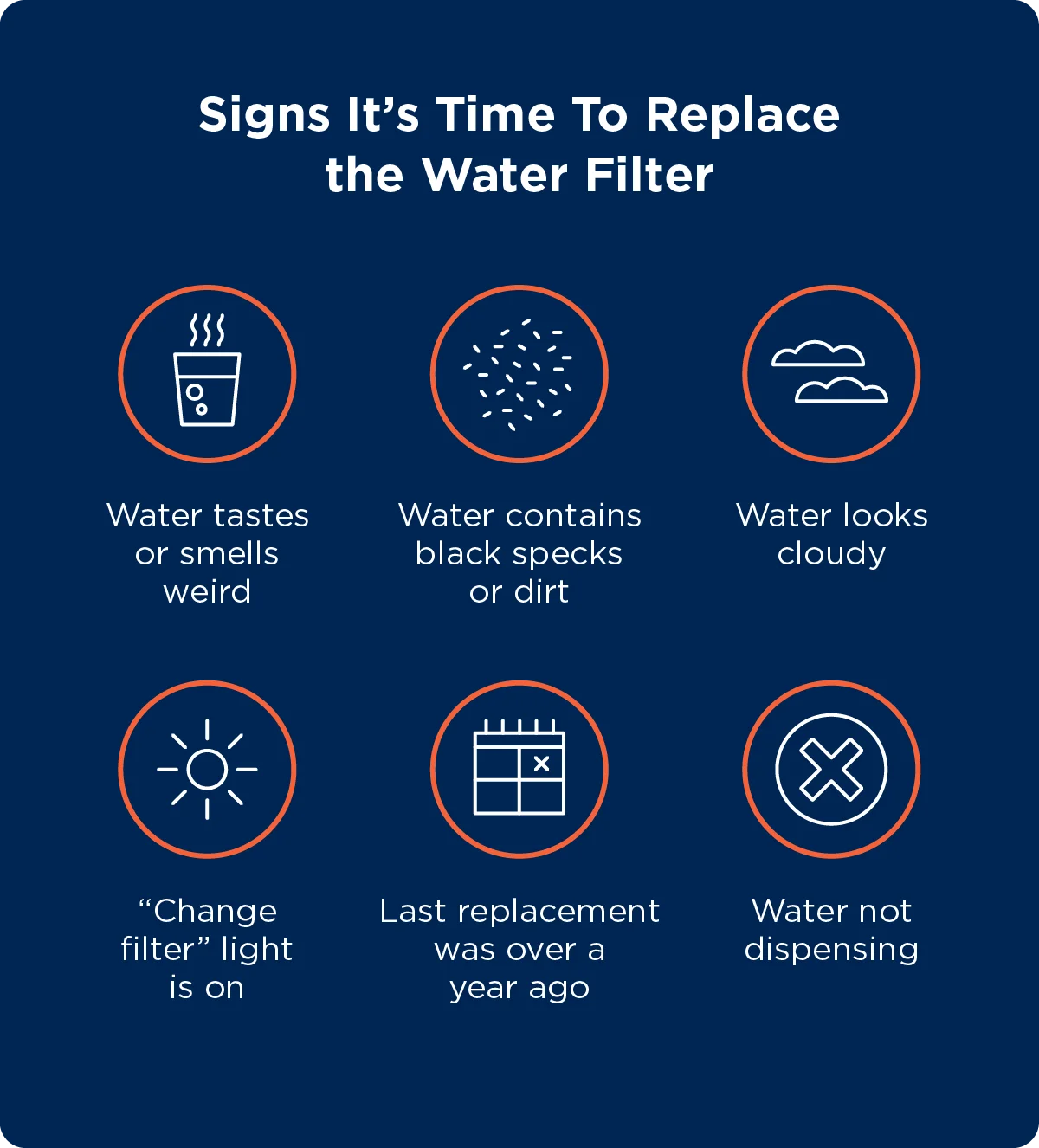
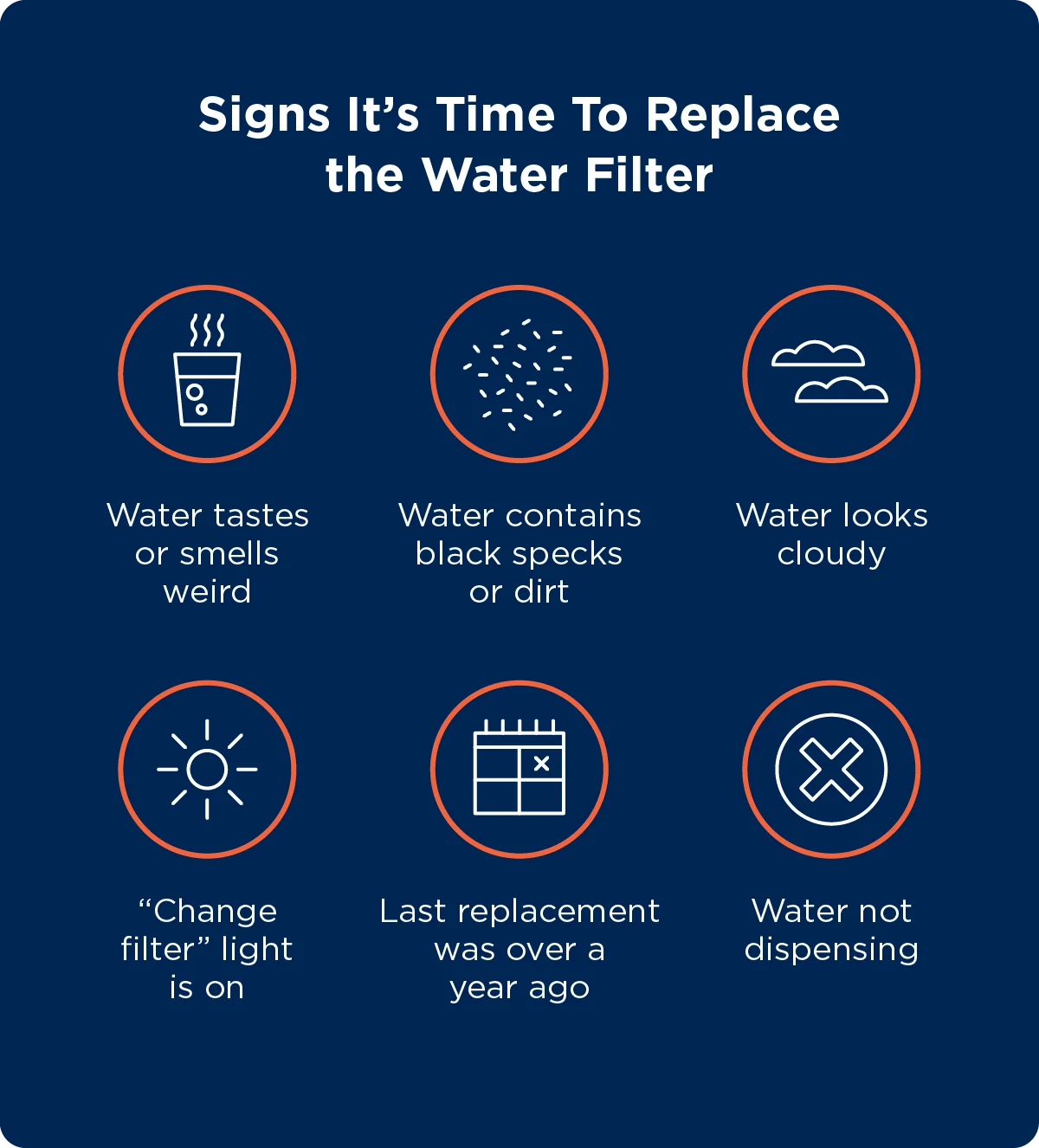
Sometimes your filter will tell you it's done long before the calendar reminder goes off. Here are the most common red flags I've encountered.
Change in Water Taste or Odor
The first sign is usually a faint plastic or chemical taste. If your water starts smelling slightly off or loses that crisp, clean flavor, the carbon inside the filter is exhausted.
Reduced Water Pressure
When the filter gets clogged, you'll notice the water flow slowing down. Filling a glass takes longer, and the ice maker might produce smaller cubes. This is the most mechanical sign of a filter on its last legs.
Cloudy Ice or Discolored Water
If your ice starts looking cloudy or your water takes on a gray tint, the filter isn't doing its job. This often means trapped particles are breaking free and entering your water supply.
Filter Indicator Light
Most refrigerators have a small light that changes from green to red or yellow when it's time. Don't ignore it. That little LED is one of the simplest yet most overlooked tools in your kitchen.
Strange Noises from the Dispenser
A struggling filter can cause the dispenser to sputter or make unusual sounds. I once had a fridge that sounded like it was clearing its throat every time I filled a cup. A new filter solved it instantly.

How to Track Your Filter Replacement Schedule
Keeping track doesn't have to be complicated. Here are a few methods that have worked for me and many homeowners I've talked to.
Use Your Phone Calendar
Set a recurring reminder every six months with a note like "Replace fridge water filter." Simple, reliable, and free.
Stick a Label on the Filter
Write the install date directly on the filter with a permanent marker. When you glance at it, you'll know exactly where you stand.
Use the Fridge's Built-in Indicator
If your fridge has one, trust it. These sensors calculate water flow and time to give you a fairly accurate estimate.
Keep Spare Filters on Hand
Buy a two-pack so you always have a replacement ready. There's nothing worse than hitting the six-month mark and realizing you're out of stock.
Mark It on a Physical Calendar
If you prefer the old-school approach, mark a big red circle on your kitchen calendar. Visual cues help more than you'd think.
Can You Extend the Life of a Refrigerator Water Filter?
Technically, you can stretch it a little, but it's risky. Some people rinse the filter or run water through it longer to "clean" it, but most modern filters are not designed to be washed or reused. Doing so can damage the carbon block and release trapped contaminants.
Here's what you can realistically do:
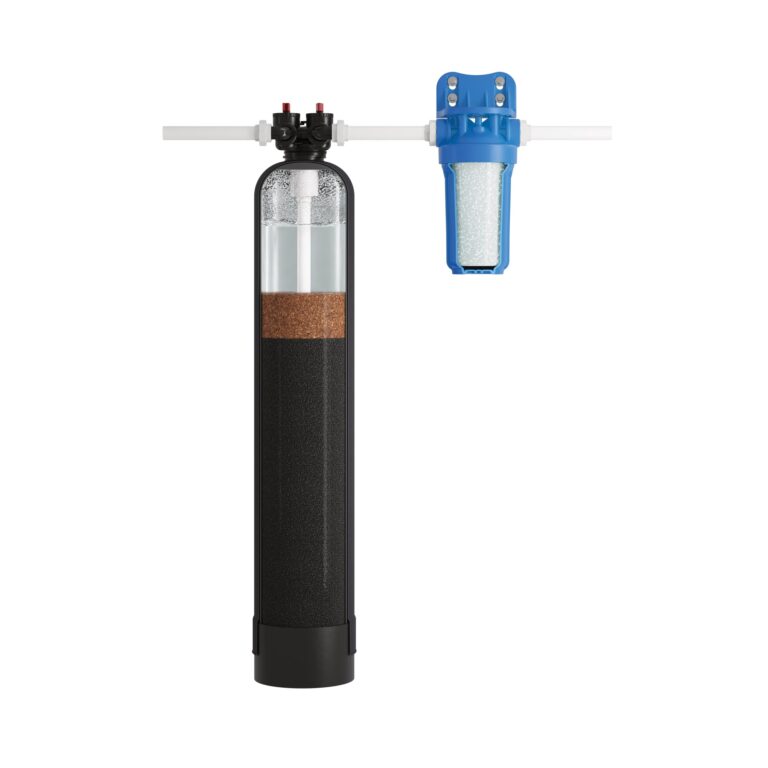
- Pre-filter your water with a whole-house filtration system to reduce the load on your fridge filter.
- Use less water from the fridge door for non-drinking purposes.
- Turn off the ice maker when you're away for long periods to reduce filter wear.
But honestly, replacing on schedule is the safest bet. The cost of a new filter is far less than the cost of drinking contaminated water or repairing a clogged water line.
What Happens If You Don't Replace Your Filter on Time
Skipping a replacement might seem harmless, but it creates a domino effect.
- Water quality drops as the carbon media saturates and can no longer trap chlorine, lead, or other contaminants.
- Bacteria growth becomes a real risk. A damp, old filter is a perfect breeding ground for microorganisms.
- Ice maker damage can occur if sediment backs up into the system.
- Reduced appliance lifespan because the water lines and valves work harder with clogged filters.
I've seen fridges where the owner hadn't changed the filter in over two years. The water smelled like a swimming pool and the dispenser barely trickled. A simple $40 filter swap fixed everything.
Choosing the Right Replacement Filter
Not all filters are created equal. Here's how to pick the best one for your fridge.
Stick With OEM When Possible
Genuine manufacturer filters are designed specifically for your model. They meet NSF certification standards for contaminant reduction.
Look for NSF Certification
Third-party filters can be fine, but always check for NSF/ANSI Standard 42 or 53 certification. This ensures the filter actually does what it claims.
Avoid Ultra-Cheap Knockoffs
I've tested filters priced under $10, and the difference is noticeable. Poor flow, weird tastes, and faster clogging are common complaints.
Match the Model Number
Each fridge brand uses specific filter models like Whirlpool EDR1RXD1, Samsung DA29-00020B, or LG LT1000P. Using the wrong one can cause leaks or poor filtration.
Frequently Asked Questions About How Long a Refrigerator Water Filter Lasts
How many gallons does a refrigerator water filter last?
Most refrigerator water filters are rated for around 2,000 gallons or about six months of typical household use. Once you hit that threshold, the carbon media loses its ability to trap contaminants effectively, even if the filter looks fine on the outside.
Can a refrigerator water filter last a year?
Technically, it might still allow water to pass through after a year, but it won't be filtering properly. The carbon inside becomes saturated and can even start releasing trapped particles. I always recommend sticking to the six-month replacement schedule for safety and performance.
Do refrigerator water filters expire even if not used?
Yes, they do. Carbon filters have a shelf life, usually around one to two years unopened. Once exposed to water, the clock starts ticking. An old, unused filter sitting in your garage won't perform like a fresh one, so always check the manufacture date before installing.
How do I know when my refrigerator filter needs changing?
Watch for changes in water taste, slower flow from the dispenser, cloudy ice, or your fridge's indicator light turning red. Any of these signs mean it's time to swap the filter, even if the calendar reminder hasn't gone off yet.
Is it bad to use a refrigerator water filter past its expiration date?
It can be. Past expiration, the filter may allow bacteria to grow or release contaminants back into your water. The risks far outweigh the savings of delaying replacement, so it's best to install a new one right on schedule.
The Bottom Line on Refrigerator Water Filter Lifespan
Your refrigerator water filter is a small component that plays a huge role in your daily life. It quietly cleans the water you drink, cook with, and freeze into ice. Most filters are designed to last around six months or 2,000 gallons, but water quality, household size, and usage habits can shift that timeline in either direction.
The smartest approach is to replace it on schedule, pay attention to the early warning signs, and invest in a quality OEM filter whenever possible. A few dollars and a few minutes of your time every six months can keep your water tasting fresh, your appliance running smoothly, and your family healthier.
If you've been ignoring that little indicator light for a while, consider this your sign. Go swap your filter today, set a reminder for the next change, and enjoy the crisp, clean taste of properly filtered water every single day.