Water Filter System vs Water Softener: Which Should You Choose?

Is DREO RO Water Filter Good?
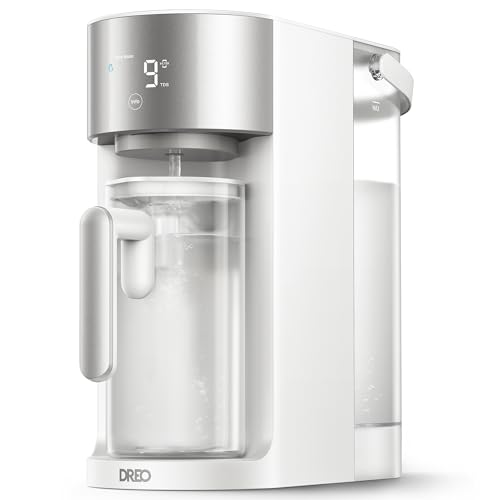
Yes, if your main goal is cleaner drinking water. The DREO countertop RO system uses reverse osmosis and includes a 3-liter reservoir, TDS monitoring, filter-life reminders, and an autofill pitcher. It also needs no permanent plumbing installation, which makes it useful for renters or people who do not want to modify a kitchen counter.
What stood out to me in this water filter system vs water softener comparison is the difference in purpose. I would reach for the DREO when my concern is drinking and cooking water. It is more like a fine sieve for water. It focuses on dissolved substances rather than trying to change the hardness of every shower and faucet in the home.
The tradeoff is simple. RO systems can waste some water and need filter changes. The DREO lists a 3:1 pure-to-drain ratio, so three parts of water can produce about one part of purified water. That is still a key cost and environmental factor to consider.
 filter system vs water softener]([https://m.media-amazon.com/images/I/31FCcQTo0AL._SL500_.jpg)
What](https://m.media-amazon.com/images/I/31FCcQTo0AL._SL500_.jpg%22,%22affiliate_link%22:%22https://www.amazon.com/dp/B0GHP4KY1Z?tag=azad010d-20&linkCode=ogi&th=1&psc=1%22,%22key_features%22:{%22h3_heading%22:%22What) Makes It Stand Out / Key Features
- Reverse OsmosisUses RO filtration to reduce dissolved substances and lower total dissolved solids in the treated water.
- Countertop DesignSits on the counter and avoids the plumbing work often needed for an under-sink system.
- 3-Liter CapacityProvides a compact water reservoir for everyday drinking and cooking needs.
- TDS MonitorShows total dissolved solids readings so users can track changes in the treated water.
- Filter ReminderProvides a reminder when filter service is due.
- Autofill PitcherUses an autofill pitcher for easier daily use.
- Self-Cleaning FeaturesThe listed design includes self-cleaning functions to reduce routine effort.
My Recommendation
Choose the DREO if your main goal is better drinking water. It makes more sense than a softener when dissolved solids, taste, or drinking-water quality are your main concerns.
| Best For | Why |
|---|---|
| Drinking water | RO treatment focuses on water used for drinking and cooking. |
| Apartments and rentals | The countertop design avoids major plumbing work. |
| TDS-conscious users | The built-in TDS display gives a simple way to monitor treated water. |
Is AquaBliss SF100 Good?
It depends on the problem you want to solve. The AquaBliss SF100 is a shower filter. It is not the same thing as a whole-house water softener. It is designed for shower use and focuses on reducing chlorine and improving the feel of shower water. That makes it a very different tool in a water filter system vs water softener comparison.
I like the basic idea for a simple shower upgrade. The unit fits into the shower line and does not require the large tank, salt, drain connection, and regeneration cycle found in a traditional ion-exchange softener. For a renter, that can be a major advantage.
But there is an important limit. A shower filter should not be treated as a cure for hard water. Hard water comes mainly from calcium and magnesium. A true water softener uses ion exchange to reduce those hardness minerals. So if your real problem is scale on fixtures, soap that does not rinse well, or hard-water buildup, this small shower filter may not solve the root problem.
 filter system vs water softener]([https://m.media-amazon.com/images/I/31NtRLMvSRL._SL500_.jpg)
What](https://m.media-amazon.com/images/I/31NtRLMvSRL._SL500_.jpg%22,%22affiliate_link%22:%22https://www.amazon.com/dp/B01MUBU0YC?tag=azad010d-20&linkCode=ogi&th=1&psc=1%22,%22key_features%22:{%22h3_heading%22:%22What) Makes It Stand Out / Key Features
- Shower InstallationDesigned to install in the shower water line rather than treat the entire home.
- Chlorine Reduction FocusThe product is marketed around reducing chlorine and improving the shower-water experience.
- Compact FormIts small form takes far less space than a whole–house treatment tank.
- Simple SetupThe shower design makes installation much simpler than a plumbed-in softener.
- Replaceable FilterThe filter cartridge can be replaced when service is needed.
- Personal Water TreatmentTreatment is limited to the shower rather than every faucet in the home.
My Recommendation
Consider the AquaBliss when you want a simple shower filter. Do not buy it expecting the full hard-water control of a true whole-house softener.
| Best For | Why |
|---|---|
| Renters | It offers a small shower-focused setup without major plumbing work. |
| Chlorine concerns | Its design focuses on reducing chlorine in shower water. |
| Simple upgrades | It is easier to install and maintain than a whole-house softener. |
water filter system vs water softener: Side-by-Side Test
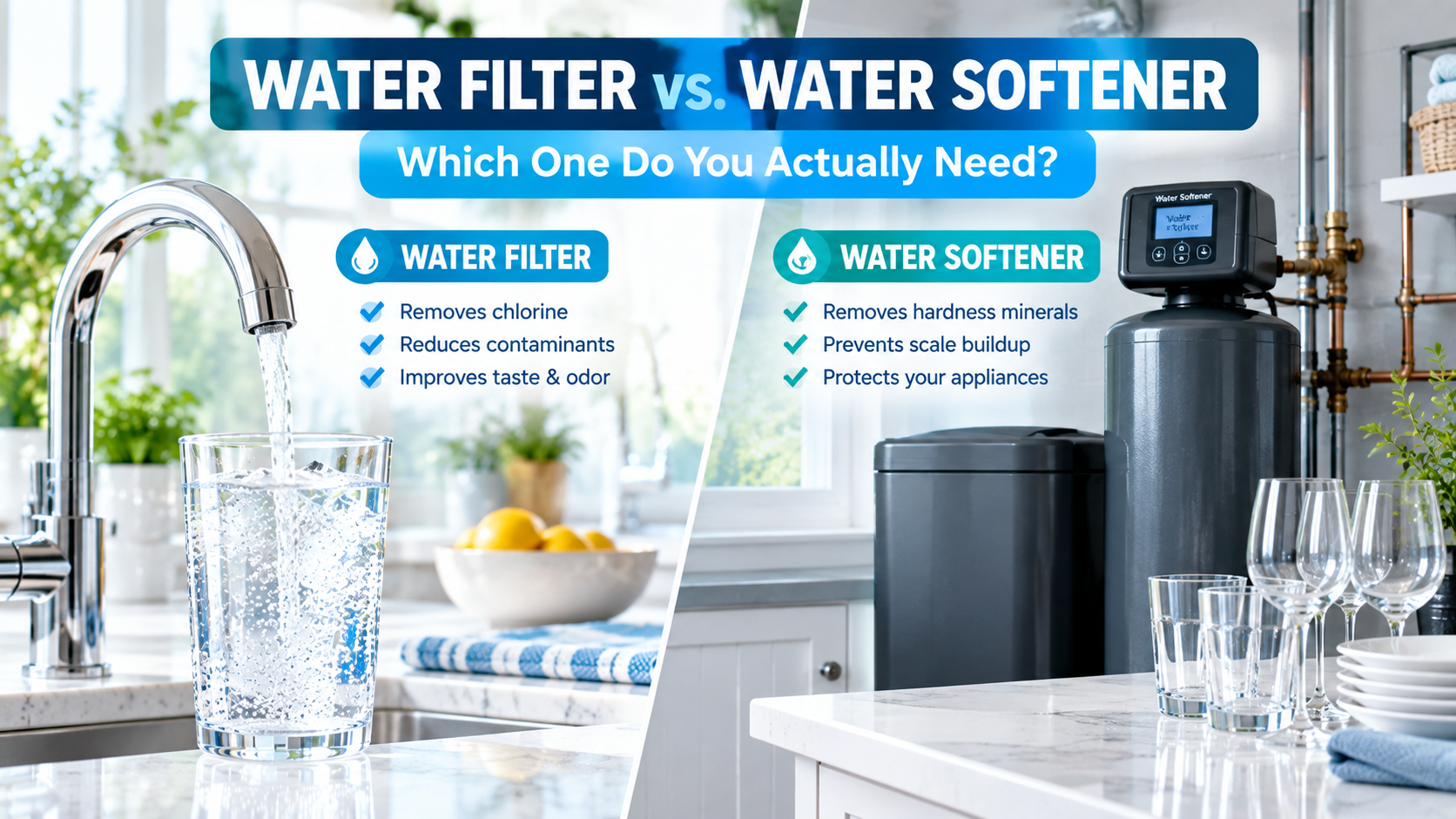
The biggest lesson from this water filter system vs water softener comparison is that these products do not do the same job. A filter targets certain contaminants or particles. A true softener targets hardness minerals such as calcium and magnesium.
The supplied AquaBliss product is a shower filter, so I compare it as the second product rather than calling it a full water softener. This keeps the comparison clear and avoids mixing two very different technologies.
1. Drinking Water: Which One Wins?
If your first concern is the water you drink, the DREO has a much more direct role.
| Feature | Product 1 | Product 2 |
|---|---|---|
| Designed for drinking water | Yes | No |
| Reverse osmosis | Yes | No |
| TDS monitoring | Yes | No |
| Kitchen use | Yes | No |
⭐ Product A – 9/10 | Product B – 3/10
The DREO has the edge for drinking and cooking water.
2. Hard Water: Which One Helps More?
Hard water can leave scale and make soap work poorly. Neither supplied product replaces a true whole-house ion-exchange softener.
| Feature | Product 1 | Product 2 |
|---|---|---|
| Targets dissolved solids | Yes, with RO | Limited focus |
| Removes hardness minerals | Can reduce some dissolved minerals in treated water | Not a true softening process |
| Whole-house treatment | No | No |
| True water softener | No | No |
⭐ Product A – 5/10 | Product B – 3/10
Neither supplied product is a replacement for a true whole-house water softener.
3. Installation: Which Is Easier?
This is where both products are simple compared with a permanent whole-house system.
| Feature | Product 1 | Product 2 |
|---|---|---|
| Permanent plumbing needed | No | Usually no |
| Countertop setup | Yes | No |
| Shower-line setup | No | Yes |
| Good for renters | Yes | Yes |
⭐ Product A – 9/10 | Product B – 9/10
Both are easy to add, but they fit different parts of the home.
4. Maintenance: Which Takes Less Work?
Every water treatment product needs care. The question is how much and how often.
| Feature | Product 1 | Product 2 |
|---|---|---|
| Filter replacement | Yes | Yes |
| Salt needed | No | No |
| Regeneration cycle | No | No |
| Routine cleaning | Some care required | Basic care required |
⭐ Product A – 8/10 | Product B – 9/10
The AquaBliss is simpler, while the DREO offers more treatment and monitoring.
5. Water Waste: What Should You Expect?
RO filtration can use extra water. A shower filter does not use an RO membrane.
| Feature | Product 1 | Product 2 |
|---|---|---|
| RO membrane | Yes | No |
| Pure-to-drain ratio | Listed as 3:1 | Not applicable |
| Drain wastewater | Yes | No RO wastewater |
| Water efficiency concern | Worth considering | Lower concern |
⭐ Product A – 6/10 | Product B – 9/10
The AquaBliss has the edge for avoiding RO-related wastewater.
6. Space: Which Fits Smaller Homes?
Space matters in apartments, condos, and small kitchens.
| Feature | Product 1 | Product 2 |
|---|---|---|
| Approximate footprint | 14.5 x 6.7 x 13.4 inches | Compact shower-line design |
| Counter space needed | Yes | No |
| Large mineral tank | No | No |
| Apartment friendly | Yes | Yes |
⭐ Product A – 8/10 | Product B – 9/10
Both save space, but the shower filter leaves the kitchen counter clear.
7. Daily Convenience: Which Feels Easier?
The best system is often the one you will actually use every day.
| Feature | Product 1 | Product 2 |
|---|---|---|
| Autofill pitcher | Yes | No |
| TDS display | Yes | No |
| Shower use | No | Yes |
| Drinking use | Yes | No |
⭐ Product A – 9/10 | Product B – 7/10
The DREO offers more visible convenience, while AquaBliss stays focused on shower use.
8. Value: Where Does Each Make Sense?
Value depends on the problem. Buying the wrong type of system is like using a raincoat to fix a leaky roof.
| Feature | Product 1 | Product 2 |
|---|---|---|
| Main purpose | Purified drinking water | Filtered shower water |
| Typical buyer need | Drinking-water quality | Shower-water concerns |
| Whole-home solution | No | No |
| Best value case | When drinking water is the priority | When shower water is the priority |
⭐ Product A – 9/10 | Product B – 8/10
Both can offer value when matched to the right problem.
Final Verdict: Which Should You Buy?
In this water filter system vs water softener comparison, the biggest point is simple: a filter and a softener are not interchangeable. The DREO makes more sense when you want treated drinking and cooking water. It offers RO filtration, TDS monitoring, and an autofill pitcher in a compact countertop design.
The AquaBliss makes more sense when your goal is shower water and simple installation. But it should not be treated as a true water softener. If your home has serious hard-water problems, test the water and consider a proper whole-house softening system built for hardness minerals.