Water Filter vs Water Softener: Which Do You Need?


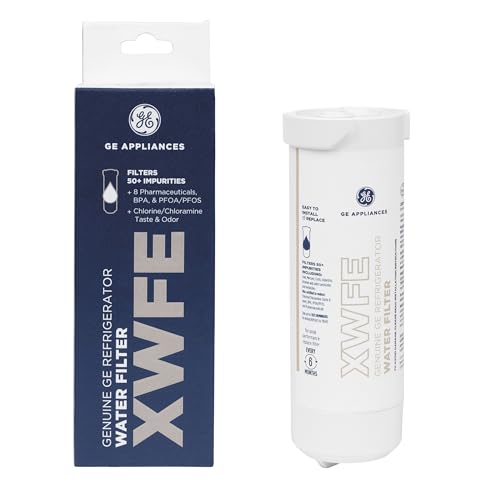
Is GE XWFE Water Filter Good?
Yes, if you own a compatible GE refrigerator and want targeted drinking-water filtration. The GE XWFE is a refrigerator cartridge, not a whole-house filter and not a water softener. That distinction matters in any water filter vs water softener comparison. The cartridge is certified for specific contaminant-reduction claims, including claims covered by NSF/ANSI 42, 53, and 401 depending on the product certification. NSF notes that certification applies to specific claims, so shoppers should check the exact contaminants listed for the model. ([NSF][1])
In a normal U.S. kitchen, I like this type of filter for its simple role. You replace the cartridge and keep using the refrigerator dispenser. If the real problem is white scale on faucets or a water heater, though, this filter is the wrong tool. A softener works on hardness by exchanging calcium and magnesium ions, while a filter may target other contaminants. ([US EPA][2])
What Makes It Stand Out / Key Features
- Targeted filtrationThe cartridge is designed to reduce specific contaminants rather than soften hard water.
- NSF certificationsThe XWFE is associated with certifications covering specific reduction claims under NSF standards.
- Refrigerator fitIt is made for compatible GE refrigerator models that use the XWFE system.
- Simple replacementThe cartridge format makes routine replacement easier than installing a whole-house treatment system.
- Drinking water focusIts main value is at the refrigerator dispenser and ice maker, not throughout the plumbing system.
- No softening functionIt does not replace calcium and magnesium ions, so it should not be treated as a conventional water softener.
My Recommendation
Consider it if your main goal is filtered drinking water from a compatible GE refrigerator. Do not buy it as a solution for hard-water scale, soap scum, or whole-home mineral control.
| Best For | Why |
|---|---|
| GE refrigerator owners | It is made for compatible GE refrigerator filtration systems. |
| Drinking-water filtration | It focuses on specific contaminant reduction claims. |
| Easy maintenance | A cartridge swap is simpler than managing a whole-home softener. |
Is AquaBliss SF100 Good?
It depends on what you want. The AquaBliss SF100 is a shower filter, not a conventional whole-house water softener. That is one of the most important facts in this water filter vs water softener comparison. A shower filter can be useful when your main concern is shower-water quality, but it should not be expected to remove the calcium and magnesium that define hard water. NSF also notes that shower-filter certification under NSF/ANSI 177 covers free available chlorine reduction. ([NSF][1])
For a U.S. renter or homeowner who wants a simple shower upgrade, its small size and easy setup can be appealing. But if your shower has heavy scale, your water heater has mineral buildup, or your entire home has very hard water, a real ion-exchange softener is a different class of product. EPA explains that conventional cation-exchange softeners remove calcium and magnesium by exchanging them with sodium or potassium ions. ([US EPA][2])
What Makes It Stand Out / Key Features
- Shower installationIt is designed to sit in the shower line rather than treat water for the whole home.
- Chlorine focusShower filters can target free chlorine when the specific product and certification support that claim.
- Compact designThe small format makes it easier to use in a shower than a full-size treatment tank.
- No salt regenerationUnlike a conventional ion-exchange softener, it does not use a brine tank and regeneration cycle.
- Point-of-use treatmentIts effect is limited to the shower connection where it is installed.
- Not a true softenerIt should not be confused with an NSF/ANSI 44 residential water softener that reduces hardness through ion exchange. ([NSF][3])
My Recommendation
Consider it for simple shower filtration when chlorine or shower-water feel is the main concern. If your goal is to reduce hard-water scale across the home, look for a certified residential softener instead.
| Best For | Why |
|---|---|
| Renters | A compact shower treatment can be easier to use than a permanent whole-home system. |
| Shower filtration | It treats water at the shower rather than the whole plumbing system. |
| No-salt setup | It does not use the salt regeneration process found in standard ion-exchange softeners. |
water filter vs water softener: Side-by-Side Test
The biggest lesson in the water filter vs water softener debate is that these systems are not interchangeable. A filter can target selected contaminants. A softener targets hardness. Water hardness mainly comes from dissolved calcium and magnesium. USGS classifies water above 180 mg/L as very hard. ([USGS][4])
The products in this comparison also show why labels can confuse shoppers. The GE XWFE is a refrigerator water filter. The AquaBliss SF100 is a shower filter. Neither is a conventional whole-house ion-exchange water softener. A true softener should be evaluated by its hardness capacity, regeneration performance, and applicable certification, such as NSF/ANSI 44. ([NSF][3])
Main Job: What Does It Solve?
Start with the problem, not the product name. This makes the water filter vs water softener choice much easier.
| Feature | Product 1 | Product 2 |
|---|---|---|
| Primary role | Drinking-water filtration | Shower-water filtration |
| Hard-water softening | No | No |
| Main location | Compatible GE refrigerator | Shower line |
| Whole-home treatment | No | No |
⭐ Product A – 9/10 | Product B – 7/10
The GE has the edge for drinking-water filtration, while the AquaBliss fits a simple shower-focused use.
Hard Water: Which Helps?
Hard water can leave scale and soap scum because calcium and magnesium react with soap and form deposits. ([USGS][4])
| Feature | Product 1 | Product 2 |
|---|---|---|
| Removes calcium and magnesium hardness | No | No |
| Controls whole-home scale | No | No |
| True ion-exchange softening | No | No |
⭐ Product A – 2/10 | Product B – 2/10
Neither product replaces a true residential water softener for hard-water control.
Drinking Water: Which Fits?
For drinking water, the exact contaminant claim matters more than the word ‘filter’ on the box.
| Feature | Product 1 | Product 2 |
|---|---|---|
| Designed for drinking water | Yes, at compatible refrigerator dispenser | No, shower use |
| Specific contaminant claims | Yes | Not its main purpose |
| Ice maker use | Yes in compatible refrigerator | No |
⭐ Product A – 9/10 | Product B – 1/10
The GE has the edge because it is built for filtered drinking water.
Shower Use: Which Fits?
If your goal is shower water, a point-of-use shower filter is far simpler than a whole-home treatment tank.
| Feature | Product 1 | Product 2 |
|---|---|---|
| Shower installation | No | Yes |
| Point-of-use shower treatment | No | Yes |
| Chlorine-focused use | Not its main role | Yes, when supported by the product claim |
⭐ Product A – 1/10 | Product B – 9/10
The AquaBliss has the edge for simple shower filtration.
Maintenance: What Takes Less Work?
Both are easier than a full water-treatment setup, but their maintenance needs are different.
| Feature | Product 1 | Product 2 |
|---|---|---|
| Routine task | Replace refrigerator cartridge | Replace shower filter media |
| Salt handling | None | None |
| Regeneration cycle | None | None |
⭐ Product A – 9/10 | Product B – 9/10
Both are simple to maintain because neither is a conventional salt-based softener.
Installation: Which Is Easier?
Installation is where small point-of-use products can beat large whole-home systems.
| Feature | Product 1 | Product 2 |
|---|---|---|
| Installation type | Refrigerator cartridge replacement | Shower-line installation |
| Plumbing changes | Minimal for compatible refrigerator | Usually minimal |
| Whole-home plumbing work | No | No |
⭐ Product A – 9/10 | Product B – 9/10
Both are easy compared with installing a whole-home softener.
Which One Should You Pick?
The water filter vs water softener question becomes simple when you match the treatment to your actual water problem.
| Feature | Product 1 | Product 2 |
|---|---|---|
| Best for drinking water | Yes | No |
| Best for shower use | No | Yes |
| Best for hard-water scale | Neither | Neither |
| Best for renters | If refrigerator compatible | Yes for shower use |
⭐ Product A – 8/10 | Product B – 8/10
There is no universal winner because each product serves a different point of use.
Final Verdict: Which Should You Buy?
The water filter vs water softener debate is really about two different jobs. If you want cleaner-tasting drinking water or specific contaminant reduction, choose a filter that is certified for the contaminants you care about. The GE XWFE is a good example of this focused approach. NSF stresses that certification applies to specific reduction claims, not every possible contaminant. ([NSF][1])
If your real problem is hard water, neither product here is the right answer. Look for a residential ion-exchange softener that reduces calcium and magnesium and meets an applicable standard such as NSF/ANSI 44. EPA notes that softeners can help with hard-water effects but may use salt and water during regeneration. ([US EPA][2]) For shower-focused filtration, the AquaBliss is the more relevant option.