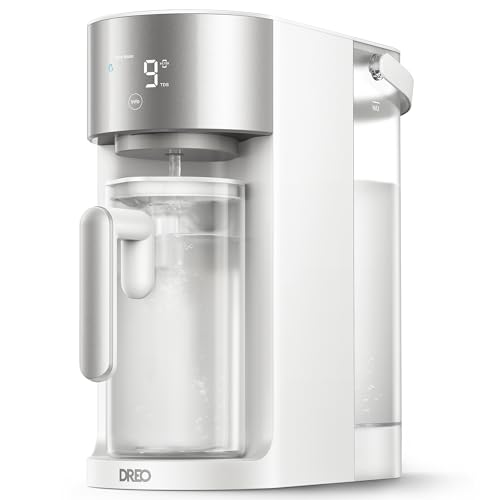
Reverse Osmosis Water Filter vs Carbon: Which Is Better?
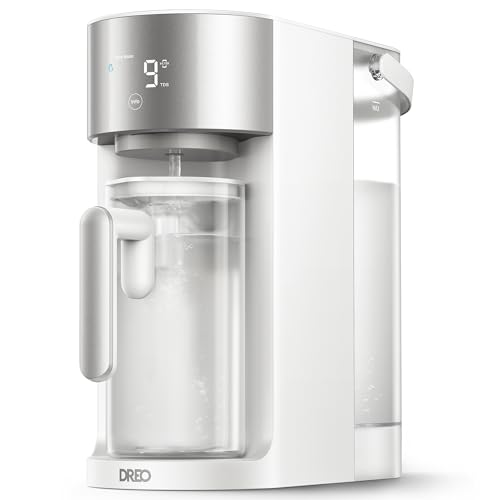

Is DREO Countertop RO Good?
Yes, if your main goal is deeper water filtration. In this reverse osmosis water filter vs carbon test, the DREO system is the more complete choice for drinking water. It uses RO technology, has a built in TDS meter, and comes as a countertop unit. It also has a filter life indicator and a self cleaning function. That makes daily use easy.
I like the countertop format because I do not need to cut into a cabinet or call a plumber. I can place it near the sink and fill the water tank. For a US kitchen, that can be a big win in a rental home or apartment. The tradeoff is water waste and a higher upfront cost than a simple carbon cartridge. If you want lower TDS, the reverse osmosis water filter vs carbon choice clearly points toward RO.
What Makes It Stand Out / Key Features
- Reverse OsmosisUses an RO membrane to remove many dissolved substances that a basic carbon filter does not target.
- TDS MeterShows total dissolved solids in the water so you can track changes before and after filtration.
- Countertop DesignThe unit sits on the counter and avoids the more complex plumbing work of many under sink RO systems.
- Filter IndicatorA filter life indicator helps show when the filter needs attention.
- Self CleaningThe system includes a self cleaning feature that can make routine care easier.
- Water RecoveryThe system is listed with a 3:1 pure to drain ratio, so some water is sent to waste during filtration.
My Recommendation
Consider it if you want deeper filtration and lower TDS. It makes the most sense for drinking and cooking water when simple taste improvement is not enough.
| Best For | Why |
|---|---|
| Apartments | Countertop design avoids major plumbing work. |
| Low TDS goals | RO is designed to reduce dissolved solids. |
| Daily drinking | It gives deeper filtration for drinking water. |
Is PUREPLUS Carbon Good?
Yes, when you mainly want better taste and basic filtration. In a reverse osmosis water filter vs carbon comparison, the PUREPLUS cartridge is the simpler tool. It is a 1 micron CTO carbon cartridge made for compatible 10 inch by 2.5 inch housings. It is listed for reducing chlorine, odor, and taste issues. It also has IAPMO certification information for NSF/ANSI 42.
What I like most is the simple design. There is no tank, pump, display, or power cord. I can swap the cartridge and keep using the same housing. That feels more like changing an air filter than managing a machine. The key limit is important, though. A carbon cartridge is not a full RO system. If your concern is dissolved salts or a broad range of dissolved contaminants, the reverse osmosis water filter vs carbon comparison favors RO.
What Makes It Stand Out / Key Features
- Activated CarbonCarbon media is designed to adsorb substances that can affect taste, odor, and chlorine levels.
- 1 Micron RatingThe cartridge uses a fine nominal filtration rating for suspended particles.
- Standard SizeThe cartridge fits compatible 10 inch by 2.5 inch filter housings.
- No ElectricityThe cartridge itself needs no power, pump, display, or electronic control.
- NSF/ANSI 42 InformationThe product is listed with IAPMO certification information for NSF/ANSI 42 related performance.
- High CapacityThe product is marketed with a capacity of up to 13,000 gallons, depending on water quality and use.
My Recommendation
Choose it if your tap water is already safe and you mainly want better taste, odor control, and basic particle filtration at a low cost.
| Best For | Why |
|---|---|
| Taste improvement | Carbon is well suited to chlorine and odor reduction. |
| Low budget | Replacement cartridges cost far less than a complete RO machine. |
| Existing housings | It can work with compatible standard filter housings. |
reverse osmosis water filter vs carbon: Side-by-Side Test
The biggest lesson from a reverse osmosis water filter vs carbon comparison is simple: these filters solve different problems. RO focuses on dissolved contaminants. Carbon focuses more on taste, odor, chlorine, and particles.
That does not make carbon a weak choice. If your municipal water is already safe and tastes fine after carbon treatment, a simple cartridge may be all you need. If you want lower TDS and deeper filtration, RO has a wider role.
Filtration Power: Which Goes Deeper?
RO uses a membrane that can remove many dissolved substances. Carbon works mainly through adsorption and particle filtration.
| Feature | Product 1 | Product 2 |
|---|---|---|
| Main method | Reverse osmosis membrane | Activated carbon and sediment filtration |
| Dissolved solids | Strong reduction | Limited |
| Chlorine | Handled through its filter stages | A key carbon target |
| Particles | Handled by the system | 1 micron cartridge |
⭐ Product A – 9/10 | Product B – 7/10
RO has the edge when the goal is deeper filtration and lower dissolved solids.
Taste and Odor: Which Wins?
Both can improve water taste, but carbon is especially useful when chlorine or odor is the main issue.
| Feature | Product 1 | Product 2 |
|---|---|---|
| Chlorine taste | Good | Very good |
| Odor | Good | Very good |
| Mineral taste | Strong reduction | Limited effect |
| Taste style | Very clean and light | More like filtered tap water |
⭐ Product A – 8/10 | Product B – 9/10
Carbon has the edge when chlorine and odor are the main taste problems.
Setup: Which Is Easier?
Setup matters in real homes. A simple cartridge can be easier than a powered filtration machine.
| Feature | Product 1 | Product 2 |
|---|---|---|
| Installation | Countertop setup | Needs compatible housing |
| Electricity | Required | Not required |
| Plumbing work | Minimal for countertop use | Depends on the housing |
| Space | Needs counter space | Housing can sit under the sink |
⭐ Product A – 8/10 | Product B – 9/10
Carbon is simpler if you already own a compatible housing.
Water Waste: Which Uses Less?
This is a major reverse osmosis water filter vs carbon difference. Carbon filters do not need an RO reject water stream.
| Feature | Product 1 | Product 2 |
|---|---|---|
| Reject water | Yes | No RO reject stream |
| Listed ratio | 3:1 pure to drain | Not applicable |
| Water efficiency | Lower than simple carbon filtration | High |
⭐ Product A – 7/10 | Product B – 10/10
Carbon has the clear edge for water efficiency.
Cost: Which Is Easier on Your Wallet?
The price gap can be large. An RO machine is a complete system, while the PUREPLUS item is a replacement cartridge.
| Feature | Product 1 | Product 2 |
|---|---|---|
| Upfront cost | Higher | Lower |
| Equipment included | Complete countertop unit | Replacement cartridge |
| Housing needed | No separate housing needed | Yes, if not already owned |
| Running cost | Filter replacement and water use | Mainly cartridge replacement |
⭐ Product A – 7/10 | Product B – 9/10
Carbon has the edge for low-cost basic filtration.
Maintenance: Which Is Simpler?
Both need regular care. The difference is the type of care they need.
| Feature | Product 1 | Product 2 |
|---|---|---|
| Filter changes | Required | Required |
| Filter indicator | Yes | No electronic indicator on the cartridge |
| Cleaning | Self cleaning feature | Housing should be cleaned during changes |
| Moving parts | More components | Very few |
⭐ Product A – 8/10 | Product B – 9/10
Carbon wins on simple maintenance, while RO offers more built-in guidance.
Who Should Buy It?
The best choice depends on the water problem you want to solve.
| Feature | Product 1 | Product 2 |
|---|---|---|
| Low TDS goal | Strong fit | Weak fit |
| Chlorine taste | Strong fit | Strong fit |
| Small budget | Less suitable | Strong fit |
| Rental home | Strong fit as countertop unit | Strong fit with suitable housing |
⭐ Product A – 9/10 | Product B – 8/10
RO fits deeper filtration goals, while carbon fits simple and low-cost filtration.
Final Verdict: Which Should You Buy?
The reverse osmosis water filter vs carbon debate comes down to the job. Choose the DREO RO system if you want deeper filtration, lower TDS, and a countertop system with useful controls. Choose the PUREPLUS carbon cartridge if your tap water is already safe and your main goal is better taste, odor control, and basic particle filtration.
For a simple kitchen upgrade, carbon can be enough. For broader dissolved contaminant reduction, RO is the more suitable tool. Before buying either one, check your local water report and the contaminants that matter in your home.