How Often to Replace Pur Water Filter in 2026 (Expert Picks)
Figuring out how often to replace your PUR water filter doesn't have to be complicated, but the answer isn't a simple one-size-fits-all date. What you need is a clear way to assess your specific situation to ensure you're always getting the cleanest, best-tasting water.
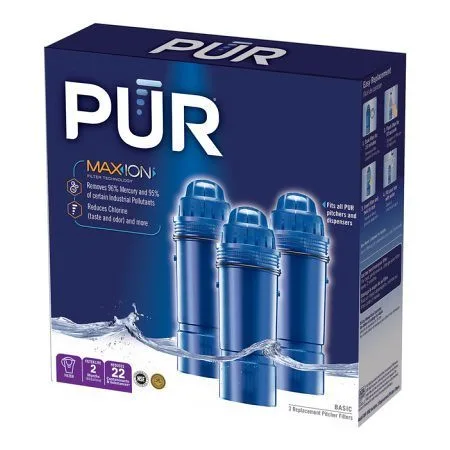
Manufacturer specifications for many PUR pitcher filters, like the PUR Basic Pitcher Filter (model PPF1000), typically suggest a replacement every two months or after filtering 40 gallons of water. Our research indicates that understanding a few key variables will help you decide if your filter needs changing sooner rather than later.
Why Filter Lifespan Isn't One-Size-Fits-All
Think of your PUR water filter like a sponge for contaminants. The more it soaks up, the more saturated it gets. Eventually, it just can't hold any more, and its effectiveness drops. Our research shows that usage volume is the primary driver, but local water chemistry is a close second.
For context, the U.S. Environmental Protection Agency (EPA) highlights that water quality can vary significantly by region, impacting how hard any filtration system must work.
What The Package Says: Manufacturer Guidelines
Every PUR water filter comes with an expected lifespan, and this is your most important starting point. Manufacturers like PUR put this information on the product packaging and often on their official website. For example, many standard PUR pitcher filters are rated for approximately 40 gallons of water or roughly two months of use. It's crucial to remember that these are often ideal-scenario figures.
- Gallon Capacity: This tells you how much water the filter is designed to process before its filtering media becomes saturated.
- Monthly Recommendation: This is a safeguard, acknowledging that even with light use, filters can degrade or become less effective over time and can potentially harbor unwanted microbial growth if left too long.
Manufacturer specifications confirm that most PUR pitcher filters aim for this dual benchmark for optimal performance.
How Much Water Are You Actually Filtering?
This is the biggest variable when deciding how often to change your PUR filter. If you’re filling up a pitcher multiple times a day for drinking, cooking, and making coffee, you're going to go through that 40-gallon capacity much faster than someone who only filters one pitcher a week.
To help you estimate, consider these scenarios:
- Heavy Use: A family of four constantly refilling glasses, making ice, and using filtered water for cooking might hit the 40-gallon mark in as little as 3-4 weeks.
- Moderate Use: A household of two or three, using filtered water for drinking and perhaps one large batch for a coffee maker daily, might find the filter lasts closer to the recommended two months.
- Light Use: If you're a single person who only filters a pitcher every few days, you might be tempted to keep the filter in for longer. However, even with infrequent use, it's generally advised to replace it within the recommended 2-month timeframe. Stagnant water left in the pitcher can also introduce issues over time.
Signs Your PUR Filter Needs Changing (Don't Ignore These!)
Even if you're not tracking gallons precisely, your senses are excellent indicators that your PUR filter might be past its prime. Paying attention to these signs can help you avoid drinking less-than-ideal water and ensure you're getting the benefits of your filtration system.
Taste and Smell Tests
Does your water start to taste… well, like tap water again? The primary job of your PUR filter is often to reduce chlorine taste and odor, along with other impurities. If that familiar chlorine smell or off-flavor creeps back in, it's a significant sign that the filter's active media, like activated carbon, is used up and can no longer effectively adsorb these compounds.
Flow Rate Drop-off
Have you noticed that filling your PUR pitcher takes significantly longer than it used to? A slower drip rate is often the first physical clue that your filter is becoming clogged. As the filter traps more sediment and particles, the pathways for water to pass through become progressively narrower. Eventually, this can slow to a trickle, making the entire process frustratingly slow.
Visible Water Quality Changes
If you start seeing murky water, sediment, or cloudiness returning to your pitcher, it's a clear red flag. This indicates that the filter has reached its capacity and can no longer effectively capture suspended particles in the water. It might even suggest that the filter is beginning to release some of the contaminants it has already trapped.
Mistakes People Make With PUR Filters
Making a mistake with your filter replacement schedule can undermine the whole point of using a water filter. Our analysis of user feedback and manufacturer guidance points to a few common missteps.
- Sticking to the Calendar, Not the Usage: Relying solely on the "two-month" rule without considering if you're a heavy or light user can mean replacing a filter too soon or, more commonly, too late.
- Ignoring Sensory Cues: Thinking "it's not time yet" even when the water tastes funny or the flow is painfully slow. Your senses are direct feedback mechanisms.
- Assuming More Water is Always Better: Some users think a filter is "good" as long as water is coming through, without realizing that the quality of that water has likely diminished significantly.
- Not Properly Rinsing New Filters: While not directly about when to change, incorrect setup can impact initial performance and how long the filter lasts. Always follow the manufacturer's instructions for preparing a new filter.
- Leaving Old Filters in Too Long: This is perhaps the most critical. An exhausted filter offers little to no benefit and, in some circumstances, could potentially become a source of contamination itself as trapped materials might be released.
When To Change: A Simple Decision Guide
Deciding on the right time to swap out your PUR water filter comes down to a simple workflow. You don't need complex tools, just your filter, a calendar, and your senses.
Step 1: Check the Manufacturer's Recommendation. Find the stated gallon capacity and monthly guideline for your specific PUR filter model. This is your baseline.
Step 2: Assess Your Household's Water Usage. Be honest here. Are you a daily user, multiple times a day? Or is it more of an occasional thing?
Step 3: Monitor for Signs of Exhaustion. Regularly pay attention to taste, smell, and flow rate. Are there any changes that suggest the filter is struggling?
Step 4: Apply the "Whichever Comes First" Rule.
- If you hit the gallon capacity before the two-month mark, change it now.
- If the two-month mark arrives before you hit the gallon capacity, change it now.
- If you notice any significant negative change in taste, smell, or flow rate, change it immediately, regardless of the date or gallon count.
This systematic approach ensures you're always prioritizing effective filtration.
Getting the Most Out of Your PUR Filter
To maximize the life and effectiveness of your PUR water filter, consistent adherence to the replacement schedule is key. Beyond just changing it on time, ensuring proper use and storage can indirectly support its performance. Always store your PUR pitcher and filtered water in the refrigerator, as cooler temperatures can help slow down potential microbial growth. Properly rinse new filters according to their instructions before first use to remove any residual dust and ensure optimal flow from the start.
As of 2026, manufacturer recommendations for standard pitcher filters remain consistent with the 2-month/40-gallon guideline, emphasizing regular replacement for the best water quality.
How Long Do PUR Filters Last in Hot Climates?
Our research indicates that extreme temperatures don't directly affect the physical lifespan of a PUR water filter cartridge itself, provided it's stored correctly. The primary factors remain your water usage and the inherent quality of your tap water. However, in warmer climates, people tend to drink more water and frequently keep pitchers in the refrigerator, which can lead to higher overall usage. This increased consumption, not the climate itself, will cause the filter to reach its capacity sooner.
Can You Use a PUR Filter Longer if Your Water is Very Clean?
While using a PUR filter with very clean tap water might mean it won't clog as quickly with sediment, it doesn't grant you an indefinite lifespan. The active filtering media, such as activated carbon, has a finite capacity for absorbing contaminants like chlorine and its byproducts. Even if your water has low levels of visible impurities, these chemical absorbers will eventually become saturated. Manufacturer guidelines suggest sticking closely to the recommended replacement schedule to ensure ongoing contaminant reduction.
What Happens If I Don't Change My PUR Filter?
Not changing your PUR water filter as recommended can lead to a few undesirable outcomes. Firstly, the filter's ability to reduce contaminants like chlorine, lead, or mercury (depending on the filter type) will diminish significantly. This means the water you're drinking may not be as pure as you believe. Secondly, an exhausted filter can start to release previously trapped particles or contaminants back into the water.
Furthermore, a consistently wet environment within an old filter media can potentially become a breeding ground for bacteria or mold, which is certainly not something you want in your drinking water.