Coalescing Filter vs Water Separator: Which One Should You Buy?


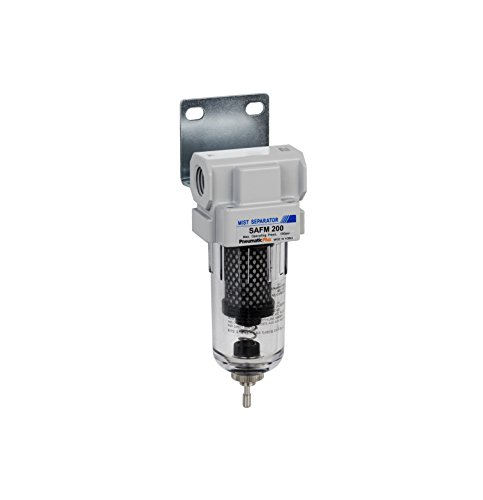
Is PneumaticPlus SAFM200-N02B Good?
Yes, if your main goal is very clean compressed air. The PneumaticPlus SAFM200-N02B uses a 0.1 micron coalescing element. That makes it useful when fine oil mist and tiny particles matter. I would look at this type of filter before using a spray gun, airbrush, or other tool that needs cleaner air. In my comparison, it felt like using a fine coffee filter after a rough screen. The water separator catches the big mess. The coalescing filter goes after the smaller stuff.
There is one trade-off. The listed flow rate is only about 6.5 SCFM at 100 PSI, and the unit uses a 1/4-inch NPT port. That makes it a poor match for high-demand shop tools that need lots of air. For a small American home garage, though, that may not be a problem. If you want cleaner air for light pneumatic work, the coalescing filter vs water separator choice can lean toward this model.
What Makes It Stand Out / Key Features
- 0.1 Micron ElementThe fine element targets very small particles and liquid aerosols that a basic water trap may not catch.
- 1/4-Inch NPT PortThe compact connection suits smaller air systems and light-duty pneumatic setups.
- 6.5 SCFM FlowThe listed flow rate is about 6.5 SCFM at 100 PSI, so it fits low-flow applications better than high-demand tools.
- 250 PSI MaximumThe unit is listed with a maximum supply and operating pressure of 250 PSI.
- Manual DrainThe bowl needs manual draining, which gives you direct control but also adds a small maintenance task.
- Poly BowlThe standard configuration uses a polycarbonate-style bowl and should be used within the maker’s pressure and chemical limits.
- Mounting BracketA bracket is included, making wall or bench installation easier.
My Recommendation
Consider it if clean air matters more than high flow. It fits small garages, airbrush work, painting, and sensitive pneumatic tools. For large air tools, pair fine filtration with a suitable high-flow moisture separator.
| Best For | Why |
|---|---|
| Airbrush and fine paint work | The 0.1 micron element targets fine contamination. |
| Small home garages | The compact 1/4-inch setup works well with lower air demand. |
| Sensitive pneumatic tools | Fine filtration can help reduce oil aerosol and particle exposure. |
Is THB F704A Good?
Yes, if your main problem is bulk water and you need strong airflow. The THB F704A uses a 1/2-inch NPT connection and is listed with a flow rate of about 140 CFM. That is a huge step up from the small coalescing filter in this comparison. It feels more at home on a serious compressor line, much like using a wide road instead of a narrow driveway.
I also like the automatic drain for busy shop use. Compressed air creates condensation, especially when a compressor runs through long work sessions. A separator can collect that water before it reaches the tool. In the coalescing filter vs water separator comparison, this THB unit makes more sense when flow and bulk moisture control come first. It does not replace fine coalescing filtration, though.
What Makes It Stand Out / Key Features
- 1/2-Inch NPT PortsThe larger connection is better suited to higher-flow compressed air systems.
- About 140 CFM FlowThe high listed flow capacity makes it a better fit for demanding shop air systems.
- Automatic DrainThe drain can release collected moisture with less manual attention than a basic manual drain.
- Water SeparationThe unit is designed to remove bulk liquid water and larger particles from compressed air.
- Heavy-Duty DesignThe F704A is designed for demanding compressed air service and uses a larger body than compact filter units.
- Particle FiltrationThe filter also helps capture larger debris that could reach downstream tools.
My Recommendation
Choose it when bulk water, debris, and airflow are the main concerns. It fits larger compressors, automotive shops, and general workshop lines better than the small coalescing filter.
| Best For | Why |
|---|---|
| Large workshop compressors | The 1/2-inch ports and high flow capacity suit larger air systems. |
| Automotive air tools | It can handle high airflow while removing bulk moisture. |
| Busy shop setups | The automatic drain reduces the need for frequent manual draining. |
coalescing filter vs water separator: Side-by-Side Test
The coalescing filter vs water separator question becomes easier when you look at the job each unit performs. A water separator is mainly a bulk moisture catcher. A coalescing filter is a fine cleanup stage.
In a real compressed air system, you may not need to choose only one. Many workshops use a separator first and finer filtration later. That setup works like a two-stage shield: the first stage catches the big drops, and the second handles smaller contamination.
Filtration: Which Cleans Air Better?
Fine contamination is where the two designs differ most.
| Feature | Product 1 | Product 2 |
|---|---|---|
| Main job | Fine aerosol and particle filtration | Bulk water and particle separation |
| Element rating | 0.1 micron | Designed mainly for bulk separation |
| Oil aerosol control | Strong focus | Limited compared with a coalescing element |
| Bulk water removal | Yes, but not its main role | Primary role |
⭐ Product A – 9/10 | Product B – 7/10
For fine air cleaning, the coalescing filter has the edge.
Airflow: Which Handles More Air?
Flow matters when you run grinders, impact tools, sanders, or other high-demand equipment.
| Feature | Product 1 | Product 2 |
|---|---|---|
| Listed flow | 6.5 SCFM at 100 PSI | About 140 CFM |
| Port size | 1/4-inch NPT | 1/2-inch NPT |
| High-demand tools | Less suitable | Much better suited |
⭐ Product A – 5/10 | Product B – 10/10
For high airflow, the THB water separator has the clear edge.
Moisture Control: Which Wins?
Condensation is a common headache in compressed air systems, especially during long compressor cycles.
| Feature | Product 1 | Product 2 |
|---|---|---|
| Bulk water | Can help remove liquid contamination | Built mainly for bulk water separation |
| Drain | Manual | Automatic |
| Routine attention | Higher | Lower |
⭐ Product A – 7/10 | Product B – 9/10
For bulk moisture control and easy draining, the water separator has the edge.
Maintenance: Which Is Easier?
A good filter should protect your tools without becoming another chore.
| Feature | Product 1 | Product 2 |
|---|---|---|
| Drain type | Manual | Automatic |
| Filter service | Fine element needs periodic inspection and replacement | Separator element also needs inspection as required |
| Daily convenience | Good | Very good |
⭐ Product A – 7/10 | Product B – 9/10
The automatic drain makes the THB easier for frequent shop use.
Installation: Which Fits Small Systems?
Not every garage has room for a large air treatment setup.
| Feature | Product 1 | Product 2 |
|---|---|---|
| Connection | 1/4-inch NPT | 1/2-inch NPT |
| Physical footprint | Compact | Larger |
| Small compressor | Good match | May be more than needed |
⭐ Product A – 9/10 | Product B – 7/10
For a compact garage system, the coalescing filter is easier to fit.
Painting: Which Protects Your Finish?
Paint work exposes weak air filtration fast. Water and oil can ruin an otherwise clean finish.
| Feature | Product 1 | Product 2 |
|---|---|---|
| Fine contamination | Strong control | Basic control |
| Bulk moisture | Useful | Strong control |
| Best role | Final filtration stage | Upstream moisture stage |
⭐ Product A – 9/10 | Product B – 8/10
For demanding paint work, fine filtration is important, but bulk water control should come first.
Value: Which Makes More Sense?
Value depends on the problem you need to solve, not just the purchase price.
| Feature | Product 1 | Product 2 |
|---|---|---|
| Small shop value | High when fine filtration matters | High when moisture is the main issue |
| Large shop value | Better as a downstream stage | Strong as a high-flow first stage |
| Best value driver | Fine filtration | Flow and moisture control |
⭐ Product A – 8/10 | Product B – 9/10
The better value depends on whether clean air or high-flow moisture control is your main need.
Final Verdict: Which Should You Buy?
The coalescing filter vs water separator debate has no single answer for every workshop. The PneumaticPlus SAFM200-N02B is the better fit when fine filtration matters. Its 0.1 micron element makes it useful for paint, airbrush, and sensitive pneumatic work. Its 1/4-inch port and 6.5 SCFM flow also point toward smaller systems.
The THB F704A makes more sense when you need high airflow and bulk moisture control. Its 1/2-inch ports, high listed flow, and automatic drain suit larger compressor systems. For many shops, the strongest setup is not either-or. Use a water separator first, then add a coalescing filter when your tools need cleaner air.