Countertop vs Under-Sink Water Filter: Which Better
Is DREO Reverse Osmosis Water Filter 112 Good?
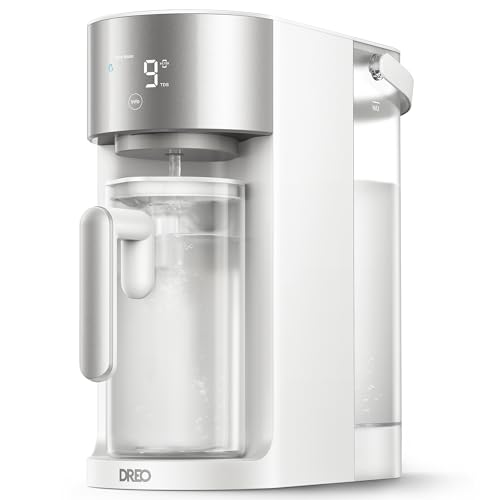
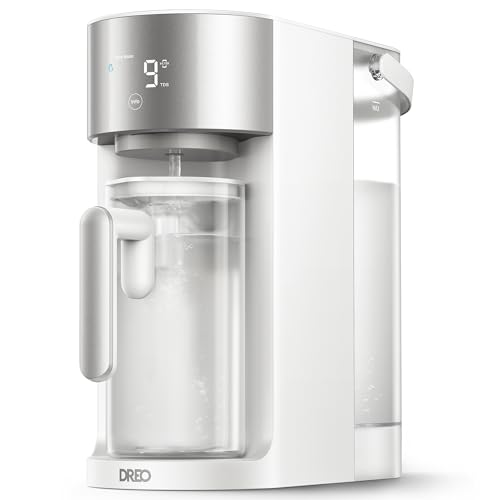
Yes, if you want broad filtration without calling a plumber. The DREO Reverse Osmosis Water Filter 112 is a countertop RO system with a 3-liter capacity. It has a built-in TDS meter, filter-life reminder, touch controls, and an automatic pitcher feature. It is also self-cleaning and uses a 3:1 pure-to-drain ratio according to its listed product specifications. In this countertop vs under-sink water filter comparison, that makes it the more feature-rich choice.
I like the simple idea behind it. Put it near an outlet, add water, and let the machine handle the work. That suits renters and people who do not want to change a faucet or cut into a water line. The trade-off is counter space. It also needs electricity and has a smaller water capacity than a plumbed system. For a small U.S. kitchen, that can matter more than it sounds.
What Makes It Stand Out / Key Features
- Reverse OsmosisRO uses a fine membrane to reduce many dissolved substances and lower total dissolved solids in water.
- 3-Liter CapacityThe built-in reservoir holds about 3 liters, which works well for personal use and smaller households.
- TDS MonitorA built-in TDS display lets you watch changes in total dissolved solids before and after filtration.
- Filter ReminderThe system provides a filter-life reminder, which can make routine maintenance easier to track.
- Automatic PitcherThe autofill pitcher adds convenience when you need several glasses of water during the day.
- No PlumbingIt sits on the counter and does not require a permanent connection to the kitchen water line.
My Recommendation
Consider it if you want RO filtration, live in a rental, or want to avoid plumbing work. It is also a good fit for people who like visible filter data and automated features.
| Best For | Why |
|---|---|
| Renters | No permanent plumbing connection is needed. |
| RO users | Reverse osmosis offers broader reduction of many dissolved contaminants. |
| Small households | The 3-liter reservoir can cover routine drinking needs without a large installation. |
Is Amazon Basics Under-Sink Water Filter Good?
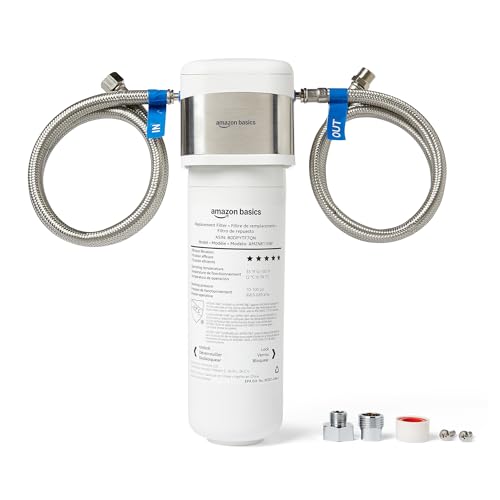
Yes, if your main goal is simple, hidden filtration for everyday tap water. The Amazon Basics Under-Sink Water Filter System uses activated carbon and is listed with NSF/ANSI 42 and 372 certification. It is designed to reduce chlorine, bad taste, and odor. The rated capacity is up to 11,000 gallons or one year, depending on use and the stated service limit.
The biggest appeal is that it disappears. Once installed, the filter stays under the sink while filtered water comes through the normal kitchen faucet. That feels natural during busy mornings. You do not have to fill a tank on the counter. In this countertop vs under-sink water filter comparison, this model wins on hidden storage, long rated capacity, and simple daily use. It does not, however, offer the same type of broad RO filtration as the DREO.
What Makes It Stand Out / Key Features
- Activated CarbonThe carbon block is designed to reduce chlorine, bad taste, and odor from municipal water.
- NSF/ANSI 42The system is listed as certified for reduction claims associated with chlorine, taste, and odor.
- NSF/ANSI 372The certification relates to lead content in plumbing components rather than broad contaminant removal.
- 11,000-Gallon RatingThe filter is rated for up to 11,000 gallons when used under the stated conditions.
- One-Year ServiceThe listed service life is up to 12 months or 11,000 gallons, whichever comes first.
- Twist-and-Lock DesignThe filter uses a tool-free twist-and-lock replacement design intended to make cartridge changes quick.
My Recommendation
Consider it if you want a hidden filter for everyday municipal water and value low-maintenance use. It makes more sense when chlorine taste and odor are your main concerns.
| Best For | Why |
|---|---|
| Busy households | Filtered water comes from the regular faucet without filling a countertop tank. |
| Municipal water users | It targets chlorine, taste, and odor and carries NSF/ANSI 42 certification. |
| Low-maintenance users | The cartridge has a long rated service life of up to 11,000 gallons or one year. |
countertop vs under-sink water filter comparison: Side-by-Side Test
This countertop vs under-sink water filter comparison is less about finding one universal winner and more about matching the filter to your home. One gives you RO filtration and portability. The other gives you a hidden setup and a long filter life.
I would also avoid judging a filter by a big contaminant list alone. Certification matters. Your local water report matters too. A filter should match the problem you actually need to solve.
Filtration: Which Goes Deeper?
The biggest difference in this countertop vs under-sink water filter comparison is the filtration method.
| Feature | Product 1 | Product 2 |
|---|---|---|
| Filtration method | Reverse osmosis | Activated carbon |
| TDS reduction | Designed to reduce TDS | Not an RO TDS-reduction system |
| Chlorine, taste, odor | RO system reduces many substances | Certified for chlorine, taste, and odor reduction |
| Certification focus | Check the exact model claims before purchase | NSF/ANSI 42 and 372 listed |
⭐ Product A – 9/10 | Product B – 7/10
The edge goes to DREO when you want RO-style filtration rather than basic carbon treatment.
Installation: Which Is Easier?
For this countertop vs under-sink water filter comparison, installation is where the DREO has a clear practical advantage.
| Feature | Product 1 | Product 2 |
|---|---|---|
| Permanent plumbing | No | Yes |
| Power | Electrical outlet required | No electricity required |
| Setup style | Place on counter and fill | Connect under the sink |
| Rental friendly | Very friendly | Less flexible |
⭐ Product A – 9/10 | Product B – 7/10
The countertop design wins if you want filtration without changing your plumbing.
Daily Use: Which Feels Easier?
A filter can be powerful and still become annoying if daily use feels like work.
| Feature | Product 1 | Product 2 |
|---|---|---|
| Water access | Countertop dispenser and pitcher | Normal kitchen faucet |
| Refilling | Reservoir must be filled | Uses the connected water line |
| Visible controls | Touch controls and TDS display | Simple filter system |
| Hands-free convenience | Autofill pitcher | Faucet-based use |
⭐ Product A – 8/10 | Product B – 9/10
The under-sink system feels more natural for a household that uses a lot of water.
Space: Which Fits a Small Kitchen?
Counter space is precious in many U.S. kitchens, especially when the coffee maker, toaster, and air fryer already compete for room.
| Feature | Product 1 | Product 2 |
|---|---|---|
| Counter space | Uses about 14.5 x 6.7 x 13.4 inches | No counter footprint |
| Under-sink space | Not required | Required |
| Portability | Easy to move | Designed as a fixed setup |
⭐ Product A – 7/10 | Product B – 9/10
The under-sink filter has the edge when every inch of counter space matters.
Maintenance: Which Needs Less Work?
Good maintenance should feel like changing a light bulb, not starting a weekend project.
| Feature | Product 1 | Product 2 |
|---|---|---|
| Filter reminder | Yes | No electronic reminder listed |
| Filter replacement | Twist-to-replace design | Twist-and-lock design |
| Cleaning | Self-cleaning features listed | Less equipment to clean |
| Rated service | Varies by filter and use | Up to 11,000 gallons or 12 months |
⭐ Product A – 8/10 | Product B – 9/10
The Amazon Basics system wins on simple, long-cycle maintenance.
Water Waste: What Should You Know?
RO filtration can produce wastewater, so this matters in any careful countertop vs under-sink water filter comparison.
| Feature | Product 1 | Product 2 |
|---|---|---|
| Filtration type | Reverse osmosis | Activated carbon |
| Pure-to-drain ratio | Listed as 3:1 | No RO wastewater process |
| Drain connection | Not required for countertop use | Not an RO drain system |
⭐ Product A – 8/10 | Product B – 9/10
The carbon filter has the simpler water-use profile because it does not rely on RO wastewater.
Capacity: Which Handles More?
Capacity can change the feel of a filter more than its feature list suggests.
| Feature | Product 1 | Product 2 |
|---|---|---|
| Water storage | 3-liter reservoir | No onboard storage tank listed |
| Filter capacity | Depends on cartridge and usage | Up to 11,000 gallons |
| Continuous faucet use | Limited by reservoir | Connected to water line |
⭐ Product A – 7/10 | Product B – 9/10
The under-sink model has the edge for high-volume household use.
Overall Value: Which Fits You?
Value depends on what you need from the filter, not just the purchase price.
| Feature | Product 1 | Product 2 |
|---|---|---|
| Best strength | RO filtration and convenience features | Simple carbon filtration and long service life |
| Best for renters | Yes | Less ideal |
| Best for busy families | Good | Very good |
| Best for broad filtration needs | Better fit | More limited |
⭐ Product A – 9/10 | Product B – 8/10
The DREO has the edge for filtration depth and flexibility, while Amazon Basics excels at simple daily use.
Final Verdict: Which Should You Buy?
This countertop vs under-sink water filter comparison shows two very different solutions. The DREO Reverse Osmosis Water Filter 112 makes more sense if you want RO filtration, a TDS display, an autofill pitcher, and no plumbing work. It is especially useful for renters and people who want more control over their drinking water.
The Amazon Basics Under-Sink Water Filter System fits people who want simple, hidden filtration for everyday municipal water. Its activated carbon design, NSF/ANSI 42 and 372 certifications, and long rated service life make it easy to understand and maintain. In short, choose DREO for deeper filtration and flexibility. Choose Amazon Basics for simple, faucet-based daily use.