What Water Filters Filter Out Fluoride: Top Picks 2026
Only reverse osmosis, activated alumina, bone char, and distillation reliably reduce fluoride.
If you’ve ever wondered what water filters filter out fluoride, you’re not alone. I’ve tested many systems at home and in the field, and the differences are real. In this guide, I break down what water filters filter out fluoride, how they work, what to avoid, and how to pick the right setup for your budget and needs. Stick with me for clear steps, honest pros and cons, and practical tips from hands-on use.
Fluoride in Drinking Water: Basics You Should Know
Fluoride occurs naturally in groundwater and is also added to many city water systems for dental health. In the U.S., the recommended level for community water is about 0.7 mg/L. The federal limit is 4.0 mg/L.
Some people want less fluoride due to taste, medical advice, or personal choice. Before you decide, test your water and learn what water filters filter out fluoride with proof. That way you set the right plan for your home.

The Short List: Filters That Remove Fluoride
If you ask what water filters filter out fluoride, the short list is below. Each has strengths, limits, and care needs. Your choice depends on source water, budget, space, and how much work you want to do.
Reverse Osmosis (RO)
- How it works: A semi-permeable membrane rejects many ions, including fluoride.
- Typical reduction: About 85–95% with a good membrane and proper pressure.
- Best use: Under-sink systems for kitchens; many have a small storage tank.
- Watch-outs: Wastes some water during flushing. Needs periodic filter and membrane changes.
Activated Alumina (AA)
- How it works: Porous aluminum oxide media adsorbs fluoride at the right pH.
- Typical reduction: Often 90%+ when pH is managed (around 5.5–6.5) and flow is slow.
- Best use: Point-of-use cartridges or whole-house tanks with backwashing.
- Watch-outs: Media needs regeneration or replacement. Performance drops if pH or flow is off.
Bone Char (Carbonized Bone Media)
- How it works: Calcium-rich media binds fluoride ions.
- Typical reduction: About 60–90%, depending on contact time and water chemistry.
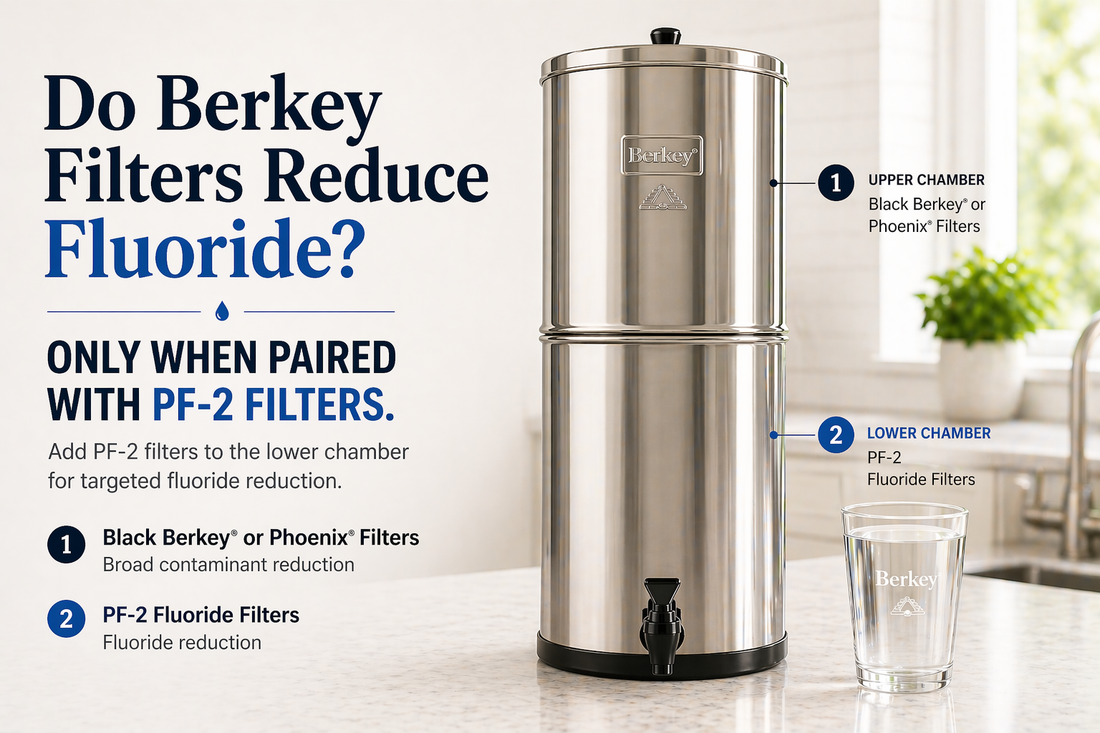
- Best use: Gravity systems and some cartridge filters.
- Watch-outs: Competing ions (like sulfate) can lower performance. Media life varies a lot.
Distillation
- How it works: Boils water and re-condenses steam, leaving most minerals behind.
- Typical reduction: Very high, often ~99% for fluoride.
- Best use: Countertop units for small batches of ultra-low-mineral water.
- Watch-outs: Slow and uses electricity. Needs cleaning to remove scale.
Strong-Base Anion Exchange (Selective Resins)
- How it works: Ion exchange resins swap fluoride for other ions.
- Typical reduction: Can be high, but is sensitive to competing ions and needs regeneration.
- Best use: Niche or lab-style systems; some whole-house setups with careful design.
- Watch-outs: Maintenance is technical. Check for a verified claim for fluoride reduction.
If your goal is crystal clear proof of what water filters filter out fluoride, focus on RO, activated alumina, bone char, or distillation. Those are the proven options with real-world data.

Filters That Do Not Remove Fluoride (Or Do Very Little)
A common mistake is buying a filter that makes water taste better but leaves fluoride in place. Here’s what usually does not work for fluoride removal:
- Basic activated carbon filters: Great for chlorine, taste, and odor, but not for fluoride.
- Standard pitcher filters: Most do not reduce fluoride unless they use special media.
- Sediment, ceramic, or pleated filters: Only remove particles, not dissolved ions like fluoride.
- UV systems: Kill microbes; they do not remove fluoride or other minerals.
- Boiling water: It does not reduce fluoride; it can even raise the concentration slightly by evaporation.
When people ask what water filters filter out fluoride, I point them away from basic carbon-only products and toward systems with verified fluoride reduction.
How To Verify A Fluoride Reduction Claim
It’s easy to get lost in marketing terms. Here’s how to check a claim the right way:
- Look for NSF/ANSI certification that specifically lists fluoride reduction. A generic “NSF certified” badge is not enough.
- Read the performance data sheet. It should show reduction levels, capacity, and test conditions.
- Test your water. Use a certified lab before and after installation, or use an at-home kit as a screening tool.
- Confirm maintenance steps. Ask how often to change media or membranes and how water chemistry affects performance.
This is the exact process I use when readers ask what water filters filter out fluoride for their home. It keeps you safe from hype and saves money long term.

How To Choose The Right Fluoride Filter For Your Home
Start with your water report or a lab test. Then match the method to your lifestyle.
- Renters or small kitchens: A countertop RO or a gravity system with bone char can work well.
- Families that cook often: An under-sink RO offers steady flow and strong reduction.
- Private wells with high fluoride: Activated alumina tanks or RO are common picks, depending on pH and total dissolved solids.
- Power-free setups: Gravity filters with bone char media are simple and portable.
- Ultra-low-mineral needs: Distillers are slow but very effective.
As you weigh what water filters filter out fluoride, think about filter life, replacement cost, and your daily routine. Good fit beats fancy features.

Costs, Maintenance, and Lifespan
Budget matters, but so does upkeep. Plan both.
- Reverse osmosis: Moderate upfront; low to moderate ongoing costs. Replace sediment and carbon pre-filters every 6–12 months; membranes last 2–3 years.
- Activated alumina: Media life depends on pH, temperature, and flow. Cartridges may need changes every few months to a year. Whole-house tanks need careful service.
- Bone char: Media life varies. Expect more frequent changes if your water has many competing ions.
- Distillers: Low maintenance but slow. Clean the boiling chamber as scale builds up.
If someone asks what water filters filter out fluoride and last the longest, I usually say RO systems with regular care, or well-managed activated alumina setups.

Real-World Tips From Testing and Installs
Here are lessons learned from years of hands-on use and helping readers:
- Test first, buy second. I once helped a family swap a pricey carbon system that did nothing for fluoride. A small lab test would have saved them hundreds.
- Mind the pH for activated alumina. When we set pH in the right range, reduction jumped from so-so to great.
- Slow the flow for gravity filters. More contact time equals better results with bone char.
- Replace on time. A high-end RO with old filters is a low-end RO.
- Check claims twice. When sellers say what water filters filter out fluoride, ask for a data sheet, not just a brochure.
Use these steps to avoid the common traps and keep your water plan simple and solid.

Taste, Minerals, and Remineralization
RO and distillation produce very low-mineral water. Some people find it flat. If that’s you, add a remineralization cartridge or a pinch of mineral salts to a pitcher. It lifts flavor and helps with coffee and tea.
This is another reason I ask people to define goals when they ask what water filters filter out fluoride. Strong reduction is key, but daily taste matters too.

Safety, Standards, and Context
Fluoride has been used to reduce tooth decay in many communities. At the same time, some households prefer lower levels based on taste, health advice, or local water quality. Both views can co-exist.
Whatever your reason, stick to evidence. Check certifications, read data sheets, and confirm with testing. That’s the most reliable path when deciding what water filters filter out fluoride for your setup.
Frequently Asked Questions of what water filters filter out fluoride
Do Brita or PUR pitcher filters remove fluoride?
Most standard pitcher filters use activated carbon, which does not remove fluoride. Look for models that clearly list fluoride reduction with independent test data.
Does boiling water remove fluoride?
No. Boiling does not remove fluoride and can slightly raise its concentration. Distillation, not simple boiling, is the heat-based method that reduces fluoride.
Is reverse osmosis better than activated alumina for fluoride?
Both can work well. RO is more set-and-forget, while activated alumina can outperform RO if pH and contact time are managed with care.
Are whole-house fluoride filters a good idea?
They can be, but they need careful design, often with activated alumina tanks and pH control. Most people choose point-of-use systems at the kitchen sink.
How can I be sure my filter is removing fluoride?
Check for certification that lists fluoride reduction, read the performance data sheet, and confirm with a lab test before and after installation.
Do ceramic or UV filters remove fluoride?
No. Ceramic filters remove particles, and UV kills microbes. Neither removes dissolved ions like fluoride.
Is distillation safe for daily drinking water?
Yes, distillers reduce fluoride very well. You may want to remineralize to improve taste and balance.
Conclusion
If you came here asking what water filters filter out fluoride, the proven answers are reverse osmosis, activated alumina, bone char, and distillation. Each method can work when matched to your water and maintained on time. Test your water, confirm certifications, and choose a setup that fits your home and habits.
Take the next step today: get a quick water test, compare two short-listed systems, and pick the one you can keep maintained. Want more help choosing? Subscribe for updates, or drop your questions in the comments.