What Micron Filter For Well Water: 2026 Buyer’s Guide
Use 5 micron for sediment, 1 micron for polishing, 0.2 for bacteria.
If you want to know what micron filter for well water is best for your home, you’re in the right place. I’ve designed and serviced hundreds of well systems, and I’ll walk you through the choices with clear steps, real setups, and simple rules that work. By the end, you’ll know exactly how to pick what micron filter for well water fits your needs, your budget, and your water test.
Why Micron Size Matters for Well Water
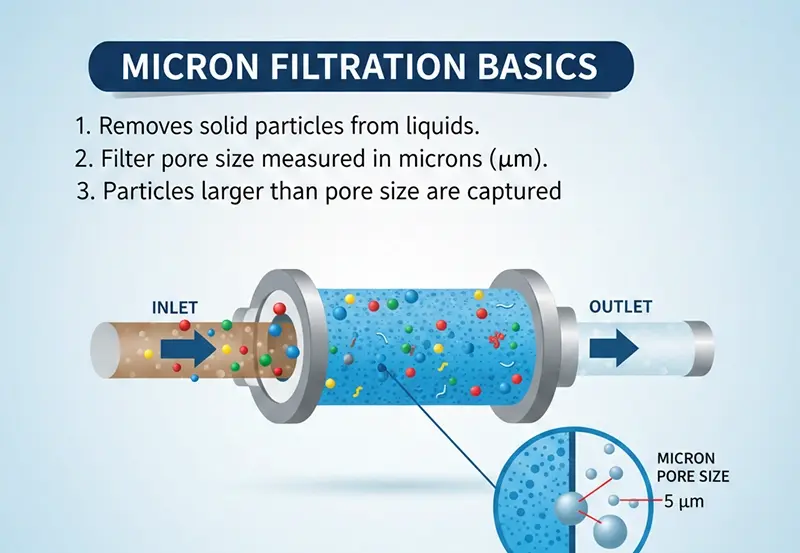
Micron size is the measure of how small a particle a filter can catch. One micron is one-millionth of a meter. For well water, micron size shapes clarity, taste, safety, and pressure.
Here is the short version. Big micron filters catch sand. Mid micron filters clear silt. Small micron filters polish water and can block some microbes. But no single filter does it all.
Small micron sizes increase pressure drop. Your shower and washer feel the hit first. So we pick the smallest micron that solves the problem, then stage filters to balance flow, life, and cost. If you wonder what micron filter for well water gives the best result, think in stages, not one “magic” filter.

Understanding Micron Ratings and Filter Types
To choose well, you must know how ratings work. Labels can look complex, but they are simple once you see the pattern.
Key terms you will see:
- Nominal micron rating captures a stated percent of that size. It may be 60–98%. It is good for sediment and general use.
- Absolute micron rating captures 99.9% of that size. It is needed for bacteria or cyst claims.
- Surface filters catch particles on the outside. They are easy to rinse but clog on the skin.
- Depth filters trap particles through the whole thickness. They hold more dirt and last longer.
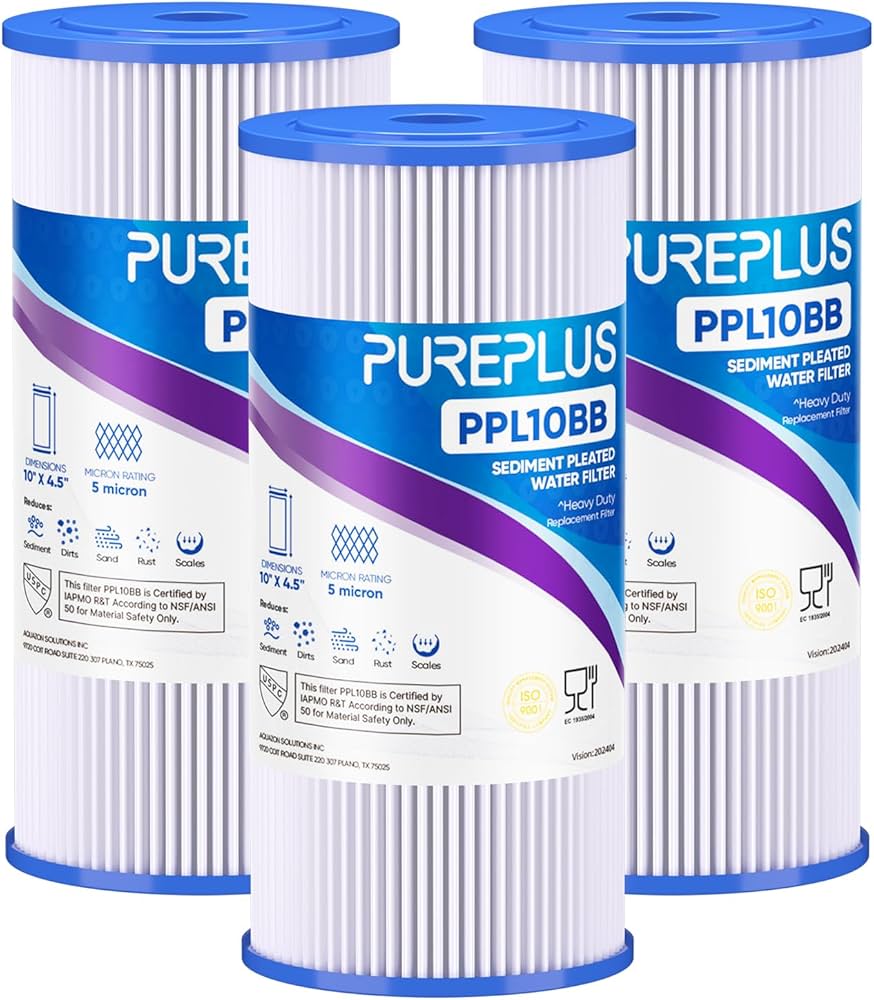
- Common media include pleated polyester, melt-blown polypropylene, string-wound, and carbon block.
Useful benchmarks:
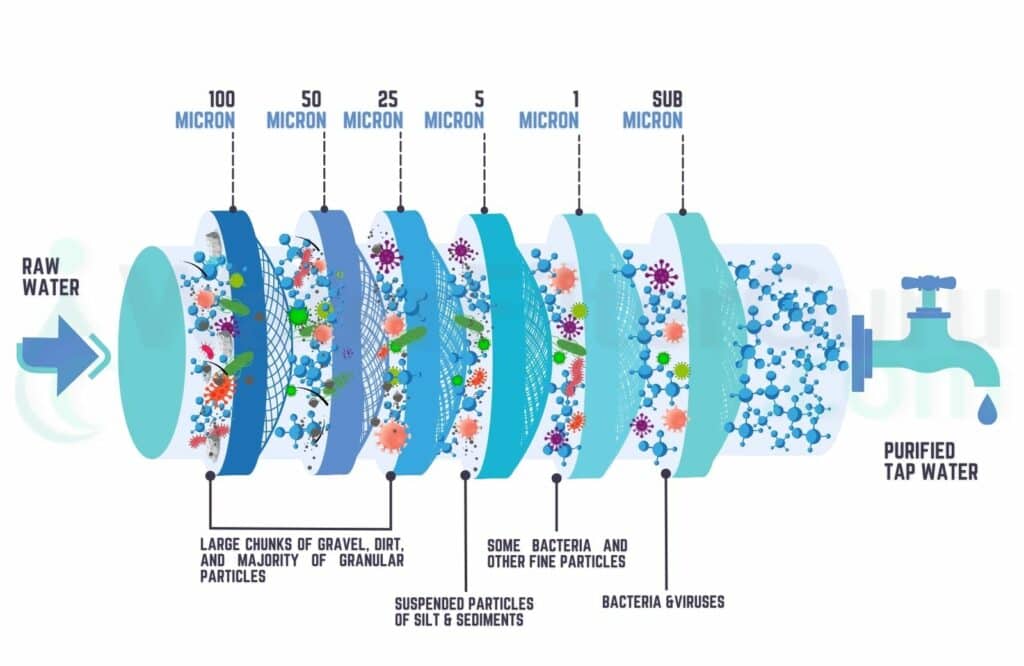
- 100–60 micron: sand and grit. Great for a first stage or a spin-down screen.
- 50–20 micron: coarse sediment and silt.
- 10–5 micron: fine silt and rust. This is the most common household choice.
- 1 micron: very fine particles and many cyst-rated filters.
- 0.5–0.2 micron absolute: bacteria-level filtration. Often used at point-of-use, not whole-house.
What does this mean for what micron filter for well water? Pick the coarsest filter that fixes the problem, then add a finer stage if needed. If you jump straight to 1 micron, expect many clogs and low flow.

Common Well Water Problems and Matching Micron Size
Every well is different. Start with a water test and a look inside your toilet tank or faucet aerators. That quick check can tell a lot.
Match problems to micron size:
- Sand and grit in sinks or appliances: Use a 100–60 micron spin-down or screen, then a 20 micron pleated filter.
- Cloudy water after rain or pump cycles: Use a 20 micron pleated, then a 5 micron depth filter.
- Fine silt that never seems to stop: Use 10 micron pleated followed by 5 or 1 micron depth for polish.
- Red or brown particles (oxidized iron): Use a 20 or 10 micron pleated, then 5 micron depth after iron removal. Note: dissolved ferrous iron needs oxidation or media, not just micron filters.
- Slimy film or fouling (iron bacteria): Use shock chlorination or continuous disinfection. Then use a 20 micron pleated plus 5 micron depth. A small micron filter alone will blind fast.
- Rotten egg smell (H2S): Use aeration, oxidation, or carbon. Micron size is not the main fix.
- Tannins (tea color): Needs anion exchange or special media. Micron filters do not remove dissolved color.
- Cysts (Giardia, Crypto): Use 1 micron absolute or certified cyst-rated filters at point-of-use or whole-house if sized right.
- Bacteria (E. coli, coliform): Use 0.2 micron absolute at point-of-use or UV/chlorination for whole-house. Always confirm with a lab test.
If you ask what micron filter for well water gives clean, clear taps, a common, safe path is a two-stage setup: 20 micron pleated followed by 5 micron depth. It protects flow and gives clear water for most wells.

How to Choose: A Step-by-Step Method
Here is a simple plan I use on jobs. It answers what micron filter for well water in a way that avoids guesswork.
- Test your water
- Get a lab test for bacteria, iron, manganese, hardness, pH, and TDS.
- If bacteria show up, plan on UV or chlorination. Use 0.2–1 micron absolute only for point-of-use, not as the only defense.
- Check flow and pressure
- Note pump flow in gpm and pressure range.
- If your home uses 8–12 gpm, pick large housings (4.5×20 inch). They drop less pressure.
- Stage your filters
- Stage 1: 100–60 micron spin-down if you have sand or bursts of grit.
- Stage 2: 20 micron pleated for bulk sediment and rust.
- Stage 3: 5 micron melt-blown depth for fine polish. Use 1 micron if needed.
- Add carbon after sediment if taste or odor remains. Carbon blocks are often 1 micron nominal.
- Size for your home
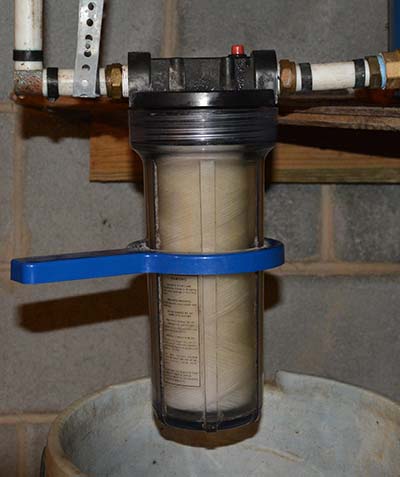
- Use Big Blue housings for whole-house. Small 10-inch standard filters clog too fast.
- Check pressure drop specs. Lower is better for comfort.
- Monitor and adjust
- If filters clog fast, go one step coarser on the first stage or add a spin-down.
- If water is still cloudy, step the final filter down from 5 micron to 1 micron.
When people ask me what micron filter for well water is the best one-size answer, I say this: use the finest filter that stays clog-free for at least 2–3 months under your normal use. That is the sweet spot for comfort and cost.
Real-World Setups I Recommend
These setups come from my field notes. They work, and they are simple to maintain. They also answer what micron filter for well water most homes should start with.
Clear-water well with light silt
- Gear: 20 micron pleated, then 5 micron depth. Optional carbon block if taste needs help.
- Why: High flow, low pressure drop, clean taps.
- Tip: If the 5 micron clogs fast, add a spin-down first.
Sandy well with bursts after pump start
- Gear: 100 micron spin-down, then 20 micron pleated, then 5 micron depth.
- Why: Spin-down catches grit you can flush. Pleated handles swings. Depth filter polishes.
- Lesson learned: People often ask what micron filter for well water to stop sand. Without a spin-down, fine filters blind in days.
Iron-heavy well after oxidation system
- Gear: 20 micron pleated, then 5 micron depth, then carbon block 1 micron nominal.
- Why: The iron filter does the heavy lift. The 20/5 combo cleans particles. Carbon improves taste and catches fines.
- Mistake to avoid: Do not skip oxidation if iron is dissolved. A low micron filter alone cannot remove it.
Bacteria risk with safe taste at one sink
- Gear: Whole-house 20 and 5 micron. At the kitchen sink: 0.2 micron absolute with carbon.
- Why: UV protects the whole home better. But if you need added safety for drinking, point-of-use microfiltration shines.
- Note: Always retest. Follow public health advice.
Every time a client asks what micron filter for well water when they have mixed issues, I build a staged plan. Start coarse. Move finer only if needed. It saves money and stress.

Maintenance, Costs, and Mistakes to Avoid
Filters work only if you care for them. Here is how to keep your system smooth and safe.
Maintenance tips
- Track pressure: Add a gauge before and after filters. Change filters when the drop doubles.
- Check monthly: Rinse spin-downs. Inspect housings and O-rings. Lubricate O-rings with food-grade silicone.
- Change on time: Pleated filters can be rinsed a few times. Depth filters should be replaced, not washed.
Cost basics
- Big Blue filters cost more up front but save money over time.
- Pleated filters last longer with heavy sediment. Depth filters polish best but clog faster.
- A smart two- or three-stage path beats constant filter swaps.
Common mistakes
- Going straight to 1 micron for the whole house. It will clog and kill your shower.
- Using micron filters to remove dissolved iron, manganese, or tannins. Use the right media or oxidation first.
- Skipping a water test. You cannot pick what micron filter for well water without knowing what is in it.
- Ignoring certifications. Look for NSF/ANSI marks for particulate, cysts, or performance claims.
- Forgetting disinfection. If bacteria show up, use UV or chlorination. A small micron filter is not enough by itself.
When you read guides on what micron filter for well water, you may see one-size claims. Real wells do not work that way. Test, stage, and size. You will spend less and get better water.

Frequently Asked Questions
What micron filter for well water should I start with?
Most homes do well with 20 micron pleated followed by 5 micron depth. It balances clear water with good flow.
What micron filter for well water removes bacteria?
Use 0.2 micron absolute at a single tap, or add UV for the whole house. Always confirm with a lab test.
What micron filter for well water is best for sand?
Begin with a 100 micron spin-down screen to catch grit you can flush. Then follow with a 20 micron pleated.
What micron filter for well water handles fine silt?
Use a 10 micron pleated as a first stage and a 5 or 1 micron depth for final polish. Adjust based on clogging.
What micron filter for well water should I use with an iron filter?
Use 20 micron pleated, then 5 micron depth after oxidation or media treatment. Micron filters alone cannot remove dissolved iron.
How often should I replace my micron filters?
Most homes change 2–4 times a year. Replace sooner if pressure drop rises or water turns cloudy.
Can I use a 1 micron filter as my only filter?
You can, but it may clog fast and drop pressure. A staged setup works better and costs less over time.
Conclusion
Choosing the right micron size is not a guess. It is a simple plan: test your water, stage your filters, and size for your flow. Start coarse, then polish. If you follow that path, you will know exactly what micron filter for well water delivers clear, safe, and strong-flowing water in your home.
Take the first step today. Check your filters, add a pressure gauge, and schedule a water test. If you found this guide useful, subscribe for more home water tips or leave a comment with your well setup and results.