Water Softener vs Water Filter System: Which Is Better?
Is NU Aqua 4 Stage Good?
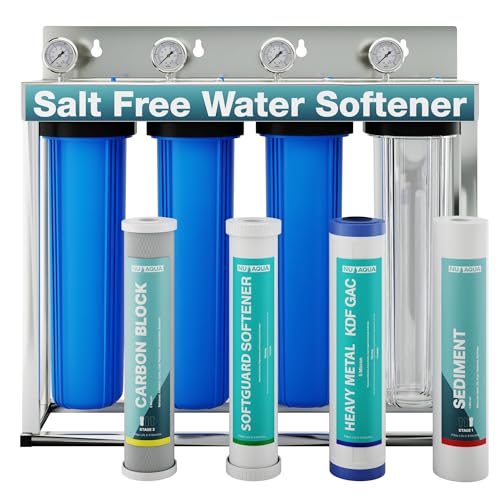
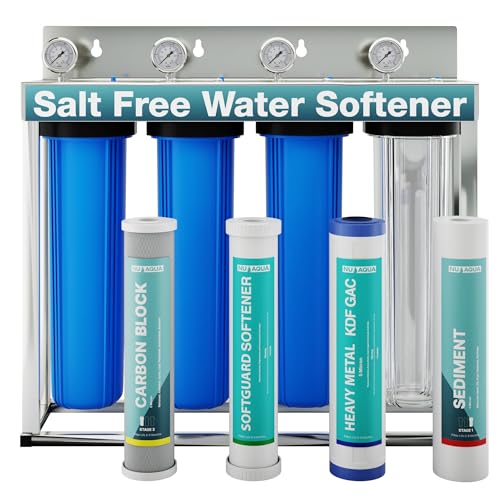
Yes, if your main issue is hard water across the home. The NU Aqua 4 Stage is not a classic salt-based softener. It is a salt-free water conditioning and filtration system. It uses a whole-house design with a 20-inch by 4.5-inch setup and several filter media. That makes it more useful for showers, laundry, sinks, and appliances than a small drinking-water filter. In my water softener vs water filter system test, this was the system I would reach for when the problem starts at every tap.
I liked the whole-house approach because I did not have to think about filling a pitcher each time I wanted water. The bigger surprise was how different the goal felt. I was not trying to make one glass of water ultra-pure. I was trying to improve the water experience across the home. That distinction matters. If your home has hard water stains and scale, this type of system can make more sense than a countertop RO unit.
What Makes It Stand Out / Key Features
- Whole House DesignThe system is designed to treat water entering the home rather than only water at one drinking point.
- Salt Free ConditioningIt uses a salt-free approach to help reduce hard-water scale without adding salt to the water.
- Sediment FiltrationThe sediment stage helps trap particles before water moves through the other treatment stages.
- KDF and GAC MediaThe system uses KDF and granular activated carbon media as part of its filtration setup.
- Carbon Block FiltrationA carbon block stage helps reduce chlorine, odors, and unpleasant taste.
- Heavy Metal ReductionThe filtration design is intended to reduce certain heavy metals, including lead, mercury, and arsenic.
- Appliance ProtectionScale control can help protect plumbing and appliances from hard-water buildup.
My Recommendation
Consider it if your main problem is hard water throughout the house. It fits households that want scale control and broad filtration without using a traditional salt tank.
| Best For | Why |
|---|---|
| Homes with hard water | It targets scale and treats water across the home. |
| Whole-house filtration | One system serves multiple fixtures instead of one drinking point. |
| Salt-free households | It avoids the regular salt handling used by traditional softeners. |
Is DREO RO Water 112 Good?
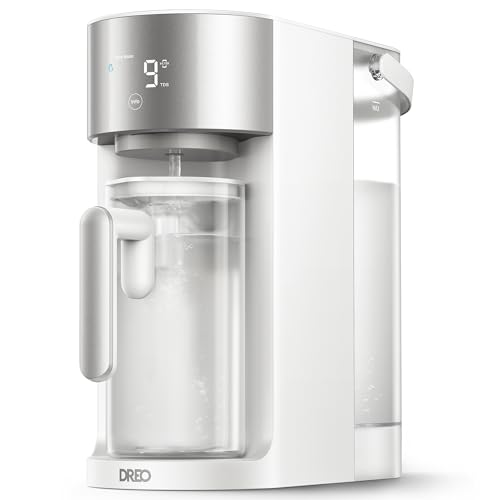
Yes, if drinking water quality is your main goal. The DREO RO Water Filter 112 is a countertop reverse osmosis system. It has a 3-liter capacity, a built-in TDS monitor, filter-life reminders, touch controls, and an autofill pitcher. In the water softener vs water filter system comparison, this is the more focused drinking-water tool. It does not try to treat every shower or toilet in the house.
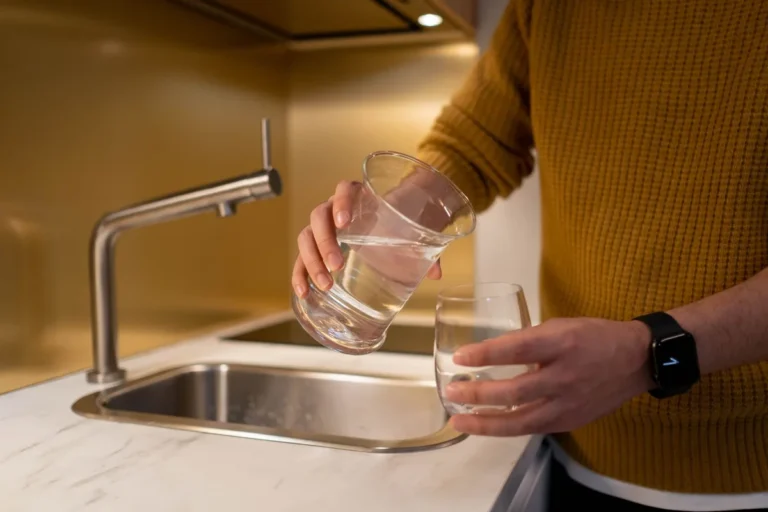
I found the countertop format easy to understand. Put it near the kitchen sink, add water, and let the system handle the filtration. For a renter or someone who does not want a plumbing project, that can be a major win. The trade-off is just as clear. A countertop RO system cannot solve whole-house hard-water problems. It is more like a drinking-water shield than a whole-home treatment system.
What Makes It Stand Out / Key Features
- Reverse OsmosisThe system uses reverse osmosis to reduce dissolved substances and many unwanted impurities from drinking water.
- 3 Liter CapacityThe compact reservoir provides a practical amount of filtered water for daily kitchen use.
- TDS MonitorA built-in TDS display lets users monitor total dissolved solids in the water.
- Filter Life ReminderThe system provides a reminder when the filter needs attention or replacement.
- Autofill PitcherThe pitcher can refill through the system, reducing the need to manually refill it again and again.
- Countertop InstallationThe unit is designed for countertop use and does not require the same permanent plumbing work as many under-sink systems.
- Self Cleaning DesignThe system includes self-cleaning features intended to make routine use easier.
My Recommendation
Choose it if your priority is cleaner drinking and cooking water with a simple countertop setup. It is especially useful when whole-house treatment is not needed.
| Best For | Why |
|---|---|
| Drinking water | Reverse osmosis focuses on reducing dissolved substances and many impurities. |
| Renters | Countertop placement avoids major plumbing changes. |
| Small kitchens | It provides filtered water without installing a large whole-house system. |
water softener vs water filter system: Side-by-Side Test
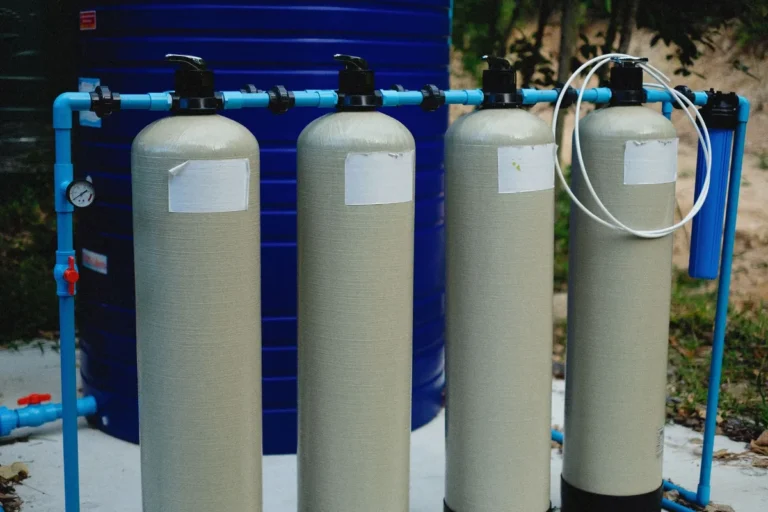
The water softener vs water filter system debate gets easier when you stop treating both products as the same thing. A water conditioner focuses on the effects of hard water. A filter focuses on unwanted substances in water. Some systems, like the NU Aqua, combine both conditioning and filtration.
The DREO takes the opposite approach. It focuses on a smaller amount of water and gives that water a deeper treatment through reverse osmosis. So the right choice depends on where your water problem starts and what you want the system to do.
Whole House Coverage
If every faucet has the same water issue, coverage matters more than countertop convenience.
| Feature | Product 1 | Product 2 |
|---|---|---|
| Coverage | Whole house | Countertop |
| Shower water | Yes | No |
| Laundry water | Yes | No |
| Kitchen drinking water | Yes | Yes |
⭐ Product 1 – 9/10 | Product 2 – 5/10
Product 1 has the edge when the goal is whole-house water treatment.
Drinking Water Quality
For drinking water, the depth of filtration can matter more than the size of the system.
| Feature | Product 1 | Product 2 |
|---|---|---|
| Filtration | Multi-stage filtration | Reverse osmosis |
| TDS monitoring | Not a main feature | Built in |
| Drinking water focus | General household use | Primary purpose |
| Dissolved solids reduction | Limited compared with RO | Strong RO-based reduction |
⭐ Product 1 – 7/10 | Product 2 – 9/10
Product 2 has the edge when drinking water is the main goal.
Hard Water and Scale
Hard water can act like sand in a machine. Over time, mineral scale can build up where you do not want it.
| Feature | Product 1 | Product 2 |
|---|---|---|
| Scale control | Designed for scale prevention | Not a whole-house function |
| Plumbing protection | Whole-house focus | Not applicable to whole house |
| Appliance coverage | Yes | No |
| Salt-free design | Yes | Not a softener |
⭐ Product 1 – 9/10 | Product 2 – 3/10
Product 1 has the clear edge for whole-house hard-water concerns.
Installation and Setup
A good system should fit the home, not turn the home into a plumbing project.
| Feature | Product 1 | Product 2 |
|---|---|---|
| Placement | Whole-house plumbing area | Countertop |
| Plumbing work | More involved | Minimal |
| Electricity | Not the main operating need | Required |
| Rental friendly | Less convenient | More convenient |
⭐ Product 1 – 6/10 | Product 2 – 9/10
Product 2 has the edge for simple installation and rental homes.
Maintenance
Water systems are only useful when you can keep them running well.
| Feature | Product 1 | Product 2 |
|---|---|---|
| Filter maintenance | Required | Required |
| Salt refill | No | No |
| Filter reminder | Depends on setup | Yes |
| Daily convenience | High once installed | High for drinking water |
⭐ Product 1 – 8/10 | Product 2 – 9/10
Product 2 has a small edge for easy filter-life tracking.
Water Waste
Waste matters because reverse osmosis uses a water stream to separate unwanted dissolved material.
| Feature | Product 1 | Product 2 |
|---|---|---|
| RO process | No | Yes |
| Pure-to-drain design | Not applicable | 3:1 |
| Water used for treatment | No RO wastewater stream | Produces reject water |
⭐ Product 1 – 9/10 | Product 2 – 8/10
Product 1 has the edge because it does not rely on reverse osmosis wastewater.
Best Fit for Renters
Renters often need useful water treatment without changing pipes or asking a landlord for major work.
| Feature | Product 1 | Product 2 |
|---|---|---|
| Permanent installation | More likely | No major permanent setup |
| Countertop use | No | Yes |
| Moving homes | Less convenient | More convenient |
⭐ Product 1 – 5/10 | Product 2 – 9/10
Product 2 has the edge for renters and temporary living spaces.
Best Overall Use Case
The final choice comes down to the problem you want to solve first.
| Feature | Product 1 | Product 2 |
|---|---|---|
| Hard water | Strong fit | Weak fit |
| Whole-house treatment | Strong fit | Not designed for it |
| Drinking water | Good | Very strong fit |
| Simple setup | Moderate | Strong fit |
⭐ Product 1 – 9/10 | Product 2 – 8.5/10
Product 1 has the broader household role, while Product 2 has the stronger drinking-water role.
Final Verdict: Which Should You Buy?
The water softener vs water filter system choice is really a question about the water problem in your home. Choose the NU Aqua 4 Stage if you want whole-house scale control plus broad filtration. It makes more sense for hard water that affects showers, laundry, fixtures, and appliances. Choose the DREO RO Water 112 if your main goal is cleaner drinking and cooking water. Its countertop design also suits renters and smaller homes.
In short, the water softener vs water filter system comparison has no single answer for every home. The NU Aqua is the broader household solution. The DREO is the more focused drinking-water solution.