How Often Should You Change Water Filter In Fridge: 2026 Guide
You should change your fridge water filter every 6 months or after filtering roughly 300 gallons of water, whichever comes first. Skipping this simple swap can quietly turn your crisp glass of water into something you really don't want to drink. I've been writing about home appliances and water filtration for over a decade, and I can tell you this is one of those tiny habits that makes a huge difference. In this guide, I'll walk you through exactly when and how to replace your filter, what happens if you wait too long, and the little signs your fridge is begging you for a fresh filter.
Why Changing Your Fridge Water Filter Matters
Think of your fridge water filter like the oil filter in your car. It does its job quietly in the background, trapping contaminants so the water reaching your glass stays safe and tasty. Most modern fridges use activated carbon filters, which work through a process called adsorption. As water flows through, tiny pores in the carbon trap chlorine, lead, mercury, and other impurities.
Over the years, I've installed and replaced hundreds of filters in my own home and helped family members troubleshoot theirs. What surprises most people is how much gunk a filter can collect without showing any obvious signs. Water might look crystal clear, but it could still carry heavy metals, pesticides, and microbial cysts that the filter was designed to remove. Once the carbon is saturated, it loses its ability to trap these particles, and they start passing right through into your drinking water.
Here are the key reasons timely filter changes matter:
- Protects your health by removing contaminants before they reach your glass
- Keeps water and ice tasting fresh without that flat or plastic-like flavor
- Prevents bacteria buildup inside an old, saturated filter
- Maintains proper water pressure from your dispenser and ice maker
- Extends the life of your fridge's internal water system by reducing sediment buildup
How Often Should You Change Your Fridge Water Filter
The standard recommendation from most manufacturers is every 6 months. Some filters are rated for 300 gallons, while others can handle up to 400 or 500 gallons before they need swapping. For a typical family of four, that gallon mark usually lines up nicely with the 6-month window, but your actual timing can shift based on your household.
In my own kitchen, we tend to go through water pretty fast between cooking, coffee, and the kids always filling up their bottles. I set a reminder on my phone for the 6-month mark and stick to it, even if the water still tastes okay. Here's a rough guide based on household size:
- Single person or couple: Every 6 to 9 months is usually fine
- Family of 3 to 4: Stick to every 6 months as your baseline
- Large family or heavy water users: Consider changing every 4 months
- Homes with hard water or well water: Replace closer to every 3 to 4 months because sediment clogs filters faster
Your fridge model might also give you a built-in indicator. Many newer refrigerators display a small light or message when it's time to replace the filter. If your fridge has this feature, treat it as a helpful nudge, but don't ignore it just because the water still seems fine.
Signs It's Time to Replace Your Water Filter
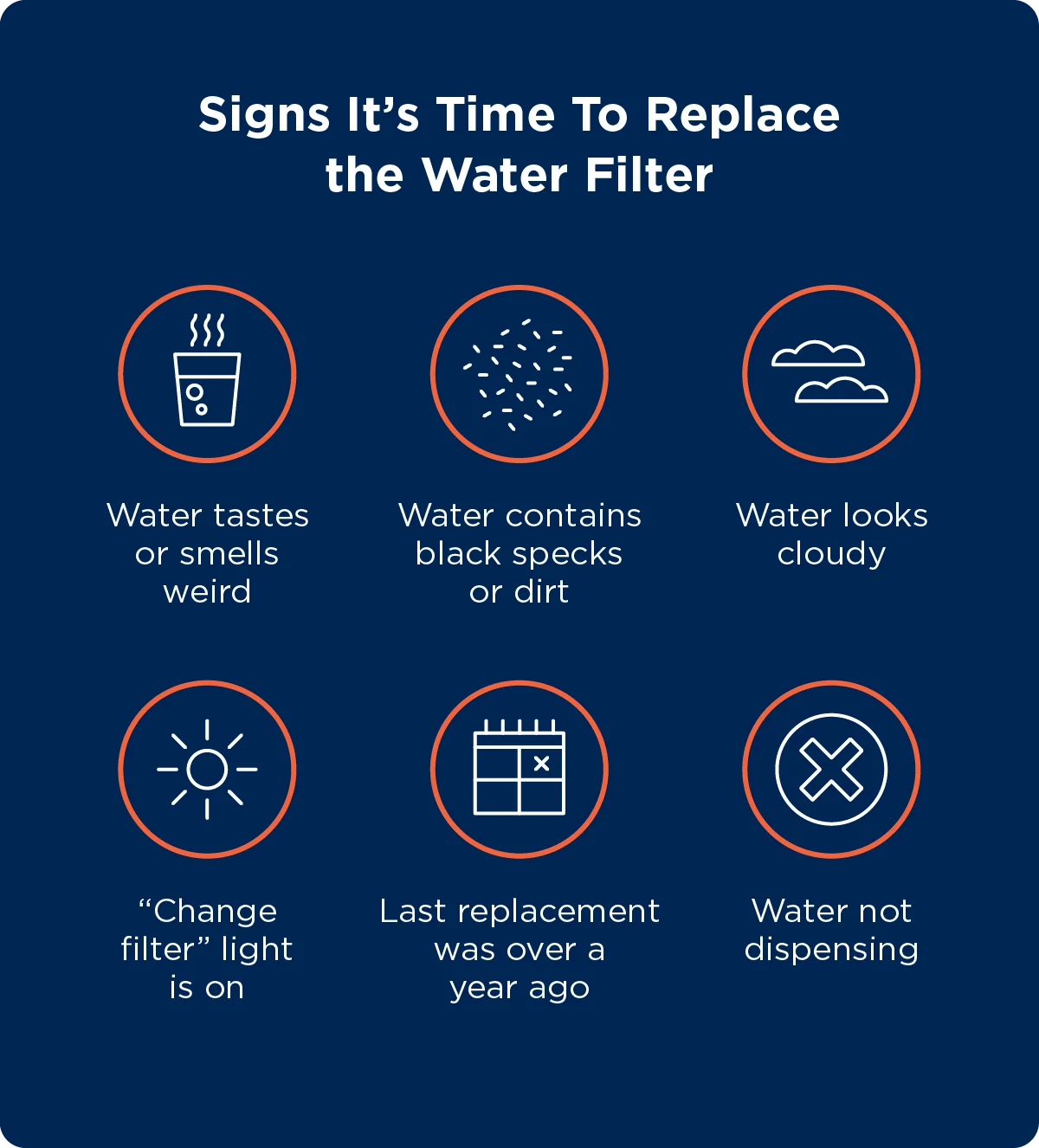
Sometimes your fridge will give you clear hints before the 6-month mark rolls around. Learning to spot these signs can save you from drinking water that's lost its protective benefits.
Here are the most common red flags:
- Water has a strange taste, often described as flat, metallic, or slightly sweet
- Ice cubes look cloudy or have small particles floating in them
- Water flow from the dispenser slows down to a trickle
- An unpleasant odor comes from your dispenser or ice maker
- The filter indicator light turns on or starts blinking
I remember ignoring a slow flow issue for a few weeks once, assuming it was a problem with the fridge itself. Turns out, the filter was so clogged my dispenser was acting like a kinked straw. Swapping in a new filter fixed it instantly.
Different Types of Fridge Water Filters
Not all fridge filters are built the same. Knowing which type you have can help you plan replacements more accurately.
Most fridges use one of these filter styles:
- Internal filters: These sit inside the fridge, usually near the top right corner or back panel. Brands like Samsung and LG often use this style.
- External twist-in filters: Found in many Whirlpool, Kenmore, and Maytag models, these are usually located at the base grille of the fridge.
- Inline filters: These sit in the water line behind the fridge and are common in setups where the fridge doesn't have a built-in filter slot.
Each style has its own replacement method, so always check your owner's manual. The good news is that replacement filters are widely available, though some homeowners prefer third-party filters to save money. If you go that route, look for ones certified by NSF International to make sure they meet the same standards as the name-brand versions.
How to Replace Your Fridge Water Filter
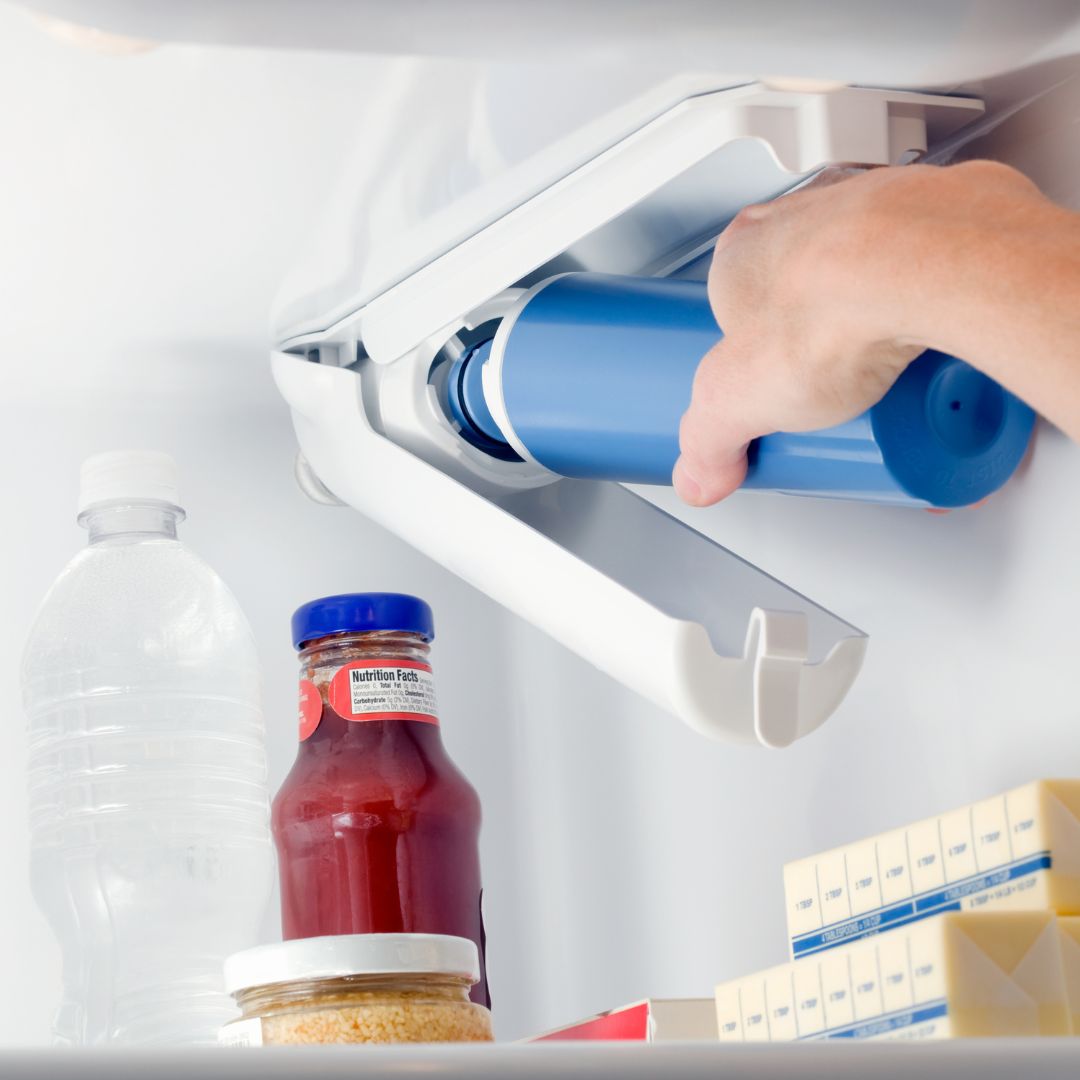
Changing your water filter is one of the easiest maintenance tasks you can do. Most people are surprised at how quick it takes once they do it the first time.
Here's a simple step-by-step process:
- Turn off the ice maker to prevent it from trying to make ice during the swap.
- Locate the filter. Check the base grille, inside the fridge, or behind the panel.
- Remove the old filter by twisting it counterclockwise or pressing the release button, depending on your model.
- Insert the new filter and twist or snap it into place until it locks.
- Run 2 to 4 gallons of water through the dispenser to flush out loose carbon particles and air bubbles.
- Reset the filter indicator light by holding the button for 3 to 5 seconds, if your model has one.
Pro tip from experience: place a towel under the dispenser when flushing. Those first few cups can splash carbon dust everywhere, and you'll thank yourself later for the small bit of prep.
Common Mistakes to Avoid
Over the years, I've seen homeowners make the same few mistakes when handling water filters. Avoiding these can save you money and keep your water safer.
Watch out for these common slip-ups:
- Forgetting to reset the filter indicator after a replacement
- Skipping the flush step and drinking water with carbon bits right away
- Using a non-certified third-party filter that doesn't actually filter what it claims
- Waiting until the water smells bad instead of replacing on schedule
- Installing the filter upside down and wondering why the water won't flow
A little attention to the details goes a long way. Your filter is the only thing standing between tap water and your glass, so treat it like the small but mighty tool it is.
What Happens If You Don't Change Your Filter
I touched on this earlier, but it's worth diving deeper because the consequences can sneak up on you. When a filter reaches the end of its lifespan, it stops trapping contaminants and can actually become a breeding ground for bacteria.
Here's what can happen if you delay:
- Bacteria like Pseudomonas can grow in the moist filter media
- Heavy metals like lead and mercury may pass through unrestricted
- Chlorine by the filter fades away, letting your water taste like pool water
- Sediment buildup can damage your fridge's water valves over time
- Ice maker performance drops, leading to smaller or hollow ice cubes
In one home I helped with, the family hadn't changed it for over two years. Their ice smelled faintly like dirt and the dispenser would barely push out water. A new filter and a quick flush made their water taste brand new again.
Tips to Make Filter Changes Easier
Replacing your filter should feel like a regular habit, not a chore. Here are a few small tricks to keep you on track:
- Set a phone reminder for every 6 months with a specific date
- Buy two filters at a time so you always have a backup ready
- Keep a small log on the inside of your fridge door with the replacement date
- Sign up for subscription filter delivery through brands like EveryDrop or FilterBuy
- Pair the filter change with another seasonal task, like changing smoke detector batteries
These tiny habits turn a forgettable task into something that just happens without thinking.
Frequently Asked Questions
How do I know which filter my fridge uses?
Check your fridge's owner manual or the existing filter for a model number. You can also look on the brand's website by searching your fridge model. Most major brands like Samsung, LG, Whirlpool, and GE have compatible filters clearly listed.
Can I use a generic water filter instead of the brand name one?
Yes, as long as the third-party filter is certified by NSF International. Many generic filters meet the same standards as name-brand versions, though cheaper uncertified options might not filter out everything they claim.
What if my fridge doesn't have a filter indicator light?
Use the 6-month rule or set your own reminder. You can also pay attention to changes in taste, flow, and ice quality, since these are usually the first indicators that a replacement is due.
Is it safe to drink water from a fridge without a filter?
Technically yes, but you're drinking whatever is coming straight from your tap, which may include chlorine, lead, or sediment. A filter is an extra layer of protection, especially in areas with older plumbing or well water.
Do I need to turn off my fridge to change the filter?
No. Most filters are designed for easy swap without any tools or power cycling. Just make sure to flush the system after installation and reset the indicator if your fridge has one.
Final Thoughts
Changing your fridge water filter is one of the easiest ways to protect your health and enjoy better-tasting water every single day. Stick to the 6-month rule, watch for those subtle signs, and don't put it off just because the water still seems fine. If you've never changed your filter before, grab one today and give your fridge the quick refresh it deserves. Got questions or your own filter tips? Drop them in the comments below.