Sand Filter vs Salt Water System: Which Is Better?


Is a Sand Filter Good?
Yes, if your main goal is simple and reliable filtration. A sand filter is built to remove suspended dirt, leaves, and other debris from pool water. It does not sanitize the water by itself. You still need chlorine or another sanitation method.
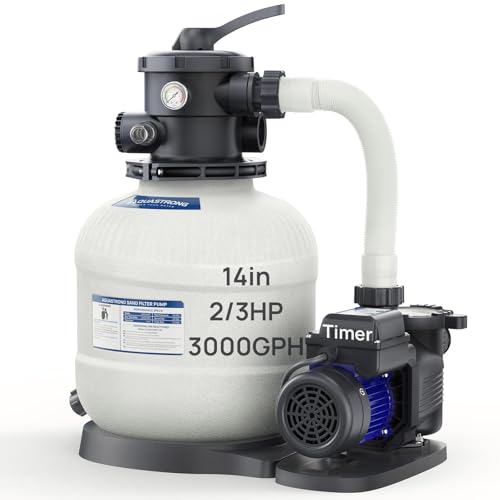
What I like most about a sand filter is its familiar routine. In a typical U.S. backyard pool, the pump sends water through the sand bed. When the filter gets dirty, you backwash it. That feels much like rinsing a reusable screen instead of throwing away a cartridge. For owners who want a sturdy filter with simple care, sand is hard to ignore.
What Makes It Stand Out / Key Features
- Physical filtrationSand traps suspended dirt and debris as pool water passes through the filter bed.
- BackwashingA dirty filter can be cleaned by reversing water flow instead of replacing the filter media each time.
- Simple designThe system uses a tank, filter sand, valves, and a pump, making the basic setup easy to understand.
- Long service lifeThe filter tank can serve for years when sized, operated, and maintained correctly.
- Low daily attentionA sand filter does not need constant manual cleaning during normal pool use.
- Works with salt systemsA sand filter can filter a saltwater pool because filtration and sanitation are separate jobs.
My Recommendation
Consider a sand filter if you want dependable physical filtration with a simple cleaning routine. It is especially useful for owners who want a filter that can pair with almost any sanitation method.
| Best For | Why |
|---|---|
| Budget-focused pool owners | The design is simple and the filter media can last for a long time. |
| Busy families | Routine care is straightforward once the filter is set up correctly. |
| Saltwater pools | A sand filter can handle filtration while a salt chlorine generator handles sanitation. |
Is a Salt Water System Good?
It depends on what you want from your pool system. A salt water system is not a filter. A salt chlorine generator uses electrolysis to turn dissolved salt into chlorine. The chlorine then sanitizes the pool. You still need a separate filter to remove dirt and debris.
For many U.S. pool owners, the biggest benefit is convenience. Instead of adding chlorine by hand as often, the generator makes chlorine while the circulation system runs. I like this approach for people who want fewer routine chlorine-handling tasks. The trade-off is a higher upfront cost and more equipment to monitor.
What Makes It Stand Out / Key Features
- Chlorine generationThe salt cell uses electrolysis to produce chlorine from dissolved salt.
- Less manual chlorine handlingThe system can reduce the need to carry, store, and add chlorine products by hand.
- Steady chlorine productionOutput can be adjusted to match the pool’s sanitation needs.
- Softer water feelMany swimmers prefer the feel of saltwater pool systems, although the water is still chlorinated.
- Automation optionsMany modern salt systems can connect with pool controls and monitoring equipment.
- Separate filtration requiredThe salt generator does not remove dirt, leaves, or suspended particles, so a pool filter is still needed.
My Recommendation
Consider a salt chlorine system if you value automated chlorine production and want to reduce routine chlorine handling. Pair it with a proper pool filter for complete water care.
| Best For | Why |
|---|---|
| Frequent pool users | Regular use can make automated chlorine production more convenient. |
| Busy homeowners | The system can reduce some hands-on chlorine tasks. |
| Automation fans | Many salt systems support pool automation and digital monitoring. |
sand filter vs salt water system: Side-by-Side Test
The biggest point in any sand filter vs salt water system comparison is simple: these systems solve different problems. A sand filter removes physical waste. A salt chlorine generator produces chlorine for sanitation.
So when I compare sand filter vs salt water system, I do not treat them as direct substitutes. The better question is which job you need to solve, and whether you should use both.
Filtration: Which Cleans Better?
A sand filter wins this category because a salt chlorine generator is not a filter at all.
| Feature | Product 1 | Product 2 |
|---|---|---|
| Removes dirt | Yes | No |
| Removes leaves and debris | Yes, when captured by the filter system | No |
| Needs separate filtration | No | Yes |
| Main job | Filter water | Make chlorine |
⭐ Sand Filter – 9/10 | Salt Water System – 3/10
For physical cleanup, the sand filter has the clear edge.
Sanitation: Which Keeps Water Safe?
This category changes the picture because sand and salt systems do very different jobs.
| Feature | Product 1 | Product 2 |
|---|---|---|
| Produces chlorine | No | Yes |
| Sanitizes water | No, not by itself | Yes, by producing chlorine |
| Manual chlorine handling | Depends on separate sanitizer | Usually reduced |
⭐ Sand Filter – 3/10 | Salt Water System – 9/10
For automated chlorine production, the salt system has the edge.
Maintenance: Which Is Easier?
Both need care, but the type of care is different.
| Feature | Product 1 | Product 2 |
|---|---|---|
| Routine task | Backwash and inspect | Check salt and water chemistry |
| Mechanical cleaning | Backwash as needed | Inspect and clean salt cell as needed |
| Water testing | Still required | Still required |
⭐ Sand Filter – 8/10 | Salt Water System – 8/10
Neither is maintenance-free, but both can be easy once the routine becomes familiar.
Upfront Cost: Which Is Simpler?
A basic sand filter is usually simpler because it does not need a salt chlorine generator and salt cell.
| Feature | Product 1 | Product 2 |
|---|---|---|
| Core equipment | Filter tank and sand | Salt cell, controller, and related equipment |
| Installation complexity | Generally straightforward | More electrical and plumbing considerations |
| Extra equipment needed | A sanitation system | A separate filter |
⭐ Sand Filter – 8/10 | Salt Water System – 6/10
A sand filter is usually the simpler starting point, while a salt system adds another layer of equipment.
Daily Convenience: Which Feels Easier?
This is where a salt chlorine generator can make pool ownership feel less like a chore.
| Feature | Product 1 | Product 2 |
|---|---|---|
| Automatic chlorine production | No | Yes |
| Less chlorine handling | No | Yes |
| Filter cleaning | Required | Still requires a separate filter |
⭐ Sand Filter – 7/10 | Salt Water System – 9/10
For reducing manual chlorine work, the salt system has the edge.
Water Feel: What Will Swimmers Notice?
Saltwater pools contain much less salt than seawater, but many people like their softer feel.
| Feature | Product 1 | Product 2 |
|---|---|---|
| Changes water feel | Not by itself | May provide a softer-feeling swim |
| Chlorine-free | No | No |
| Main effect | Physical filtration | Chlorine generation |
⭐ Sand Filter – 7/10 | Salt Water System – 9/10
The salt system has the edge if water feel matters to you.
Long-Term Ownership: What Matters?
Long-term value depends on the whole pool system, not just one piece of equipment.
| Feature | Product 1 | Product 2 |
|---|---|---|
| Replaceable consumable | Filter sand eventually | Salt and eventually the cell |
| Electrical parts | Limited | More electronics |
| Chemical savings potential | Depends on sanitizer | Can reduce manual chlorine purchases and handling |
| System complexity | Lower | Higher |
⭐ Sand Filter – 8/10 | Salt Water System – 8/10
The sand filter favors simplicity, while the salt system favors convenience.
Final Verdict: Which Should You Buy?
The sand filter vs salt water system debate becomes much easier when you separate filtration from sanitation. A sand filter cleans the water. A salt chlorine generator makes chlorine. They are not true replacements for each other.
If you want simple physical filtration, consider a sand filter. If you want automated chlorine production and less chlorine handling, consider a salt system. For many residential pools, the most complete setup is a sand filter paired with a salt chlorine generator. That combination gives you filtration and sanitation in one pool system.