What Is A Kdf Water Filter: 2026 Buyer’s Guide & Benefits
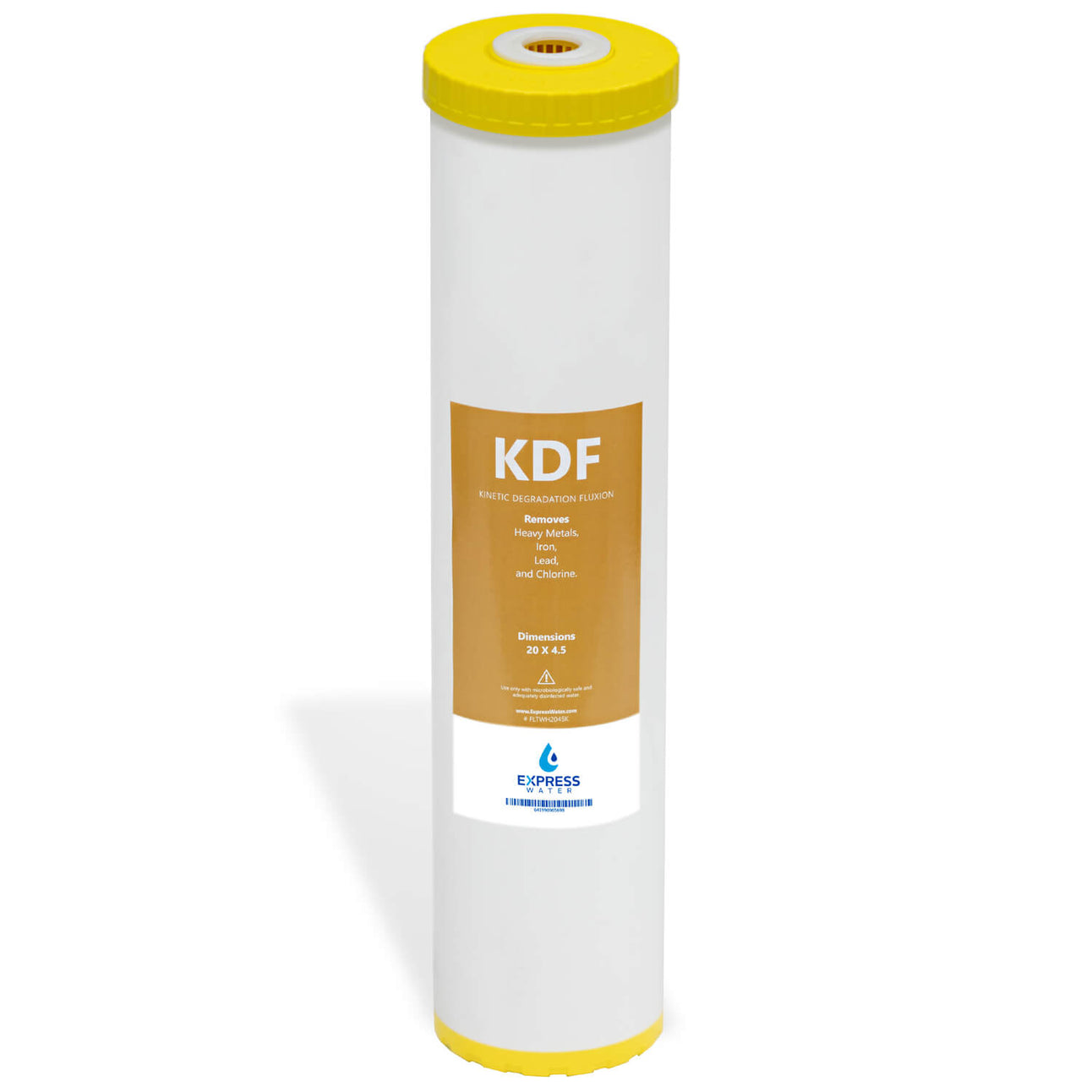
A KDF water filter uses copper-zinc media to cut chlorine and heavy metals fast.
If you have ever asked what is a KDF water filter, you are in the right place. I install and test these filters in homes and small businesses. In this guide, I break down what is a KDF water filter, how it works, what it removes, and how to choose the right one. You will see clear examples, lab-style test tips, and real results from the field. Read on and leave with a plan you can use today.

How a KDF water filter works: the simple version with real science
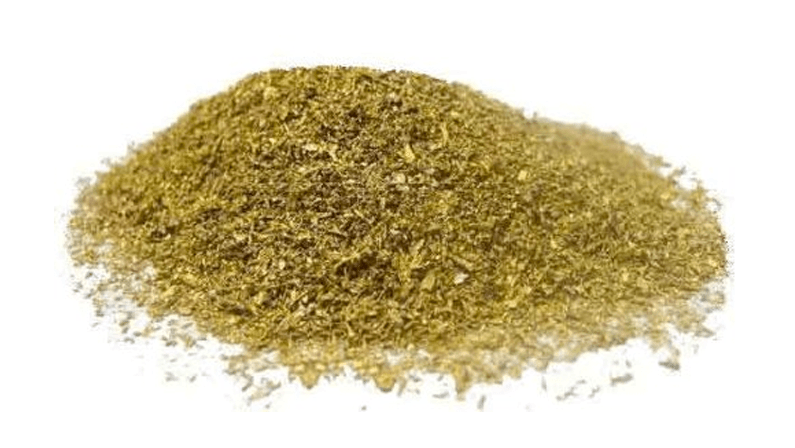
If you wonder what is a KDF water filter, think of a bed of tiny copper and zinc granules. Water flows through this metal blend. The two metals create a redox reaction. That means they swap electrons with contaminants.
Here is what that does in your tap:
- It turns free chlorine into harmless chloride.
- It pulls heavy metals like lead and mercury out of water by plating them onto the media.
- It slows the growth of bacteria in the filter bed. This is called bacteriostatic action.
- It helps other media, like carbon, last longer.
Common KDF media types:
- KDF 55. Focused on chlorine and heavy metals. Great with carbon.
- KDF 85. Targets iron and hydrogen sulfide (the rotten-egg smell). Needs a proper tank and backwash.
- KDF-F and KDF-C. Finer or coarser forms to fit cartridges or tanks.
Why it is trusted:
- KDF media is widely used in shower filters, whole-house tanks, and RO prefilters.
- Components can meet material safety rules like NSF/ANSI 61. Full systems can be tested to NSF/ANSI 42 for chlorine or 53 for lead when designed for that job.
To put it simply, when people ask what is a KDF water filter, the answer is a durable redox filter that takes out chlorine and metals and helps keep the filter fresh longer.
What KDF removes and what it does not
What is a KDF water filter good at removing? It shines for these jobs:
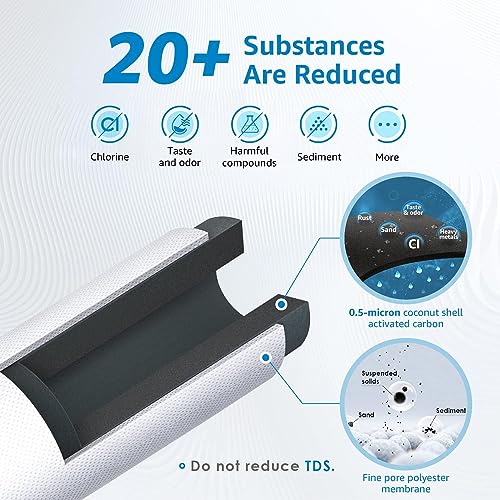
- Chlorine. Strong reduction for taste and odor.
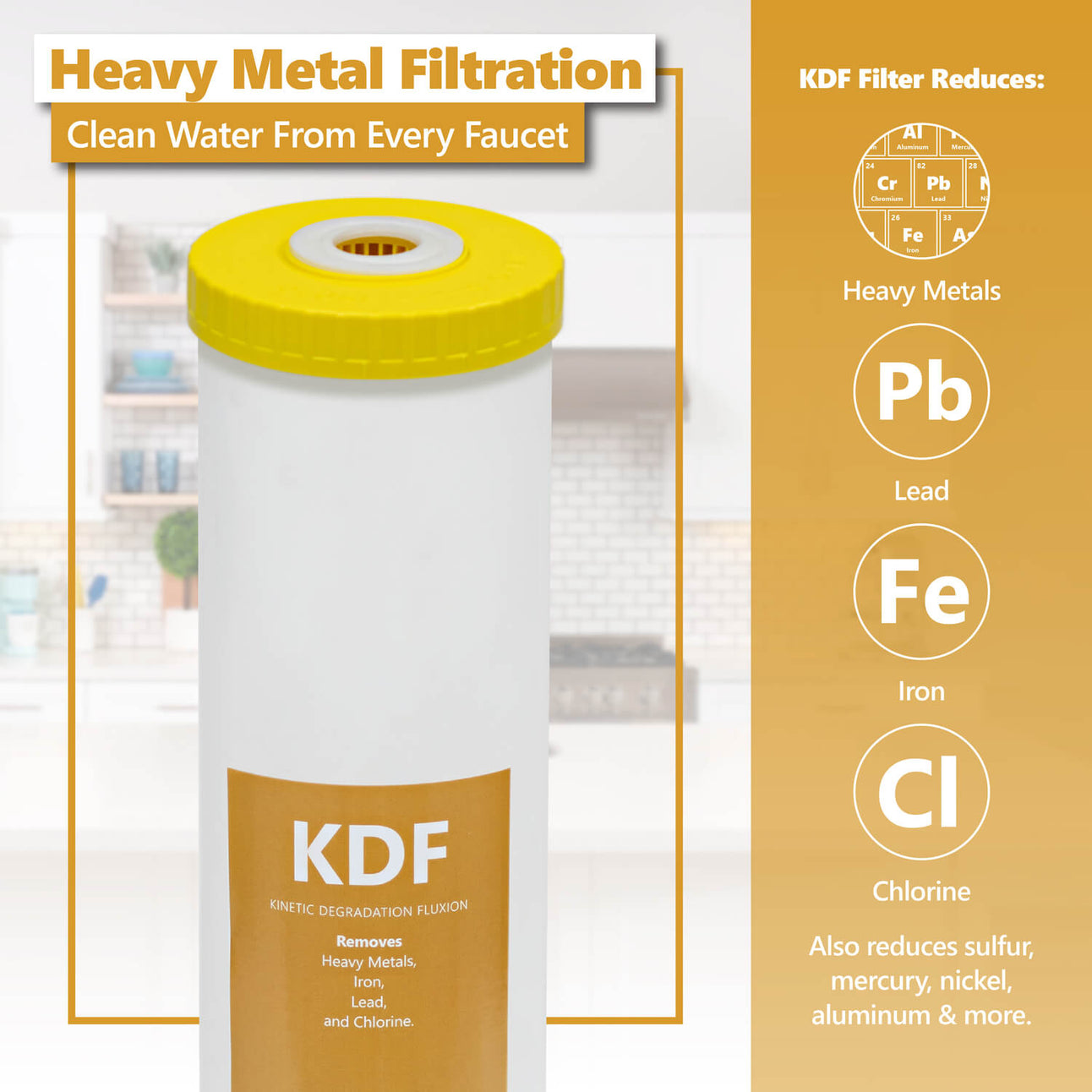
- Heavy metals. Lead, mercury, arsenic (some forms), and more, by redox and plating.
- Iron and hydrogen sulfide. Best with KDF 85 in a proper backwashing tank.
- Scale control. It can reduce scale formation a bit. It is not a softener.
- Microbial growth in the filter. The media resists colonization inside the cartridge or tank.
Where KDF is weak or needs help:
- Chloramine. It may help a little, but catalytic carbon does the heavy lifting here.
- Fluoride. No meaningful removal. Use reverse osmosis or activated alumina.
- Nitrates. Not a strong target. Consider anion resin.
- PFAS. Not by itself. Use high-grade carbon or ion exchange resins.
- TDS. It does not lower total dissolved solids. RO does that.
Quick PAA-style notes you might be asking right now:
- Does KDF remove fluoride? Short answer: no. Choose RO or a special fluoride media.
- Is KDF a softener? No. It does not remove hardness ions like calcium and magnesium.
- Can KDF remove PFAS? Not alone. Pair with certified carbon or PFAS-specific resin.
When you think about what is a KDF water filter, remember this: it is a chlorine and metal workhorse, not a cure-all.

Best use cases and media selection
A clear way to answer what is a KDF water filter is to show where it excels.
Good fits:
- Shower filters. KDF handles hot water better than carbon. It fights chlorine at the shower head.
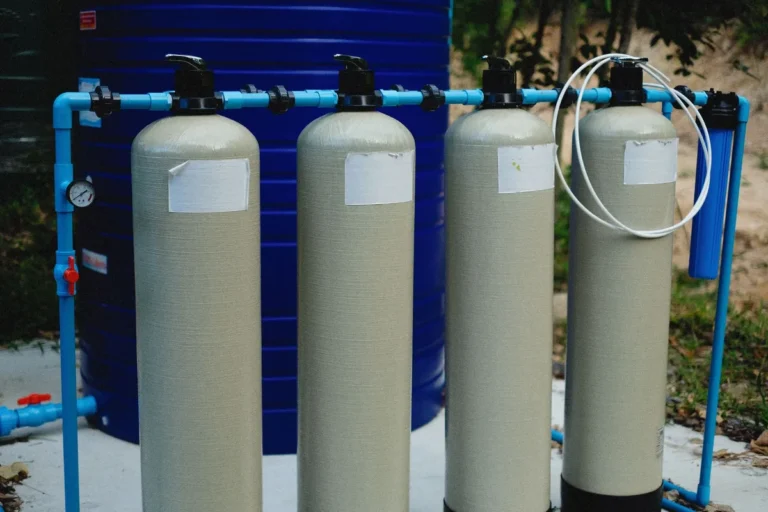
- Whole-house filters. Blend KDF 55 with carbon for city water. Use KDF 85 for well water with iron or sulfur.
- Under-sink filters. Pair KDF with carbon for taste, odor, and heavy metals.
- RO prefilters. KDF protects the RO membrane by reducing chlorine and some metals.
Pick the right media:
- Use KDF 55 when the main issue is chlorine and lead. Team it with activated or catalytic carbon.
- Use KDF 85 for iron and hydrogen sulfide on well water. Install it in a backwashing tank sized for your flow.
If your first question is what is a KDF water filter, your second should be which KDF type fits your water. Test your water, then match the media.

Benefits and limitations you should know
Top benefits:
- Strong chlorine and metal reduction.
- Works in hot water. Great for showers.
- Bacteriostatic media. Less risk of filter slime.
- Long life. Often longer than straight carbon when blended.
- Recyclable media. Many makers reclaim KDF granules.
Real limits:
- Not a one-stop solution. It will not remove everything.
- Needs good design. KDF is heavy. Cartridges can channel if flow is too fast.
- Chloramine is tough. You often need catalytic carbon to finish the job.
- Pressure drop can rise as the filter loads. Replace on time.
These facts are why pros answer what is a KDF water filter with clear pros and cons. It is best as part of a smart system, not alone.
How to choose and size a KDF system
Start with water data:
- Get your city water report or test your well water.
- Measure free chlorine (DPD kit), iron, pH, and, if on city water, check for chloramine.
Right-sizing tips:
- Aim for slow, steady flow. More contact time equals better removal.
- For whole-house carbon plus KDF, target 1 to 3 minutes of contact time at normal flow.
- For showers, use a 1.5 to 2.5 GPM head to keep contact time up.
- Use a sediment prefilter (5 microns) before any KDF or carbon bed. This prevents clogging.
- For chloramine, add catalytic carbon. KDF is not the main tool here.
What to look for on the label:
- NSF/ANSI listings. 42 for chlorine, 53 for lead, 61 for material safety.
- Clear gallon ratings and flow specs.
- Media type callout (KDF 55 vs KDF 85).
If someone asks you what is a KDF water filter, you can say it is a redox filter that needs time and good design to shine.

Installation and maintenance: simple steps and pro tips
Basic install steps for cartridges:
- Place a sediment prefilter first if possible.
- Install the KDF or KDF-carbon unit with the arrow in the flow direction.
- Flush until the water runs clear. This removes fines.
- Check for leaks and measure chlorine at the outlet.
For whole-house backwashing tanks:
- Ensure your drain can handle the backwash flow. KDF is heavy and needs strong backwash.
- Program backwash on a schedule that matches your water. Weekly is common for iron.
- Use the right tank size. Undersized tanks do not give enough contact time.
Signs it is time to replace:
- Taste or odor returns.
- Measured chlorine rises at the outlet.
- Pressure drop grows.
From my own installs:
- A KDF 55 plus catalytic carbon tank on city water took free chlorine from 1.2 ppm to 0.0 ppm on the DPD test. Skin dryness dropped fast.
- On a well with 1.5 mg/L iron and sulfur odor, a KDF 85 blend and correct backwash cut iron to 0.1 mg/L and stopped the smell. Pre-sediment and correct backwash speed were key.
- Biggest mistake I see: no prefilter and too much flow. The bed channels. Performance falls.
People who learn what is a KDF water filter also learn one truth. It works great when maintained. It fails when rushed.
KDF vs other filtration methods
Comparing helps lock in what is a KDF water filter and when to use it.
KDF vs activated carbon:
- Carbon is great for taste, odor, VOCs, and chloramine (when catalytic).
- KDF is great for chlorine in hot or cold water and for metals.
- Together they are strong. KDF protects carbon from microbial growth and oxidants.
KDF vs reverse osmosis (RO):
- RO removes a wide range, including TDS, fluoride, and nitrates.
- KDF does not lower TDS or fluoride. It is often a prefilter for RO to extend membrane life.
KDF vs water softener:
- A softener swaps hardness ions for sodium or potassium. It stops scale.
- KDF is not a softener. It may reduce scale a bit but will not soften water.
KDF vs UV:
- UV kills microbes. It does not remove chemicals.
- KDF reduces chemicals like chlorine and metals. It does not disinfect the water.
These matchups make the answer to what is a KDF water filter clear. It is a specialty filter that pairs well with others.

Safety, testing, and certifications
Safety and proof matter, especially when someone asks what is a KDF water filter and if it is safe.
What to check:
- Material safety. Components should comply with NSF/ANSI 61 so the media does not leach unsafe levels.
- Performance claims. Look for NSF/ANSI 42 for chlorine and 53 for metals when the full device is tested.
How to self-test:
- Use a DPD chlorine test at the tap. Aim for 0.0 ppm after the filter.
- For lead or iron, use certified test kits or send a sample to a lab.
- Expect TDS to stay the same. That is normal.
Microbial note:
- KDF resists bacterial growth in the media. But it is not a sanitizer for your water. If you need disinfection, use UV or another method.
If a brand cannot explain test data, keep shopping. Trust is key when you decide what is a KDF water filter worth buying.

Cost and value: what to expect
Let’s tie cost to results so the value behind what is a KDF water filter is clear.
Typical costs:
- Shower filters. The housing is modest. Refill cartridges often cost 20 to 40 dollars and last 3 to 6 months, based on use.
- Under-sink cartridges. Often 30 to 100 dollars, replaced every 6 to 12 months.
- Whole-house tanks. A carbon plus KDF system can range from hundreds to a few thousand dollars, based on size and automation.
Value per gallon:
- Well-sized whole-house systems often run well under 1 cent per gallon over their life.
- When compared to bottled water, the savings are large. You also cut plastic waste.
Avoid waste:
- Size it right. Oversized media lasts longer and keeps flow smooth.
- Maintain it. A clogged prefilter shortens media life.
When you weigh results, the math behind what is a KDF water filter ends up strong for most homes.
Frequently Asked Questions of what is a kdf water filter
What is a KDF water filter in one sentence?
It is a copper-zinc redox filter that cuts chlorine, reduces heavy metals, and slows bacterial growth. It often works with carbon for broader removal.
Does a KDF water filter remove chloramine?
Not well on its own. Pair it with catalytic carbon to handle chloramine effectively.
How long does a KDF water filter last?
Cartridge life varies from 3 to 12 months based on water and use. Tank media can last 2 to 6 years when sized and backwashed right.
Is a KDF water filter safe for drinking water?
Yes, when the device uses certified materials and is installed and flushed per instructions. Look for NSF/ANSI listings and buy from reputable makers.
Can I use a KDF water filter on well water?
Yes, especially KDF 85 for iron and sulfur odor in a backwashing tank. Test your water and add prefiltration to avoid fouling.
Will a KDF water filter soften my water?
No. It may reduce scale a bit but does not remove hardness ions. Use a softener if scale is your main issue.
How do I know if my KDF filter is still working?
Test free chlorine with a DPD kit and watch taste and odor. Also watch pressure drop and follow the maker’s gallon or time ratings.
Conclusion
You now have a clear answer to what is a KDF water filter. It is a tough, copper-zinc redox filter that cuts chlorine, tackles metals, and plays well with carbon. It fits showers, under-sink units, and whole-house systems when sized and maintained.
Act on what you learned:
- Test your water and list your goals.
- Choose the right KDF type and pair it with carbon if needed.
- Install a prefilter, keep flow steady, and test results.
Ready for cleaner water with less guesswork? Subscribe for more guides, ask a question in the comments, or bookmark this page for your next filter upgrade.