What Is KDF Water Filter: Benefits, Types & Uses
A KDF water filter uses copper-zinc media to reduce chlorine, heavy metals, and scale.
If you have ever wondered what is kdf water filter and whether it is worth it, you are in the right place. I have set up KDF filters in homes, labs, and well systems. In this guide, I will explain the science in plain words, show real use cases, and help you decide what works for your water and budget.
Understanding the basics: what is kdf water filter and why it matters
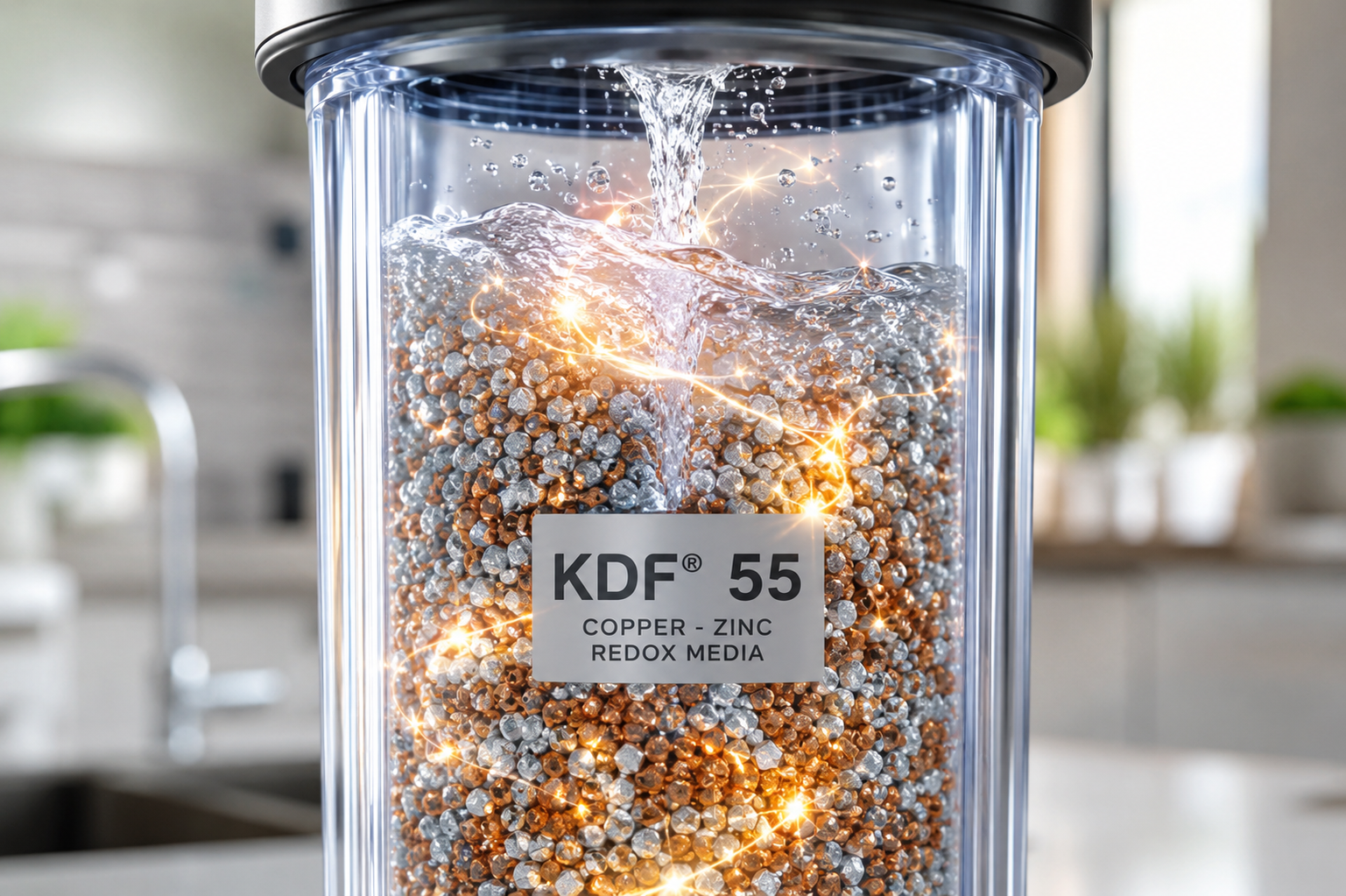
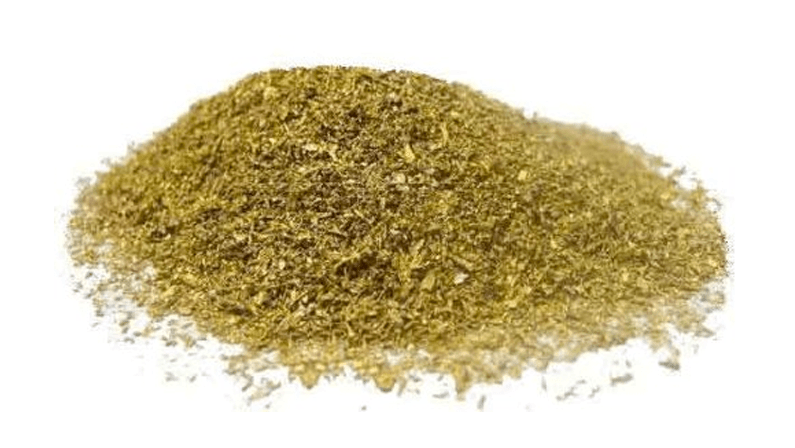
KDF stands for Kinetic Degradation Fluxion. It is a high-purity copper-zinc media. When water passes through it, tiny redox reactions happen. These reactions change harmful stuff into safer forms.
If you search what is kdf water filter, you will see it used with carbon or as a shower filter. It shines at hot water and higher flow. That is why it is common in showers and whole-house tanks. It also helps protect carbon from clogging and slime.

How KDF media works: the redox science made simple
KDF triggers redox reactions. Redox is a swap of electrons. It changes free chlorine into harmless chloride. That cuts odor and taste.
The copper-zinc mix also pulls out metals. Lead and mercury plate onto the media or turn into forms that do not dissolve well. It also reduces hydrogen sulfide, which smells like rotten eggs. KDF is bacteriostatic. It slows microbe growth inside the filter, but it is not a full disinfection step. If you ask what is kdf water filter doing behind the scenes, the answer is clean, fast redox.

Types of KDF media and common formats
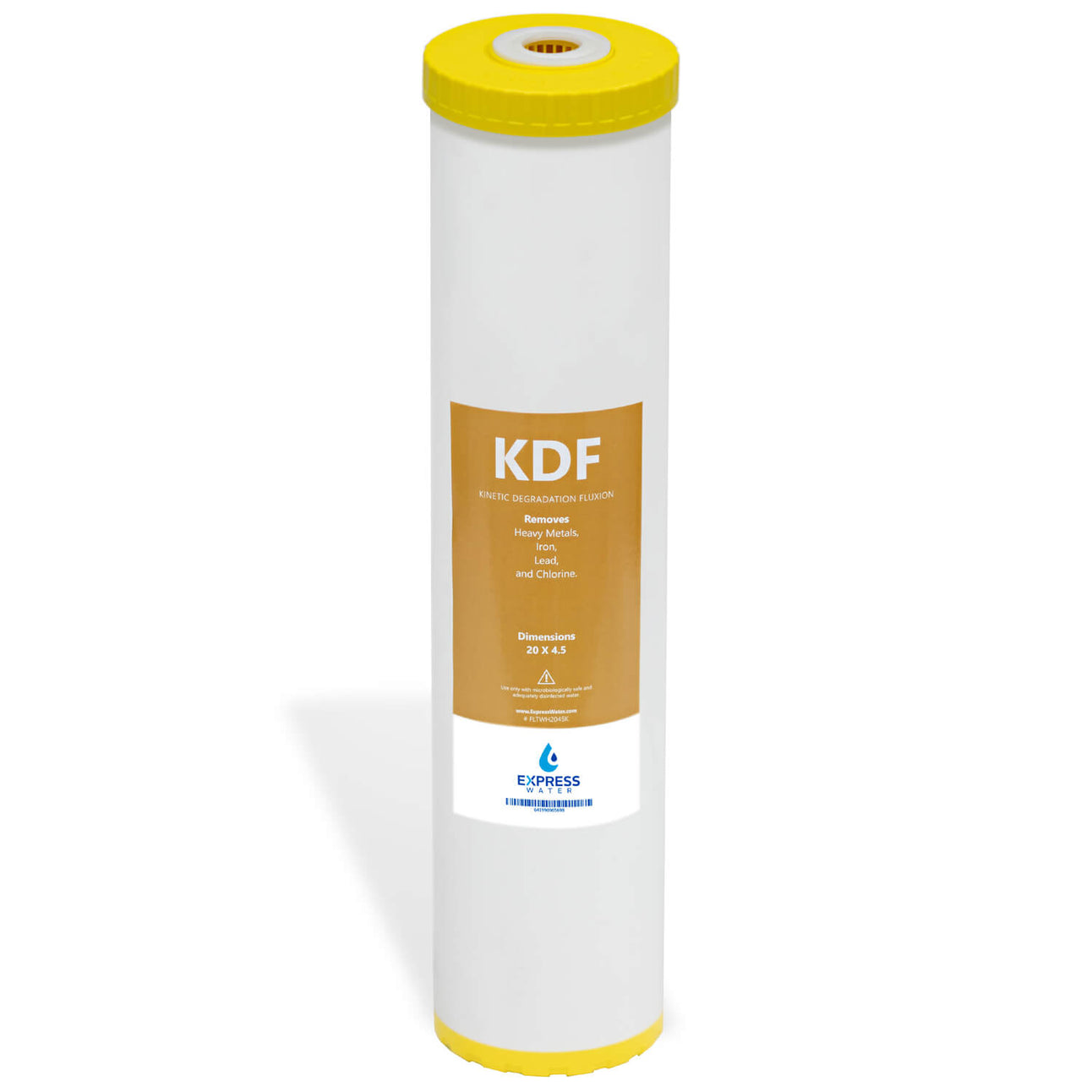
KDF 55 is the most common grade. It targets chlorine and heavy metals. KDF 85 is used for iron and hydrogen sulfide, often on well water. There are also KDF-F and KDF-C blends that mix with carbon for broad use.
You will find KDF in many forms:
- Granular media in refillable cartridges or backwashing tanks
- Discs or pellets in shower filters
- Blends with activated carbon in under-sink systems
- Layers in whole-house multi-stage filters
If you are learning what is kdf water filter for your home, match the media grade to your issue. Chlorine and taste need KDF 55 plus carbon. Iron and sulfur smells lean to KDF 85 plus the right pre-treatment.
What KDF removes and what it does not
What KDF handles well
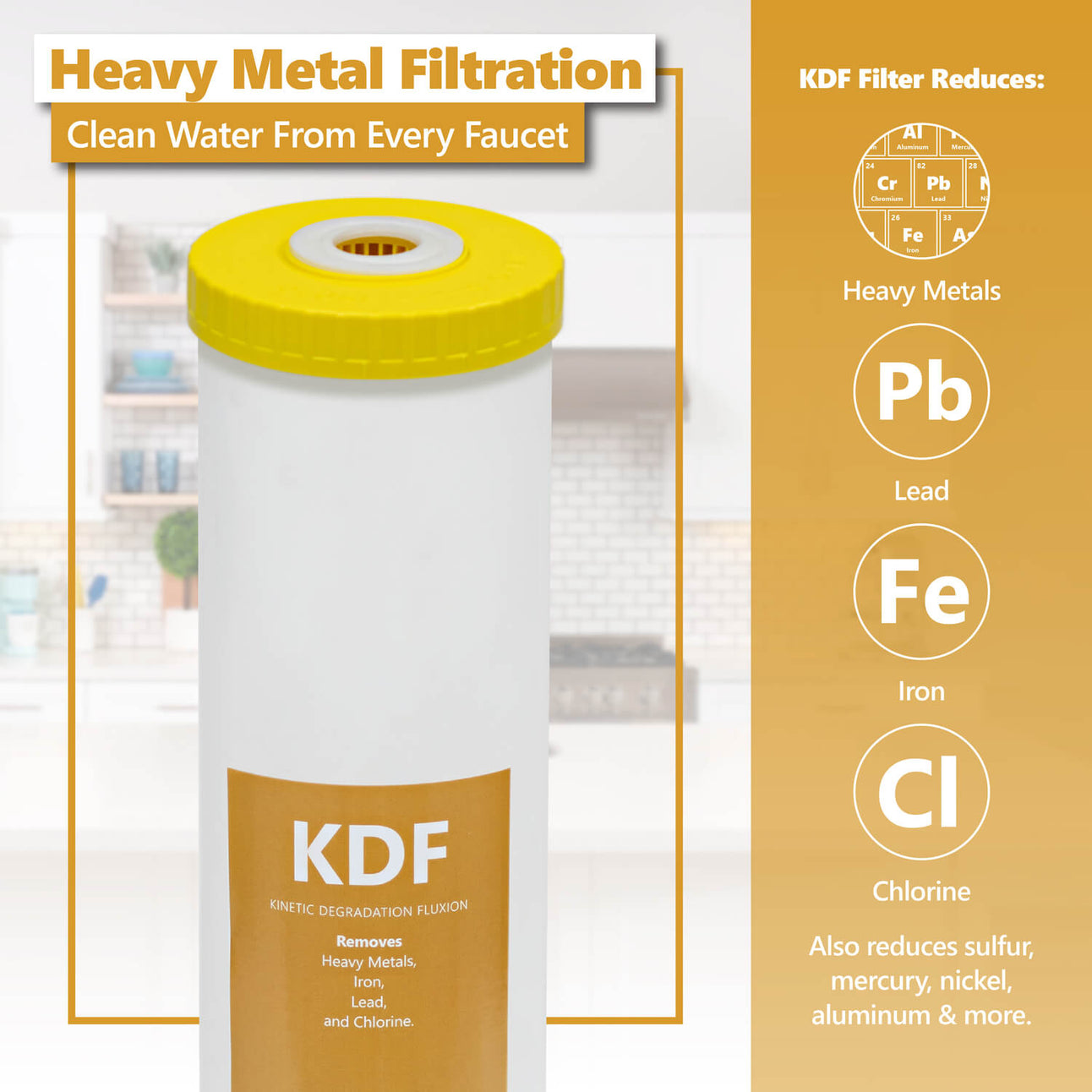
- Free chlorine and chloramines reduction, with better hot water performance than carbon alone
- Heavy metals such as lead, mercury, nickel, and chromium reduction
- Hydrogen sulfide and iron reduction with KDF 85
- Microbial growth control inside the filter housing
- Some scale reduction on fixtures, though it is not a softener
What KDF does not remove well
- Fluoride, nitrates, and sodium
- Hardness minerals at levels that cause scale, since it is not an ion exchanger
- Most organic chemicals, solvents, and PFAS without carbon or RO
- Microbes to safe drinking levels; it is not a sanitizer
If the main goal is taste and chlorine, what is kdf water filter best paired with? Blend it with high-quality activated carbon. For broad health risks, add reverse osmosis or an advanced carbon block rated for VOCs and PFAS.

Benefits and limitations of KDF filters
Benefits
- Strong chlorine and metal reduction, even at higher water temps
- Long service life compared to plain carbon when sized well
- Inhibits bacteria growth inside the filter
- Protects and extends the life of downstream carbon and RO
- Media can be recycled, which keeps waste lower
Limitations
- Heavier and more costly than simple carbon cartridges
- Needs enough contact time and proper flow to work well
- Backwashing tanks need space and drain access
- Not a full solution for all contaminants by itself
This balanced view answers what is kdf water filter good for and where it falls short. It is a great team player in a full system.
Where KDF fits in a multi-stage water system
Think of KDF as a middle infielder. It takes the fast grounders so others can make the play.
Useful stacks
- Sediment filter, then KDF 55, then carbon block for taste and odor
- Sediment filter, then KDF 85, then catalytic carbon for well water with sulfur smell
- KDF prefilter before RO to cut chlorine that can damage RO membranes
- Shower filter with KDF and carbon for clean hot showers and less smell
If you are sorting out what is kdf water filter for your setup, place it where it can protect carbon and sharpen your results.

Installation, maintenance, and lifespan
Cartridge systems are simple. Twist out the old one, put in the new one, and flush. Most last 6 to 12 months in small under-sink or shower uses. Whole-house KDF tanks can last 3 to 6 years when sized for your water.
Key tips
- Flush new media until the water runs clear
- Keep flow within rated limits to avoid channeling
- Backwash tanks as programmed to lift and clean the bed
- Test water once a year or after big changes in city supply or well conditions
If your plan centers on what is kdf water filter for daily use, track pressure drops and taste. These often give the first hint it is time for service.

Buying guide: how to choose a KDF filter
Start with your water report or a lab test. That tells you what you need to remove. Then match the media and certs.
What to look for
- NSF/ANSI 42 for chlorine taste and odor claims
- NSF/ANSI 53 for heavy metal reduction claims
- NSF/ANSI/CAN 61 for material safety
- Clear capacity and flow ratings that fit your home
- Real media weight; more grams of KDF often means longer life
- A blend with catalytic carbon if you also want chloramine and VOC reduction
If your top query is what is kdf water filter option that fits your budget, compare total cost of ownership. Include replacement cycles, not just sticker price.

Safety, certifications, and water testing
KDF media is tested for material safety. Look for NSF 61 on the system or parts list. For performance, seek NSF 42 and 53 claims that match your goals. Some makers also carry WQA Gold Seal.
Good practice
- Test before and after install to confirm results
- Mind pH and iron levels on well water to avoid fouling
- Do not count on KDF for germ safety; use UV or another disinfectant if needed
This is why experts frame what is kdf water filter as one layer in a safe water plan.
Real-world results, mistakes to avoid, and pro tips
From my field work, KDF in showers shines. In an old city apartment, a compact KDF-plus-carbon shower filter cut the pool smell in one shower. Skin felt less dry in a week. It held up better than plain carbon at hot temps.
On a sulfur well, I used KDF 85 before catalytic carbon. The rotten-egg smell dropped fast. But I learned the hard way that iron bacteria can foul KDF. A shock chlorination and better pre-sediment control fixed it. The lesson is simple: test, size the bed right, and keep flow slow enough to work.
If a client asks what is kdf water filter mistake to avoid, I say do not skip certification and do not overspeed the flow. Contact time is king.
Frequently Asked Questions of what is kdf water filter
What is KDF and how does it clean water?
KDF is a copper-zinc media that drives redox reactions. It changes chlorine to chloride and reduces heavy metals and hydrogen sulfide.
Does a KDF filter remove lead?
Yes, many KDF 55 systems reduce lead by plating and redox. Always check for NSF/ANSI 53 certification for lead reduction.
How long does a KDF water filter last?
Small shower or under-sink cartridges last 6 to 12 months. Larger whole-house KDF beds can last several years when sized and backwashed well.
Is KDF safe for drinking water?
Yes, KDF media is used in certified systems and is considered safe when properly made. Look for NSF/ANSI 61 for material safety and follow install guides.
Do I still need carbon or RO with KDF?
Often yes. KDF is great for chlorine, metals, and sulfur, while carbon targets organics and RO handles salts and many PFAS.
Can KDF handle hot water in showers?
Yes, that is a key strength. KDF works well at higher temperatures where carbon alone struggles.
Will KDF soften hard water?
No. It can help reduce scale on surfaces but it is not a water softener. Use ion exchange or TAC for true softening.
Conclusion
KDF filters use smart redox chemistry to cut chlorine, metals, and sulfur. They shine in hot water, protect carbon, and add a strong layer to multi-stage systems. They do not replace softeners, disinfectants, or RO, but they make those tools work better and last longer.
If you came here asking what is kdf water filter, now you can judge fit, not hype. Test your water, match the media, and size it right. Want more breakdowns like this? Subscribe, ask a question, or share your setup so we can help you fine-tune it.