How Long Does a Pur Water Filter Last in 2026 (Expert Picks)
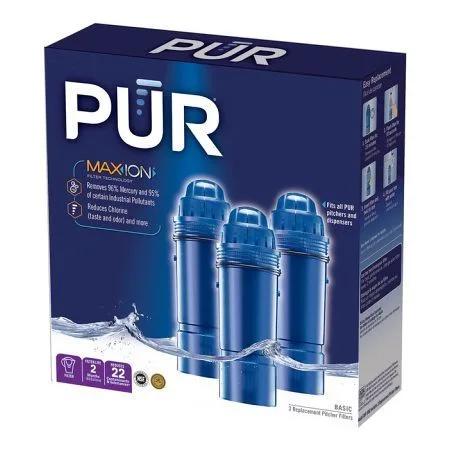
You've got a PUR water filter, which is fantastic for getting cleaner, tastier water right from your tap. But then the big question pops up: when do you actually need to swap out that filter cartridge? It’s not as straightforward as a clock ticking down; a lot depends on your situation. We're going to break down what influences how long a PUR filter lasts and what you can expect.
Manufacturer specifications indicate that standard PUR pitcher filters are typically rated to last around 40 gallons, which usually translates to about 2 months of regular use. These numbers are great starting points and represent ideal conditions for filter performance and longevity.
Manufacturer Guidelines vs. Your Home's Reality
Manufacturers base their estimates on average usage and typical water conditions, but your home might be quite different. Think of these numbers as the "best-case scenario" for your PUR filter's lifespan.
The Numbers: Gallons and Months
PUR provides estimates for how long their filters should work effectively. These are usually stated in two ways: by the volume of water they can filter, and by the duration they're expected to last.
- Standard Pitcher Filters: These commonly last for about 40 gallons. In a typical household, this often means you'll need to replace them every 2 months.
- Faucet Mount Filters: These generally have higher capacity, often rated for around 100 gallons. This translates to about 3 months of use for most homes.
- Specialty Filters: Some advanced PUR filters designed for specific contaminants might have slightly different capacities and lifespans, so always check the packaging for your particular model.
These figures are a solid benchmark, but they don't account for the unique variables present in every home's water supply or daily water consumption habits.
Factors That Actually Shrink Filter Life
The official gallon and month counts are just a guideline. What you’re actually experiencing at home can significantly alter how long that filter truly lasts. It’s more than just a number.
Water Quality's Big Role
This is arguably the biggest variable. If your tap water is particularly hard, contains high levels of sediment, or has a lot of chlorine that needs filtering, your PUR filter is working harder. It's like a sponge soaking up impurities, once it's full, it's done. Cities with older plumbing infrastructure or areas that experience seasonal water quality fluctuations might find their filters get clogged up, or reach their saturation point, much faster.
How Much Water Are You Running Through It?
It’s pretty simple: the more water you pass through the filter, the quicker it reaches its limit. If you have a large family, fill up multiple water bottles daily, or use filtered water for cooking and brewing coffee, your filter will naturally deplete its effective capacity sooner than if it's just one or two people using it sparingly. Aggregate user reviews often highlight that heavy households can see filter lifespans cut by a third or more compared to lighter use.
Signs Your PUR Filter is Past Its Prime
Beyond just passively waiting for the recommended time to pass, your filter will actually give you signals that it's time for a fresh one. Paying attention to these is key to ensuring you're always drinking the best quality water.
Taste and Odor as a Tell-Tale
This is often the most immediate indicator. If your water starts tasting or smelling "off" again, perhaps that chlorine flavor you were trying to avoid has returned, or you detect a metallic or earthy note, the filter media has likely saturated. It can no longer effectively trap the specific contaminants responsible for those undesirable characteristics. As of 2026, taste and odor reduction remains a primary function for many household water filters.
That Slow Flow Problem
As the filter media inside your PUR cartridge traps impurities like sediment, minerals, and other particles, it can become clogged. This buildup creates resistance, making it harder for water to pass through the filter. If you notice a significant reduction in the flow rate from your faucet or pitcher spout compared to when the filter was new, that's a strong clue it's time for a replacement.
Checking Your Filter's Indicator
Many modern PUR filter systems, especially faucet-mounted ones, come equipped with an electronic indicator. These can be timer-based, flow-based, or a combination of both, designed to estimate when the filter's performance has likely decreased below optimal levels. While generally reliable, these indicators are still estimates and might not perfectly reflect your specific water conditions.
Real-World Lifespan: What to Expect
So, when all is said and done, what’s a realistic expectation for your PUR filter’s lifespan? It’s a blend of the manufacturer’s guidance and your home’s unique environment. For most standard PUR pitcher filters, aiming to replace them every 2 months or around the 40-gallon mark is a good baseline. If you have a faucet mount, pushing towards 3 months or 100 gallons is reasonable, provided your water quality isn't excessively challenging.
However, if you live in an area with famously hard water, or if you notice a decline in taste or a slowdown in flow before that 2-month or 3-month mark, don't hesitate to swap it out early. The goal is consistently clean, great-tasting water, not just hitting an arbitrary date. Editorial analysis of user feedback suggests that around 30-50% of users report needing to replace filters sooner than the stated guidelines due to local water conditions or higher usage.